 English


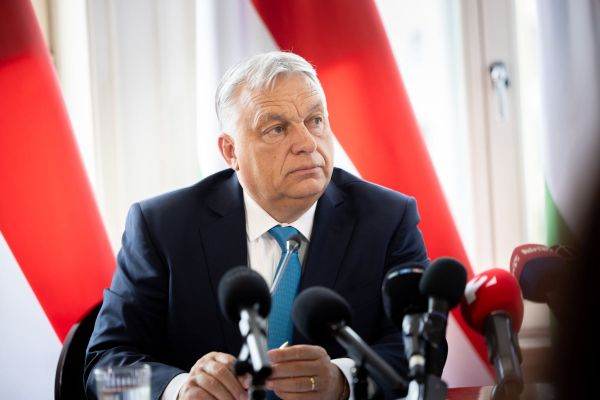
The government led by Viktor Orban directed another 5 million euros to the Hungarian-language press in Transylvania just before the parliamentary elections in Hungary, which it lost in April 2026, in a new phase of a funding program that, according to calculations published by the Hungarian press, has exceeded the 30 million euro threshold in the last nine years, according to a report presented by the Hungarian branch of the RTL television station.
According to the cited source, the funds were transferred to Romania through the Transylvanian Media Space Association, an organization that has become, in less than a decade, the largest Hungarian press trust in Transylvania and one of the most influential media vehicles dedicated to the Hungarian community in Romania.
The revelation comes at a time when the new Hungarian Minister of Culture, Zoltan Tarr, announced his intention to review the system of granting these subsidies. At the same time, Transparency International Hungary claims that the former executive in Budapest distributed most of these funds through secret resolutions, which raises new questions about the transparency of the use of public money.
This funding is not an isolated episode, but is part of a constant flow of financial resources sent from Hungary to the Hungarian-language press in Transylvania since 2017. According to calculations made by RTL journalists, the total value of these funds exceeds 30 million euros, money coming from the Bethlen Gabor Fund (BGA). Officially, the objective of these investments was to save Hungarian media institutions in the Szeklerland and support the process of digital transformation of the regional press. However, investigations conducted by journalists from the Atlaszo Erdely website claim that, beyond the declared goals, these investments also had an important political component, consolidating the influence of Prime Minister Viktor Orban and the Fidesz party on the information space intended for the Hungarian community in Romania.
The phenomenon is also explained by researcher Tamas Kiss, from the Romanian Institute for Research on National Minorities, who described the impact of this media policy in a statement given to Expert Forum. "The expansion and unification of the media space is a very important step in this direction. This has led to strange situations, in which many Hungarians living in Romania are better informed about the political situation in Hungary than about the political complexities in Bucharest,” Tamas Kiss told the cited source. He characterized the entire phenomenon as "a system of ethnic parallelism in which Hungarians can live their lives in Romania as part of Hungary.”
The transformation of the Transylvanian Media Space Association into a true media empire began more than a decade ago. The organization was founded in 2013 as a modest cultural association, initially managing the opinion portal Fõter.ro, a platform dedicated to debates between left and right-wing currents. The turning point, however, came in 2015, in the context of the conflict between Prime Minister Viktor Orban and his former ally, businessman Lajos Simicska. After the breakup between the two, Simicska's media empire in Transylvania, managed through the company Udvarhelyi Hírado SRL, entered a serious financial crisis.
The government in Budapest intervened to prevent the disappearance of this press group, which included important publications such as the regional daily Kronika, the local newspapers Vasarhelyi Hírlap, Csíki Hírlap, Gyergyoi Hírlap and Udvarhelyi Hírado, the weekly Erdelyi Naplo, but also one of the most accessed Hungarian-language news portals in Transylvania, szekelyhon.ro. The chosen solution was to use the Transylvanian Media Space Association as a vehicle for taking over the media assets. The process took place in two stages: first, the association received substantial funding from the Hungarian state, money used to buy the company Prima Press SRL, and later, the journalists of the publications in difficulty were also taken over.
A key figure in the development of this media trust was Szilard Demeter, considered by the Hungarian press to be the "intellectual father” and "unofficial ambassador” of the entire construction, although he never held an official position within the association. Demeter began his career as a professor of logic and philosophy at the Partium Christian University in Oradea, later becoming a journalist and chief of staff to Laszlo Tõkes during his time as a MEP. His influence on the media trust lasted from January 2018 until the summer of 2023.
The major changes came in January 2023, when the printed editions of the publications were suspended, approximately 70% of the employees were laid off. A few months later, in July 2023, Szilard Demeter's team was completely removed from managing the media operations in Transylvania. Its place was taken by Györfi Áron, described by the Hungarian press as "Liszkay's man", in reference to Gabor Liszkay, one of the most important figures in the pro-government press in Hungary. Immediately after this change of leadership, substantial funding from the Hungarian Government was resumed, after a period of stagnation. At the peak of its development, the Transylvanian Media Space Association managed approximately 30 media entities, constituting the largest Hungarian-language press group in Romania. The portfolio included publications such as Szekelyhon, the largest Hungarian-language news portal in Transylvania, the regional daily Kronika, the weekly Erdelyi Naplo, the portal Fõter.ro, the women's magazine Nõileg and the cultural supplement Liget. The trust also controlled the Târgu Mureş-based Radio GaGa, Príma Radio, Friss FM and Feny TV stations, as well as the job platform job.szekelyhon.ro and teletext services.






















 Euro
Euro Dolar SUA
 Franc elveţian
 Liră sterlină
 Gram de aur






























1. fără titlu
(message sent by anonim on 30.06.2026, 00:39)
Agenturile straine.