English


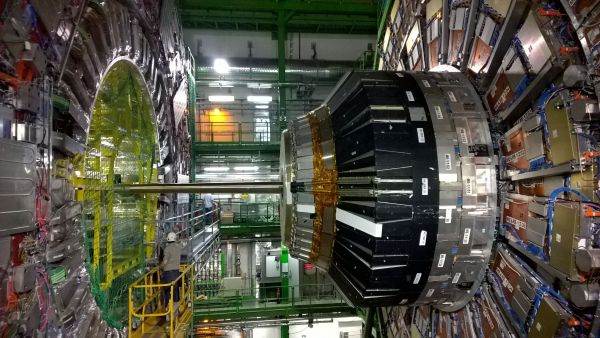
The Large Hadron Collider (LHC), the world's most powerful particle accelerator, is entering a major upgrade phase. CERN researchers hope that the new version of the accelerator will allow the discovery of previously unknown particles and test fundamental theories about the Universe with unprecedented precision. The project, called the High-Luminosity LHC (HL-LHC), represents one of the most important investments in modern physics and could pave the way for the next generation of particle accelerators, DPA reports.
• Four-year upgrade for the world's largest accelerator
Starting Monday, June 29, the accelerator will be shut down for extensive upgrade work. About two kilometers of the 27-kilometer underground ring will be rebuilt, with much more powerful superconducting magnets and state-of-the-art detectors being installed.
The aim is to significantly increase the number of proton collisions, which will allow for a much larger volume of data to be collected and extremely precise measurements to be made. "This will set the course for future projects,” project coordinator Markus Zerlauth said, as quoted by DPA.
• The big goal: discovering dark matter
One of the main targets of the new accelerator is to identify the particles that make up dark matter, one of the greatest mysteries of cosmology. According to current models, dark matter and dark energy make up about 95% of the Universe, but their nature remains unknown. Although physicists know the structure of ordinary matter - made up of protons, neutrons, quarks and leptons -, the particles that would make up dark matter have never been observed. "The theory is that they could be much heavier than the known particles, which means that more energy or more collisions are needed to detect them,” explained Markus Zerlauth.
• Better detectors and millions of additional collisions
The new infrastructure will use state-of-the-art superconductors, capable of focusing proton beams much more efficiently than today. This will significantly increase the number of collisions. Nedaa-Alexandra Asbah compares this development to switching to a camera with a much higher resolution. "It's like replacing the camera at the center of the detector with one that has much finer pixels,” the researcher explained.
She also uses an analogy inspired by wildlife photography: "If you take just a few photos, you can identify animals, but you will miss rare behaviors. If you take millions of high-quality photos, you start to notice details that were previously invisible. The High-Luminosity LHC gives us this opportunity.”
• Recreating conditions after the Big Bang
The collisions between protons produced in the LHC generate temperatures and energies comparable to those that existed in the fractions of a second after the Big Bang. By analyzing the particles resulting from these collisions, researchers are trying to understand how matter was formed and to discover possible particles that are not predicted by the current Standard Model of physics. The new detectors will allow the observation of extremely rare processes, impossible to capture with current technology.
• Investment of 1.2 billion Swiss francs
The modernization work is estimated to last about four years. The total cost of the project, including the preparatory stages, amounts to 1.2 billion Swiss francs (about 1.4 billion dollars). Despite the difficulties caused by the COVID-19 pandemic and the war in Ukraine, the final costs exceed the budget estimated in 2016 by only 16%, according to CERN officials. If the goals are achieved, the High-Luminosity LHC could become the instrument that will provide the most important discoveries in particle physics in the coming decades and will guide the development of future accelerators capable of exploring even deeper the structure of the Universe.


























 Euro
Euro Dolar SUA
 Franc elveţian
 Liră sterlină
 Gram de aur