English

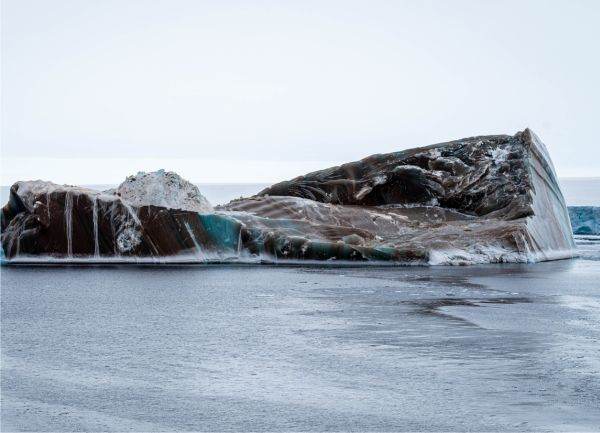
Global warming could expose an ice-free area in Antarctica the size of the US state of Pennsylvania by 2300, opening up new perspectives, but also tensions, regarding the continent's resources and legal status, according to a study published in Nature Climate Change and cited by Live Science. The research, coordinated by Erica Lucas of the University of California Santa Cruz, introduces for the first time into such projections the concept of glacial isostatic adjustment, the process by which the Earth's crust rises after the retreat of ice sheets. Until now, climate models have only analyzed the retreat of ice edges. The new study adds factors such as: changes in sea level, the thickness of the lithosphere, the gravitational effects of the ice mass. This approach provides a more complete picture of how Antarctica could transform in the coming centuries.
• Huge areas could become accessible
Depending on the ice melting scenarios, researchers estimate that by 2300 there could be: 120,610 km² of ice-free land (severe scenario), 36,381 km² (moderate scenario), 149 km² (optimistic scenario). According to the study, these values confirm the trend already observed in the last two decades, of the progressive retreat of the Antarctic ice sheet. Under the ice sheet lies a complex relief, consisting of mountains, valleys, canyons and even volcanoes. As the ice retreats, these areas become accessible, and with them the mineral resources. According to the study, in the regions that could become ice-free there are deposits of: copper, gold,
Silver, iron, platinum. These resources, essential for industry and technology, could increase the interest of states in Antarctica, especially in areas claimed by Argentina, Chile and the United Kingdom.
• Antarctic Treaty under pressure
Currently, commercial exploitation of mineral resources is prohibited by the Antarctic Treaty, which only allows scientific activities. However, a possible increase in the accessibility of resources could generate pressure to renegotiate this framework. The first formal opportunity for such a review will arise in 2048, when the signatories of the treaty can request a change to the environmental protocol.
Although the study suggests possible geopolitical tensions, experts remain cautious. Tim Stephens, of the University of Sydney, believes that the emergence of ice-free lands is unlikely to trigger, on its own, a major change in the governance of Antarctica. He emphasizes that the environment remains extremely hostile to resource exploitation, and the transformations could, on the contrary, stimulate international cooperation and strengthening environmental protection measures.
• An uncertain future for the "white continent”
The anticipated transformations in Antarctica highlight the interdependence between climate change, natural resources, and the global geopolitical balance. As the ice retreats, not only the geography of the continent is changing, but also the economic and strategic stakes associated with it. In this context, the international community will have to find a delicate balance between exploiting resources and protecting one of the planet's most fragile ecosystems.




















 Euro
Euro Dolar SUA
 Franc elveţian
 Liră sterlină
 Gram de aur