English

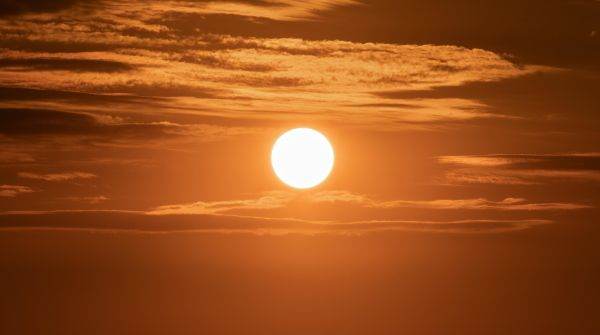
Heat waves that occur in late spring and early summer risk producing more extensive effects than the classic heat waves of July and August, warns French climatologist Christophe Cassou, in an interview with AFP. The specialist draws attention to the fact that unusually high temperatures recorded in Western Europe at the end of May have demonstrated once again the vulnerability of society and ecosystems to climate change. Director of research at the French National Center for Scientific Research (CNRS) and one of the authors of the upcoming report of the Intergovernmental Panel on Climate Change, Cassou believes that the impact of these early episodes may be even greater than that of more intense heat waves, but produced in the middle of summer.
• Population exposure is higher
According to the climatologist, the main reason is that these episodes occur during a period when economic activity is at full capacity and most of the population is not on vacation. "Many more people are exposed to these early heat waves. We are not in the summer vacation period, when many companies reduce their activity. Now, people are working and are directly exposed to high temperatures," explained the researcher. In addition, the economic effects are considerable. Extreme temperatures reduce labor productivity, especially in construction, agriculture, industry and other fields carried out outdoors or in insufficiently air-conditioned spaces.
• Major danger for agriculture and biodiversity
Cassou warns that the end of spring represents one of the most sensitive periods in the biological cycle of plants and animals. During this stage, intense vegetation development takes place, and fruits and agricultural crops are in the process of formation. Excessive temperatures and lack of water can affect crops before they reach maturity. "We are at a very sensitive moment in the phenological cycle. Plant growth is at its peak, and the fruits that will be harvested in the summer are now in the formation phase," explained the climatologist. The effects are also being felt on fauna. Marine species, such as mussels, oysters or sea snails, are affected by the rapid warming of the waters, while many bird species are going through the period of reproduction and raising their young, which makes them particularly vulnerable.
• Soils dry out earlier
Another effect of these heat waves is the acceleration of soil drying. According to data provided by Meteo-France, at the end of May 2026, soils in France were among the driest 10% recorded for this period of the year. Water demand is high at this stage of crop development, and moisture deficits can significantly affect agricultural production. "The soils have been depleted very quickly this spring. Vegetation is extracting water from the surface layers, and reserves are being reduced at an alarming rate," the specialist said.
• Adaptation to climate change remains insufficient
According to Christophe Cassou, European societies continue to react to the effects that have already occurred rather than to anticipate future phenomena. "We are in a crisis management logic. We are running after the effects of climate change and we are not sufficiently preparing society for what is coming," says the researcher. He believes that adaptation must start from extreme scenarios, including the possibility of temperatures of 50 degrees Celsius in major European cities, followed by concrete measures to reduce vulnerabilities. Examples given include school infrastructure, which in many cases is not prepared for very high temperatures. Instead of just discussing changing the holiday calendar, the climatologist believes that authorities should invest in adapting buildings and public spaces to the new climate realities.
• Extreme phenomena are becoming more frequent
Specialists warn that climate change favors the occurrence of more frequent, earlier and more intense extreme weather episodes. In this context, heat waves at the end of spring are no longer exceptions, but signals of a trend that could become common in the coming decades. For climatologists, the major challenge is no longer just reducing greenhouse gas emissions, but also preparing societies for a climate in which extreme temperatures will occur more often and will simultaneously affect the health of the population, agriculture, the economy and natural ecosystems.






















 Euro
Euro Dolar SUA
 Franc elveţian
 Liră sterlină
 Gram de aur