English

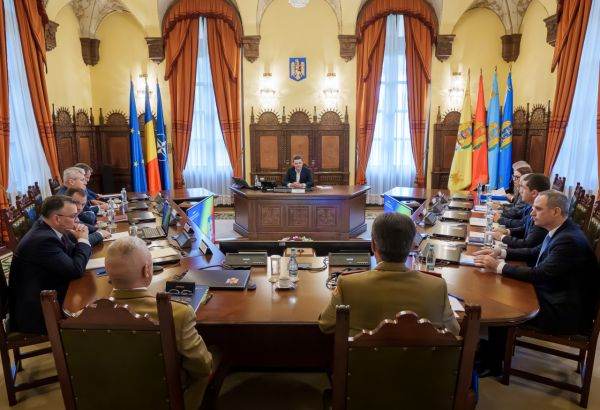
The meeting of the Supreme National Defense Council is scheduled to take place at the Cotroceni Palace this morning, starting at 9:30 am, convened yesterday by President Nicuşor Dan at a time marked by major geopolitical tensions generated by developments in the Middle East.
According to a press release issued by the Presidential Administration, the meeting will analyze the regional and economic implications for our country of the crisis in the Middle East, as well as possible security measures that could be adopted in the current international context, especially in the context of the European Council, whose meeting is scheduled for March 19 and 20.
The agenda of the CSAT meeting includes, first of all, the analysis of the situation in the Middle East and its implications for Romania, given that the escalation of the conflict in the region has determined political, military and economic reactions at a global level. The central authorities are to assess the potential risks to national security and the strategic stability of NATO's eastern flank, given the rapid dynamics of events and the possible spillover effects of the crisis.
The cited source also indicates that, during the Cotroceni meeting, the impact of the events in the Middle East on the oil market in our country will also be assessed. Developments in the region have already generated volatility on international energy markets, and the Government is monitoring how these tensions could influence oil prices, fuel supplies and the stability of the domestic energy sector. The CSAT analysis could include scenarios regarding the evolution of energy markets and possible measures to prevent disruptions in supply, in the context in which any major fluctuation in oil prices is quickly transmitted to the economy, with effects on transport, industry and the cost of living.
Another sensitive point on the CSAT meeting agenda is the analysis of the temporary deployment, on Romanian territory, of some military capabilities. The topic is discussed in the context of the strengthening of the defense posture on NATO's eastern flank and the security developments generated by the crisis in the Middle East, with the authorities to examine the opportunity of additional measures to strengthen defensive capabilities and military coordination with allies. A possible temporary deployment of military capabilities could have the role of strengthening the reaction capacity of Romania and NATO in the region, in the event of the expansion of security risks or the amplification of geopolitical tensions. The discussions about this deployment of forces take on an important aspect in light of the information published yesterday by G4Media, which shows that the United States is interested in sending aircraft to the Kogălniceanu base for possible interventions in the Middle East, but also in sending American soldiers to the Smârdan training ground to train the crews who will service the Abrams tanks.






















 Euro
Euro Dolar SUA
 Franc elveţian
 Liră sterlină
 Gram de aur