English

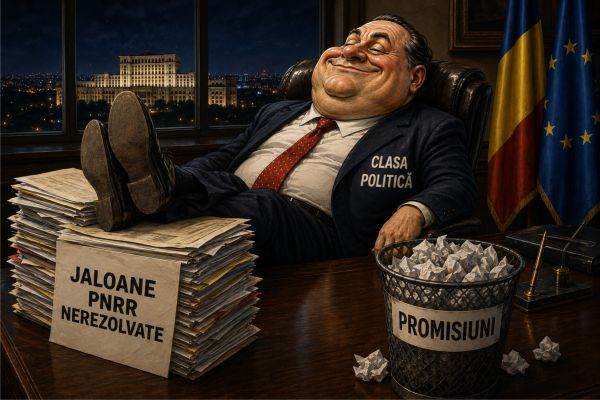
Today is the last day to implement the National Recovery and Resilience Plan. Unfortunately, although in the last month the engines have been revved to the max, we have had inaugurations at the limit, thousands of invoices pushed into the settlement circuit, we are left with a question of almost nine billion euros that the entire political class in Bucharest should be forced to answer: how was it possible that a program started in 2021 from approximately 29.2 billion euros could reach, after successive renegotiations, just over 20 billion? The answer does not fit into the convenient formula according to which Romania "gave up some loans". Part of the reduction does indeed have technical and financial explanations, but other billions were removed from the PNRR because the governments, ministries, parties and parliamentary majorities in Bucharest were unable or unwilling to carry out the reforms they had undertaken, to prepare the projects on time, to organize the tenders, to depoliticize the state-owned companies and to give up the privileges they had solemnly promised to Brussels in exchange for European money.
On August 31, 2026, the image of the National Recovery and Resilience Plan is far from the administrative triumph that the authorities are trying to project, but also from the absolute disaster described by those who only see the delays. Romania has built highways, modernized sections of the railway, renovated buildings, purchased equipment and started public projects that, without the pressure of European money, would probably have remained in drawers for years. At the same time, it cut objectives, reduced targets, eliminated investments, moved construction sites to the state budget and transformed the promise of accelerated modernization into a desperate race to save what could still be saved.
The PNRR approved in 2021 was worth approximately 29.2 billion euros, of which almost 14.2 billion euros represented grants and 14.9 billion euros were loans. Since then, the plan has gone through three major processes of modification and renegotiation.
• 9 billion euros lost following three renegotiations
The first important change was caused by the recalculation of the European grant allocation based on the real economic evolution during the pandemic. In June 2022, Romania's grant component was technically reduced by approximately 2.1 billion euros, to around 12.1 billion. This reduction cannot be entirely attributed to the Bucharest Government, as it resulted from the European distribution formula: Romania's economy performed better than initially estimated, and the non-reimbursable allocation was recalculated accordingly.
In 2023, the first major renegotiation followed, through which Romania introduced the REPowerEU chapter, modified investments and milestones, and brought the value of grants back to approximately 13.6 billion euros through the new European energy allocations. The revised plan, approved by the European Commission in November and the EU Council in December 2023, had reached approximately 28.5 billion euros: 13.6 billion grants and 14.9 billion loans. It included 66 reforms and 111 investments. On paper, Romania had recovered most of the technical reduction in grants and retained almost the entire financial power of the initial plan.
The second major renegotiation, carried out in 2025 and approved by the EU Council in November, radically changed the situation. Romania admitted to the Commission that many projects could no longer be completed by the August 2026 deadline. The value of the plan dropped from 28.5 billion to around 21.6 billion euros, with the loan component being reduced from almost 15 billion to around eight billion. Officially, the government presented the operation as a rescue: the grants of 13.57 billion euros remained intact, and loans that Romania could no longer or did not want to use were mainly removed from the plan. In reality, this "rescue” meant the recognition that projects worth almost seven billion euros had no chance of being executed in the remaining time. The EU Council formally approved the changes in November 2025, reiterating that all reforms and investments must be completed by the end of August 2026.
The third major renegotiation came in the summer of 2026, the last before the closure of the mechanism. The government also eliminated approximately 1.3 billion euros from the loan component and lowered the realistic value of the PNRR to approximately 20.1 billion euros, of which 13.57 billion were grants and approximately 6.5-6.6 billion were loans. New investments were reduced or eliminated, milestones were reformulated, indicators were reduced, and some obligations were transformed from final results into intermediate thresholds. Officially, the negotiations were declared a success because Romania would have kept fully the grants and would have avoided billions in penalties. But the success actually consisted in convincing the Commission to judge Romania on a smaller and easier to implement version of the plan, not in the execution of the initial plan.
The difference between the 29.2 billion euros in 2021 and the approximately 20.1 billion in 2026 is almost 9.1 billion euros. Not the entire amount can be legally called a "loss”, because most of it was made up of loans, not grants. The loans had to be repaid and generated costs, and Romania had the right to stop requesting them if it did not consider them advantageous or if it no longer had eligible projects. But it cannot be argued that the waiver is without consequences. The PNRR loans had European conditions and were intended for productive investments. Romania did not give up on them after it found that all projects could be financed more cheaply from other sources, but largely because it was no longer able to execute them by the deadline. Delayed construction sites do not disappear, and the remaining works will be paid for later through the Transport Program, through other European funds or directly from the budget, sometimes under more expensive conditions and with additional pressure on the deficit and public debt.
• Causes of the loss of a significant part of the PNRR financing
Billions disappeared from the PNRR for four overlapping reasons. The first was the European recalculation of grants, a technical reduction that Romania could not avoid. The second was the voluntary waiver of a large part of the loans. The third, much more serious, was the elimination of investments that could no longer be completed: highways, railways, hospitals, energy capacities, digital infrastructure, schools and local projects. The fourth was the failure to implement reforms, that is, the part where the political class can no longer invoke either the pandemic, the war, or the European bureaucracy, because the obligations were in the documents assumed by the Romanian governments themselves.
The European Commission did not ask Bucharest for secret reforms, invented at the last minute. Romanian politicians knew years in advance that the money depended on the special pension reform, the new public payroll law, the professional governance of state-owned companies, the operationalization of AMEPIP, tax reform, decarbonization, integrity, and transparent appointments. They signed these obligations, received pre-financing, used the money politically, and when the time came to deliver the reforms, the postponements, simulations, exceptions, and laws tailored to preserve exactly the privileges they had promised to eliminate began.
The first financial warning came with payment request number 2. Romania had to contract at least 100 MW of new electrolyzer capacity for the production of renewable hydrogen. The target was renegotiated and lowered to 60 MW, but even this reduced target was not met. The Commission initially suspended euro53.4 million, Romania later recovered around euro42.6 million, but euro10.77 million was permanently cut. It is an almost didactic case: first a target is assumed, then its reduction is requested, and in the end even the reduced version is not achieved. Payment request number 3 turned the delays into a huge bill. Submitted in December 2023, it included 74 milestones and targets and numerous reforms. Romania claimed that the obligations had been met, but the Commission's verification showed that six milestones were not satisfactory and led to the initial suspension of almost euro870 million. After months of corrections, amendments and justifications, Romania recovered approximately 350.7 million, but permanently lost approximately 458.7 million euros due to delayed, incomplete or poorly implemented reforms.
Behind this amount lie precisely the old diseases of the Romanian state. For the governance of transport companies, Romania had to demonstrate that the heads of CNAIR, CNIR, CFR, Metrorex and CFR Călători were elected transparently, competitively and on professional criteria. The Commission found incomplete procedures, conflicts of interest and appointments that did not comply with the assumed standards. Romania recovered only 4.5 million euros and lost approximately 15.4 million. In state-owned energy companies, problems regarding political appointments, poorly applied criteria, incomplete mandates and lack of performance indicators produced a loss of approximately 180 million euros. Brussels did not impose the politicization of the boards of directors. Bucharest preferred to maintain political control over the companies and pay the price with the country's money.
• Single wage reform - a milestone completely missed
The special pension reform also went through delays, successive amendments, appeals and legislative solutions that tried to reconcile European requirements with the protection of domestic privileges. Of the approximately 231 of millions of euros at stake, Romania managed to recover about 166 million, but about 65 million were lost. The problem was not the simple existence of a legal debate, but the fact that the parties postponed the adoption of a clear and sustainable reform for years, hoping that they could collect the money without really touching the system of privileges.
AMEPIP, the agency that should supervise the performance of public enterprises, has become another symbol of the miming of the reform. The institution was supposed to guarantee that state-owned companies are run professionally, not distributed as political spoils. Its faulty operationalization blocked hundreds of millions of euros, and Romania was forced to redo procedures and rules to recover 132 million. The fact that this money was saved does not erase the lost years nor the reflex of the parties to create institutions with European titles, keeping the same mechanisms of influence inside.
The most costly political capitulation since the end of the PNRR is the new budget payroll law. The reform had been known for years and was supposed to create a more coherent, fair and sustainable payment system in the public sector. Instead of being prepared in advance, the law was pushed after the elections, passed between ministries and blocked in the coalition. Three Ministers of Labor succeeded each other without completing the project, and a first serious project appeared only in the spring of 2026, when time had practically expired. The PSD refused to support the proposed formula, citing the effects on certain professional categories and demanding changes, and the milestone on which approximately 770 million euros depended remained unmet. As of August 31, the loss has yet to be formalized through the Commission's evaluation, but politically and procedurally the money is compromised in the absence of the law. It is not an unexpected sanction, but the price of a reform that the parties consciously postponed until it could no longer be adopted.
Along with salaries, the integrity law, the energy system reform and the decarbonization obligations remain vulnerable. In energy, Parliament tried to condition the closure of coal-fired capacities on the commissioning of equivalent capacities, which the Commission interpreted as a risk of reversing the reform. Bucharest negotiated the temporary maintenance of some energy groups for security of supply and managed to substantially reduce the risk of penalties. It is one of the cases in which the renegotiation had a real justification for energy security, but it also shows how late the contradictions between the commitments assumed and the effective capacity of the Romanian energy system were confronted.
• Unrealistic investments
Beyond the reforms, billions of euros were spent because investments were started too late or conceived unrealistically. Romania entered the PNRR with huge lists of highways, railways, hospitals, schools, digital systems and energy capacities, but without all the studies, authorizations, tenders and administrative capacity necessary to complete them by 2026. The years 2022-2024 were consumed in procedures, appeals and blockages, and the succession of elections and political crises slowed down the reforms. In 2025 and 2026, the Government no longer negotiated with Brussels how to develop the plan, but how to eliminate projects that had become impossible.
The most recent data set from the MIPE dashboard is dated August 19, 2026. According to it, Romania has an accounting allocation of approximately 21.41 billion euros, contracts of 21.66 billion, payments to active and withdrawn projects of almost 12.89 billion and effective receipts from the European Union of 12.97 billion. The realistic value resulting from the last renegotiation is, however, approximately 20.1 billion euros. The difference between the two benchmarks comes from the fact that the dashboard did not synchronize all sections with the last negotiated configuration. The fact is that Romania collected approximately 60.6% of the accounting ceiling of 21.41 billion and almost 64.5% of the realistic target of 20.1 billion, not the entire amount presented as "saved".
On August 15, Romania submitted payment request number 5, with a gross value of 2.84 billion euros, which includes 75 milestones and targets, of which 21 are for reforms and 54 for investments. The money had not been collected on August 28. The European Commission must verify whether the obligations have been met, and the amounts related to salaries, integrity or other failed reforms can be cut. After this request, the final request, number 6, follows. Only after the evaluation of both will the final amount obtained by Romania be known.
At the level of the 16 components, the recorded budget execution amounts to approximately 8.33 billion euros out of an allocation of 21.41 billion, i.e. only 38.9%. Sustainable transport has 2.99 billion executed out of 5.45 billion, respectively 54.9%, and the Renovation Wave leads in percentage, with 60.2%. The local fund reached 51.3%, fiscal reforms and pensions at 51.1%, health at 48.8%, tourism and culture at 41.3%, education at 35.7% and waste management at 35.4%. At the bottom of the ranking are water management, with 24.2%, social reforms, with 22.3%, digital transformation, with 21.5%, support for the business environment and research, with 14.4%, energy, with 13.9%, and REPowerEU, with only 5.9%.
• A7 - the only major investment we have left after the PNRR
The big trophy that the Government will lift before the closure of the PNRR is the Moldovan Motorway. Today, August 31, traffic is to be opened on approximately 47 kilometers between Adjud and Bacău. With the inauguration, approximately 242 of the 319 kilometers of the A7 between Ploieşti and Paşcani will be trafficable. Together with the A3 Bucharest-Ploieşti, the route will provide over 300 kilometers of high-speed road between the Capital and Moldova. It is the strongest physical result of the PNRR and one of the few investments capable of rapidly changing the economy of an entire region.
However, the success up to Bacău cannot hide the missed deadline up to Paşcani. The 77.38 kilometers between Bacău and Paşcani have not been completed to date. The first two lots have passed approximately 65%, and the third lot is around 50%. The government confirmed that the PNRR will only pay for the works completed by the end of August, and the rest will be financed directly from the state budget. The motorway will continue, but the remaining bill is being moved from Brussels to the Romanian taxpayer.
The A7 situation shows the mechanism by which Romania "saved” its plan. The PNRR initially provided for approximately 429 kilometers of motorway. After the renegotiations, about 251 kilometers remained eligible in full or proportionally, a reduction of about 178 kilometers, or 41.6%. The A8 Târgu Mureş-Miercurea Nirajului and Leghin-Târgu Neamţ sectors were removed, the A3 Nădăşelu-Poarta Sălajului section disappeared from the mechanism, and the financing of the A7 Bacău-Paşcani was limited to the progress made by the deadline. The roads do not necessarily disappear from the map, but they disappear from the PNRR balance sheet and are included in the future state expenses.
The Margina-Holdea section of the A1 will not cross the finish line either. The 9.13 kilometer link, which includes about 2.5 kilometers of tunnels, had reached a physical progress of about 72%. The authorities talk about completing it by the end of the year, but the promise does not change the reality: the project is not ready during the eligibility period. Of the 132.4 kilometers of motorway in the final stage of execution, only the approximately 47 kilometers between Adjud and Bacău will be opened on time. The remaining over 86 kilometers will continue outside the PNRR calendar.
• Digitalization through PNRR - a failure that shows the limits of the governments in Bucharest
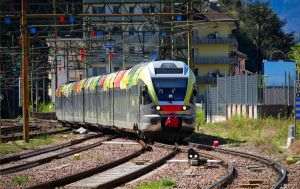
On the railway, the percentages are more generous than the reality experienced by passengers. The remaining portfolio includes ten projects, worth approximately 2.32 billion euros, with an average reported technical progress of 83.9% and a financial one of 69.1%. The figures, however, include the "Quick Wins” projects, one-off interventions that cannot be confused with the full modernization of a highway. The Cluj-Napoca-Oradea-Episcopia Bihor line remains a construction site with renegotiated intermediate thresholds, not a completed highway. The first sectors could be put into operation in 2027, and the entire corridor only in 2028-2029. On Caransebeş-Timişoara-Arad, only the Lugoj-Timişoara East lot remained relevant in the final configuration of the PNRR.
Digitalization most clearly reveals the structural failure. The component has only 373.81 million euros executed out of 1.74 billion, i.e. 21.5%. The government cloud infrastructure appears almost technically delivered, but the migration of administration applications to the cloud has a financial execution of approximately 2.5%. The eHealth system is around 8.7%, the electronic identity card remains close to zero in financial reporting, and automation, artificial intelligence and cybersecurity projects are seriously delayed. Romania can buy servers, but it cannot call the simple move of some boxes into a data center modernization, as long as the institutions do not communicate with each other, the applications are not migrated, and the citizen continues to carry the file with a rail between the counters.
Energy offers the cruelest image of the sacrificed ambition. The Energy component has an execution of only 13.9%, and REPowerEU of 5.9%. The 150 million euro program for the production, assembly and recycling of batteries has been eliminated. The target for green hydrogen has been reduced, contracts for the production of panels and hydrogen have been suspended, and the high-efficiency cogeneration objective has been cut from 300 MW to only 83 MW. The approximately 295 MW project in Craiova has been canceled. Romania is not only losing some positions in a European table, but the chance to build strategic industries in the fields of batteries, energy storage, photovoltaic panels and hydrogen.
The verdict on August 31, 2026 is harsh. Romania has collected almost 13 billion euros, built real works and used the PNRR to push forward investments that would otherwise have progressed much more slowly. The A7 to Bacău is the most spectacular proof. But the country is not completing the promised plan in 2021. It is closing it in an amputated version, almost nine billion euros smaller, with highways and railways removed, energy projects abandoned, hospitals and local investments eliminated, objectives transformed into intermediate thresholds and reforms sacrificed to protect clientele, privileges and balances in governing coalitions.
The biggest loss is not exclusively financial. Romania had at its disposal a rare mechanism, in which money was linked to the obligation to reform the state. It is precisely this conditioning that bothered the politicians who wanted the funds, but not the change of rules. They wanted billions for highways and buildings, but not the depoliticization of public companies. They wanted money for digitalization, but not transparency and interoperability. They wanted funds for administration, but not the salary reform. They wanted European tranches, but not the elimination of privileges.
The PNRR thus ends not just as a story about absorption, but as an indictment of political impotence. Romania saved an important part of the program by building, but it also saved it and amputated it until it fit in the remaining time. After August 31, construction sites will continue, but the bill for delays will no longer be able to be sent to Brussels. It will remain in Bucharest, on the table of a taxpayer who will pay twice: once through the missed European billions and once again through the taxes from which the projects that the state was unable to complete on time will be completed.
















 Euro
Euro Dolar SUA
 Franc elveţian
 Liră sterlină
 Gram de aur