 English
Major Belgian trade unions have called for two days of protests-today and Monday-with disruptions expected to affect air and rail travel as well as certain public services, DPA reports, citing Agerpres.
Approximately 140 flights to and from Brussels Airport are expected to be cancelled today after the ground handling company announced it would join the strike, the Belgian news agency Belga reported yesterday.
Belgium's second-largest airport-Charleroi-plans to operate all scheduled flights.
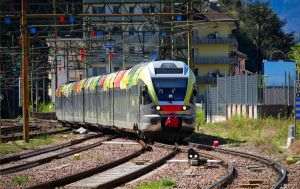
The national rail operator, SNCB, announced that services might run on a reduced schedule from Sunday evening through Monday, as many railway employees are set to participate in the strike.
Other services likely to be affected by the protest action include public transport, education, and waste collection.
The Confederation of Christian Trade Unions (CSC) and the socialist union FGTB are jointly organizing the protests against the government's budgetary policies.
Today's demonstration in Brussels is expected to draw thousands of participants. In May, a similar protest attracted between 40,000 and 75,000 people, according to police and union estimates, respectively.
Belgium has a high level of public debt and a persistently large budget deficit. Prime Minister Bart De Wever's government has set a target of saving ten billion euros by the end of its term in 2029.
De Wever is expected to address the Belgian Parliament on Tuesday. According to Belga, Belgium will submit its draft budget to the European Commission by October 15.
• Belgium's economy stagnates
Eurozone Gross Domestic Product grew by 0.6%, and that of the entire European Union by 0.7%, in the second quarter of 2026 compared to the previous quarter-when the eurozone reported stagnation and the EU economy saw growth of 0.1%-according to data published last month by the European statistical office (Eurostat).
Among EU member states for which data is available, the most significant growth in the second quarter of 2026 (compared to the preceding three months) was recorded in Ireland (10.2%), Slovenia (1.8%), and Lithuania (1.7%), while Romania, Belgium, and France each reported stagnation. Austria was the only EU member state to record an economic decline, of 0.1%. Compared to the second quarter of 2025, the economy grew by 1.2% in the euro area and by 1.4% in the European Union during the April-June 2026 period, following annual growth of 0.6% in the euro area and 0.9% in the EU in the first three months of 2026.
Among the EU member states for which data is available, the most significant growth in the second quarter of 2026-compared to the same period in 2025-was recorded in Malta (5%), Slovenia (4.8%), and Denmark (4.6%), while the only declines occurred in Romania (-2%) and Ireland (-0.4%).
















 Euro
Euro Dolar SUA
 Franc elveţian
 Liră sterlină
 Gram de aur































Reader's Opinion