English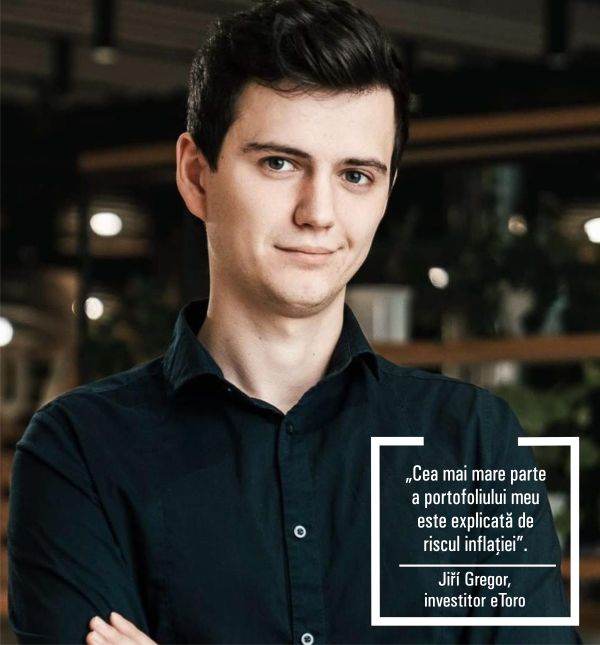
Reporter: You have a background in mathematics and also work professionally in asset-liability management in the insurance industry. How does that combination shape the way you think about risk and investment opportunities? Does it make you look at markets differently from the average retail investor?
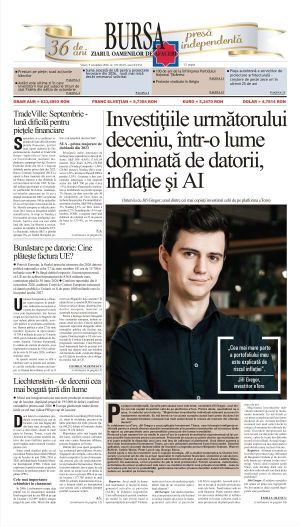
Jiøí Gregor: I studied maths and spent years as an actuary before moving into asset-liability management in insurance. That work teaches you that the dangerous risks are the slow ones. Everyone sees a crash. Few people notice how interest rates and inflation quietly change what a promise to pay in twenty years is really worth.
Most retail investors measure success in nominal returns. I ask what the money will buy in twenty years. That question matters more today than at any time in decades. Governments carry record debt, and historically the way out of record debt has been inflation. That one idea explains most of my portfolio, including bitcoin.
You describe yourself as a long-term investor influenced by Benjamin Graham and value investing. When a stock has fallen sharply, how do you decide whether it is genuinely undervalued-or whether the market is correctly warning that the business is in trouble?
Jiøí Gregor: A falling price tells me the market is worried. It doesn't tell me whether the worry is justified. I check whether the company can survive several bad years without new financing, whether the problem is cyclical or structural, and whether insiders are buying.
Inflation adds one more filter. If rates stay high for longer, cheap companies with a lot of debt are traps, because refinancing eats the value. I want net cash and pricing power. A low P/E on a weak balance sheet is how value investors lose money.
Reporter: Your portfolio combines fairly traditional value ideas-such as low-P/E, dividend-paying stocks-with assets like Bitcoin, gold and inflation-linked bonds. How do these very different investments fit together within one overall strategy?
Jiøí Gregor: I run it as two trades. The first is inflation. High public debt, fast money growth, tariffs and energy disruption around the Strait of Hormuz add up to an inflation wave the market isn't pricing yet. Gold or inflation-linked bonds would hedge that too, but I expect bitcoin to beat both. So bitcoin is my hedge, together with Cal-Maine. The second trade is software companies the market wrote off because of AI.
Bitcoin is where my value side meets my macro side. It has no earnings, and Graham would never touch it. But when governments inflate their debt away, scarce assets get repriced, and bitcoin is the scarcest asset I know. This decade is its first real test as an inflation hedge. I expect it to pass.
• Managing a Portfolio in Public
Reporter: You have invested on etoro for around six years, with more than a thousand people copying your portfolio. How does knowing that other people are following your decisions affect the way you invest? And what has it taught you about how retail investors behave when markets become volatile?
Jiøí Gregor: More than 1,100 people copy me, so I write down why I'm buying before I buy. If I can't explain a trade in two sentences on the feed, I don't make it.
I expected panic in every sell-off. It didn't happen. Most long-term copiers sit through drawdowns because they know the plan in advance. With bitcoin, I told them well ahead of time at what level I'll start trimming, and that I'll trim, not exit. Nobody has to guess what I'll do when the price moves.
Reporter: You have said that people who copy an investor should start small and build their position gradually. But you have also argued that investors need to understand the reasoning behind a trade. How do you encourage people who copy you to learn rather than simply follow your moves?
Jiøí Gregor: Start small, because you only learn your real risk tolerance when your own money is in the red. Then add over time.
Bitcoin is the clearest example. If you copy me because it went up last year, you'll sell it in the first 30% drop. If you copy me because you also think governments will inflate their debt away, you'll hold it. That's why I explain my trades on the feed. I'd rather lose a copier who disagrees than keep one who doesn't know what he owns.
Reporter: One of the hardest parts of investing is knowing when to remain patient and when to admit that your original idea was wrong. If an investment you believe in keeps falling, what signs tell you to hold, buy more, or change your mind?
Jiøí Gregor: Cal-Maine Foods, the largest US egg producer, fell hard as egg prices came down from record highs. I kept buying. It's a cyclical at the bottom of its cycle with net cash, and people won't stop eating eggs. Peter Lynch warned that cyclicals are easy to buy at the top and hard to buy at the bottom. And when inflation comes back, food is among the first things to get more expensive.
What would change my mind is the business: debt appearing, lost market share, bad capital allocation. A lower price alone won't. Patience turns into stubbornness when you start inventing new reasons to hold.
• How Much Information Is Too Much?
Reporter: You have said that investors probably need less information than they think, and that too much data can actually hurt decision-making. In a market shaped by wars, geopolitical tensions, changing interest rates and constant financial news, how do you decide what information really matters-and what investors should ignore?
Jiøí Gregor: In econometrics you learn that adding variables makes a model fit the past better and forecast the future worse. Investors do the same thing with news.
My filter is one question: does this change cash flows or inflation over several years? Hormuz does, because it feeds straight into energy prices. That's one reason I own bitcoin. Most daily headlines don't. I ignore price targets, quarterly GDP forecasts and anyone who explains yesterday's move with great confidence.
• Making the AI Agents Disagre
Reporter: One of the more unusual features of Investment Titans is that the AI agents do not simply give separate opinions-they can review and challenge one another's conclusions before producing a final investment view. Why is that debate important? Can disagreement between the agents help an investor avoid becoming too attached to one idea?
Jiøí Gregor: Because they disagree. Graham wants safety and a low price. Buffett wants a great business at a fair price. Lynch wants a story he understands. Soros watches macro and crowd psychology, and Cathie Wood looks for disruption.
Give them the same market and you see it. Buffett's agent picks Cal-Maine: a simple business, net cash, a product people buy every week. Cathie Wood's picks Tesla and doesn't care about eggs at all. Each is right within its own logic. The problem is that most investors mix the two logics: they buy Tesla for Wood's reasons and then sell it in a panic for Graham's. Comparing the Titans shows you which logic you're actually using.
Reporter: You created Investment Titans, where AI versions of investors such as Benjamin Graham, Warren Buffett, Peter Lynch, George Soros and Cathie Wood analyze investments from very different perspectives. Why did you choose such different investment styles, and what can an investor learn by comparing their answers?
Jiøí Gregor: In insurance, no model reaches the board without independent validation. Someone has to try to break it first. I wanted the same for investment ideas, especially because a single language model tends to agree with whoever is asking.
A funny detail: the Titans agree on one thing, and it's that none of them likes bitcoin. I've read their arguments, and I still hold it. You don't need the agents to agree with you. You need to know the strongest case against your position before the market shows it to you.
Reporter: You recently argued against the idea of a "SaaS apocalypse,” saying that AI may make software easier to build but does not necessarily remove the advantages of established companies such as Adobe, SAP and Monday.com. Over the long term, where do you think most of the economic value from AI will end up: with the companies building the AI models, established software companies selling AI to existing customers, or somewhere else entirely?
Jiøí Gregor: Most of it will go to the companies that already own the customer. AI makes code cheaper, but it doesn't make a large company rip out the SAP system that runs its accounting and supply chain. SAP, Adobe and Monday.com have the customers, the data and the workflow, and they can sell AI as an upgrade to people who already pay them.
The market prices them as victims of AI. I think they'll be among its biggest sellers, which is why I've been buying Adobe and SAP. The model builders will do fine, but they burn huge amounts of capital in a price war. Building the model is expensive. Owning the customer is where the money is.
Reporter: Thank You!






















 Euro
Euro Dolar SUA
 Franc elveţian
 Liră sterlină
 Gram de aur