 English


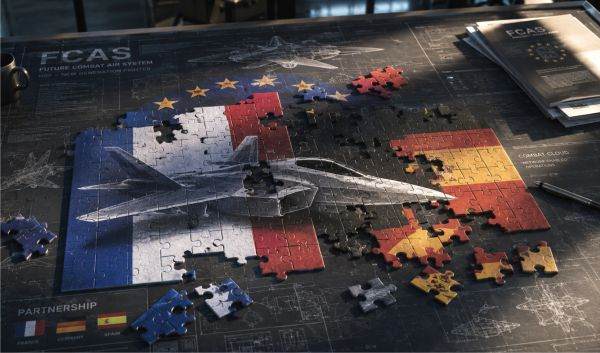
After almost a decade of promises, negotiations, disputes and billions of euros planned for investment, one of the most ambitious defense projects in European history has officially come to an end. According to articles published on the news websites of the ARD and ZDF television channels, Germany and France have decided to stop the joint development of the fighter aircraft of the future within the framework of the FCAS (Future Combat Air System) program, transforming what was supposed to be the symbol of European strategic autonomy into a resounding failure of industrial and political cooperation between the two great powers of the European Union.
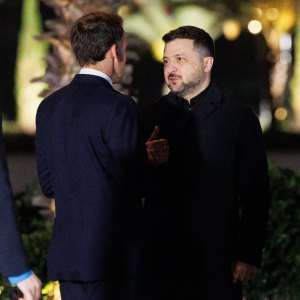
The decision announced by German Chancellor Friedrich Merz and French President Emmanuel Macron did not surprise anyone who followed the development of the project. For months, tensions between the European giant Airbus and the company Dassault had become impossible to hide, and differences over control of the program turned the partnership into a real war of industrial pride. Behind the diplomatic discourse of European cooperation and unity, a fierce struggle for power, influence and access to the technologies that will define the future of military aviation was taking place.
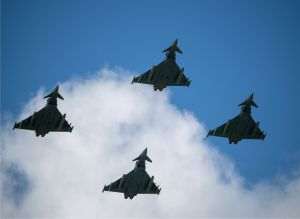
The FCAS was launched in 2017 by Angela Merkel and Emmanuel Macron, at a time when Europe was trying to strengthen its military and technological independence. The program was to become the largest European defense project, estimated at around 100 billion euros. The objective was to develop a new fighter jet capable of replacing the Eurofighter aircraft used by Germany and Spain, as well as the Rafale aircraft in France, by 2040. Around this aircraft, an entire military ecosystem was to be built, consisting of autonomous drones, connected combat systems and the "Combat Cloud” - a digital network that would allow the instantaneous exchange of information between all platforms involved in operations.
The ambition was huge. So were the economic interests. However, differences of vision soon began to erode the foundation of the project. Dassault has repeatedly claimed the role of absolute leader of the program, claiming that it has the essential skills to develop the new aircraft. The company's director, Eric Trappier, has sent out unequivocally, according to ARD, that he does not want a divided leadership and that projects of such complexity need a single chief architect. The message was received in Berlin as an attempt to transform Airbus and the other European partners into simple subcontractors of French industry.
Suspicions quickly grew. In Germany, the perception grew stronger that France sought to retain technological and industrial control over the program, while the German partners would have been called upon mainly to contribute to the financing. In a context in which Paris is facing budgetary pressures and high public debt, these fears have become even more sensitive.
The differences could not be overcome from a military point of view either. Chancellor Friedrich Merz pointed out that France and Germany have completely different operational requirements for the next generation of fighter jets. France needs a plane capable of carrying nuclear weapons and operating from aircraft carriers, while the Bundeswehr has no such requirements. This reality raised the fundamental question of whether a single plane could simultaneously meet the needs of both states without major compromises.
As negotiations stalled, the German trade union IG Metall also began to openly call for the abandonment of cooperation with Dassault. Airbus, for its part, hinted that it might support the development of separate platforms, which was a clear signal that trust between the partners had almost completely disappeared.
Finally, Berlin took the first step. German government sources revealed to ARD that Merz had recommended that Macron abandon the idea of building a joint plane. The subsequent confirmation from the Elysee Palace was worded coldly and almost defensively, suggesting that the German authorities considered it impossible to exert further pressure on the companies involved. Even the way the end of the project was communicated highlighted the persistent tensions between the two capitals.
The consequences go far beyond the simple cancellation of an industrial program. The failure of the FCAS represents a severe blow to the idea of an integrated European defense industry and raises questions about the European Union's ability to develop major strategic projects without national conflicts. In a period marked by the war in Ukraine, the global competition for military technologies and the pressures generated by the accelerated rearmament of the great powers, the inability of the two political engines of Europe to cooperate effectively conveys a worrying signal.
For Germany, the immediate problem is to find a replacement for the Eurofighter. Britain seems unavailable, having already been involved with Japan and Italy in the GCAP project, which aims to develop a sixth-generation aircraft. On the other hand, Sweden and Saab appear as credible options for future collaboration. In parallel, the expansion of purchases of American F-35 aircraft is not ruled out, a solution that would ensure the continuity of military capabilities, but which would increase European dependence on US defense technology and infrastructure.
On the political front, reactions have been mixed. German Defense Minister Boris Pistorius acknowledged, according to ZDF, that the abandonment of the project is painful but inevitable. Other leaders of the governing coalition argued that, after years of deadlock and uncertainty, clarifying the situation allows for the identification of new and more balanced partnerships. The opposition, however, sees the collapse of the FCAS as a major failure of European security and defense policy, arguing that political leaders have failed to impose the necessary discipline on the industry.
Paradoxically, the FCAS is not disappearing completely. Germany and France intend to continue collaborating to develop the "Combat Cloud” component, the digital infrastructure intended to connect future combat platforms. At the same time, a new industrial alliance is beginning to take shape around Airbus, called "Team Gen 6”, which brings together some of the most important German companies in the aerospace and defense fields. This initiative could become the core of a new European program, built on other bases and with other partners.
Airbus wants to continue project with German companies
After Germany and France abandoned their FCAS plans, a group of eight defense and aerospace companies, led by Airbus, is planning an alliance to develop a new European fighter jet, according to an article published yesterday by the German website Welt.
According to the cited source, the alliance, called the "Gen 6 Team”, is expected to be presented at the ILA air show in Berlin this week, the "Financial Times” reported on Tuesday. In addition to Airbus' defense division, the companies involved are Autoflug, Diehl Defense, Hensoldt, Liebherr, MBDA, MTU Aero Engines and Rohde & Schwarz, which informed Chancellor Friedrich Merz and Defense Minister Boris Pistorius about the project in a letter. The new alliance aims to demonstrate that German industry is ready to develop a sixth-generation fighter jet with European partners, sources familiar with the project told Welt.
The sources said that one possibility would be to continue the FCAS project with Spain or conclude a partnership with Sweden, but Welt said that representatives of Airbus, Hensoldt and Rohde&Schwarz declined to comment.




















 Euro
Euro Dolar SUA
 Franc elveţian
 Liră sterlină
 Gram de aur





























