English

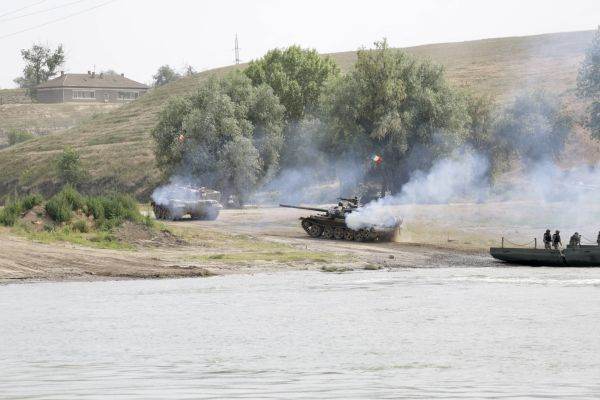
The procurement of military equipment and weapons through the SAFE mechanism by our country would be directed by the authorities in Bucharest so that only certain companies benefit from the funds, according to an article published on Thursday by Defense Industry Europe.
The cited source gives as an example, in this regard, what is happening with the approximately 3 billion euro program for the acquisition of infantry fighting vehicles (MLI), in a context in which official statements, the evolution of negotiations and the manner of applying the SAFE mechanism raise serious suspicions about the transparency and fairness of the process. The authors of the respective article claim that the Ministry of National Defense has indicated that the MLI program, valued at 3 billion euros, is about to be awarded to Rheinmetall, despite the controversies related to the price increase of 30% or even more. According to sources quoted by Defense Industry Europe, Minister Radu Miruţă reportedly acknowledged this understanding in a recent question-and-answer session with journalists, even after, in public statements, he had criticized suppliers who propose increases of over 30% and claimed that Romania would not accept such conditions.
"The MLI program will go to Rheinmetall,” said Radu Miruţă, when asked if other suppliers would be invited to submit offers if price negotiations with the preferred suppliers were not successful.
The cited source shows that, within this program, Rheinmetall is the only company that received the request for information (RFI) from the Romanian government, while other potential competitors were not invited to participate in the same process, which would have allowed the German company to propose a reduction in the number of vehicles instead of real price decreases, thus transferring the pressure of the negotiations to the Romanian state. This development reinforces the perception that major defense procurement programs are not conducted in a truly competitive framework, but rather on the basis of seemingly politically predetermined outcomes, which compromises transparency and fair competition in one of Romania's most important endowment programs.
Defense observers, contacted by the cited source, warn that the current procurement framework financed through the SAFE mechanism is being used in a way that limits competition and undermines institutional accountability, given that the MLI program, one of the largest land modernization efforts in recent decades, aims to deliver 298 infantry fighting vehicles, intended to replace outdated Soviet-era platforms with modern, NATO-compatible systems.
Beyond the military component, the program has major industrial and economic implications, as it is expected to generate local production, technology transfer and long-term integration into Romania's defense industrial base, making transparency and fair competition not just a procurement issue but one of national economic interest. In this context, Rheinmetall's Lynx platform, produced mainly in the industrial heartland of Hungary, clearly limits the potential for industrial value creation in Romania.
Similar concerns arise in other programs funded by SAFE, Defense Industry Europe argues, including the NATO Standard Individual Armaments Procurement Initiative, where industry sources indicate that several qualified suppliers, including FN Herstal, CZ Group, Beretta, Heckler & Koch and SIG Sauer, were associated with the program, but that detailed technical specifications and formal requests for proposals were ultimately sent to only one company. This practice raises not only fairness issues, but also procedural and legal risks, given that the SAFE implementing ordinance requires that requests for information be sent to all qualified suppliers and that a comparative assessment be carried out based on transparent criteria, including delivery times and price. A selective approach, in which only one supplier receives the full specifications and is invited to submit a detailed offer, may be considered incompatible with these requirements and may affect both the integrity of the evaluation process and the legal position of the state in the event of appeals by excluded bidders, the cited source states.
We note that the SAFE mechanism, initially introduced as an emergency solution to accelerate defense procurement and formalized by Emergency Ordinance no. 62/2025, was designed to allow for simplified procedures and centralized coordination at the level of the Prime Minister's Chancellery, but also includes clear guarantees to maintain competition. When there are multiple suppliers , authorities are required to send requests for information to all qualified candidates and to carry out a structured assessment based on delivery times and price. However, recent developments and proposed changes risk weakening these guarantees, through early designation of preferred suppliers, cooperation mechanisms between programmes and post-award adjustments, including price increases combined with quantity reductions, which may allow for the shaping of outcomes in advance, rather than through open competition.
At the same time, the flexibility of location requirements, such as the aggregation of commitments between programmes, may allow suppliers to fulfil their obligations only formally, limiting real industrial participation at project level, which risks diluting one of the central objectives of SAFE, which is to strengthen Europe's defence industrial base through broad participation, rather than by concentrating the benefits in the hands of a small number of established suppliers. Instead of stimulating balanced industrial development, this approach could lead to selective localization, in which economic gains are concentrated outside Romania, despite significant public investments.






















 Euro
Euro Dolar SUA
 Franc elveţian
 Liră sterlină
 Gram de aur