English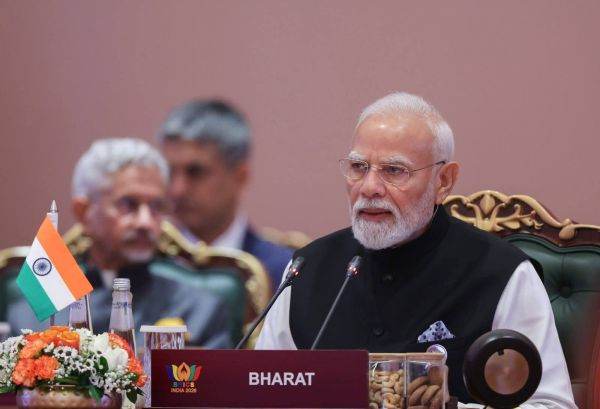
Indian Prime Minister Narendra Modi focused his remarks at the BRICS summit on the imbalance between the Global South's actual weight and the limited influence it wields within international institutions. He likened the current governance system to a pyramid where power and decision-making authority are concentrated at the top, while the majority of the world's nations remain at the base.
"The Global South is at the forefront of global crises but continues to be at the back of the line in the decision-making process. If our future is shared, then the right to shape it must be shared as well. From voice to impact. From privilege to partnership," Narendra Modi stated, according to The Indian Express.
The Indian Prime Minister called for emerging economies to move beyond merely complying with rules drafted by others and instead participate in their creation; he proposed a roadmap for global reform based on three elements: fairer representation, institutions capable of responding to crises, and the Global South's participation in setting international norms. Modi emphasized that systemic reform must begin with the UN and the Security Council but also extend to the international economic and financial architecture. Institutions established after World War II need to be adapted to the current distribution of population, production, and economic power, and emerging economies must be granted appropriate representation. According to the cited source, Narendra Modi stated: "We must focus on three key aspects: Representation, Responsiveness, and Rule-making. First, regarding representation: reform of the UN Security Council can no longer be postponed. Text-based negotiations on this subject must be tied to a defined timeframe and clear outcomes. Similarly, voting power, leadership positions, and policy priorities within financial institutions must align with current economic realities. Nations driving global economic growth should also play a commensurate role in steering global economic governance. Public trust in global institutions will be strengthened only if they prove capable of effectively resolving issues. We must focus on the speed, scale, and ultimate impact of our collective responses." However, the Indian Prime Minister distinguished the multipolar vision promoted by BRICS from the idea of a direct confrontation with the West: "BRICS operates by consensus. We are not against anyone; we aim to build a more inclusive, equitable, and prosperous world." For India, strengthening the New Development Bank, utilizing local currencies, and interconnecting payment systems should complement IMF and World Bank reforms rather than immediately causing a rift with them, the Indian Prime Minister added.






















 Euro
Euro Dolar SUA
 Franc elveţian
 Liră sterlină
 Gram de aur