English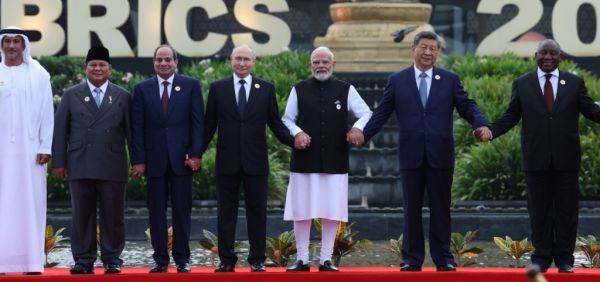
The New Delhi summit, held last weekend, did not create a common currency, transform BRICS into a military alliance, or offer solutions to the wars dividing its members. However, it demonstrated the group's ability to forge a compromise between India-which advocates for a pragmatic, non-aligned BRICS-and Russia and China-which view it as an alternative pole to the West-alongside other emerging economies primarily interested in finance, trade, and international representation. BRICS showed it could remain united at the negotiating table and challenge the Western-dominated world order, yet it has not yet proven capable of acting in unison when major crises demand more than just cautious statements.
The key achievement of the September 12-13, 2026 meeting was the consensus adoption-on the first day-of the New Delhi Declaration. This 140-paragraph document challenges sanctions and protectionism, calls for the reform of the UN, IMF, World Bank, and World Trade Organization, and advocates for stronger representation for the Global South, all without transforming BRICS into a military alliance. The document demonstrated that the expanded group can maintain a facade of unity even when its members are divided by wars, strategic rivalries, and conflicting economic interests.
The meeting between Narendra Modi and Vladimir Putin on the sidelines of the summit reaffirmed the strategic nature of the India-Russia relationship. The two leaders discussed oil, defense, nuclear energy, the steel industry, rail transport, critical minerals, and industrial projects, reaffirming the goal of raising bilateral trade to $100 billion by 2030, up from nearly $70 billion currently. India is seeking to narrow the trade imbalance caused by massive imports of Russian oil and is calling for broader access to the Russian market for its own products. Vladimir Putin used the BRICS Business Forum to argue that the old centers of the global economy are being replaced by "new engines of growth." According to the Russian leader, BRICS nations generate approximately 40% of global GDP, compared to around 29% for the G7. He urged the group to move beyond political declarations toward concrete projects in technology, infrastructure, investment, energy, food security, and cross-border payments.
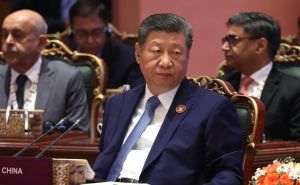
On the first day of the summit, Xi Jinping called for BRICS to become an active mediating force in the Middle East and the Persian Gulf; he rejected protectionism, unilateral tariffs, and the "decoupling" of economic supply chains, while advocating for cooperation in artificial intelligence, open-source technologies, space exploration, and internet governance. China will assume the BRICS presidency and host the 2027 summit.
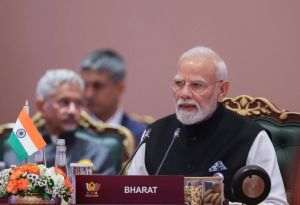
Narendra Modi steered the meeting in a more cautious direction. The Indian Prime Minister called for replacing the "pyramid of privilege" within the international system and transforming the Global South from a mere beneficiary into a participant in shaping global rules. He called for a timeline for UN Security Council reform but insisted that BRICS is "not against anyone," thereby distancing India from the explicitly anti-Western stance promoted by Russia and-to a more nuanced degree-by China. The declaration notes Moscow and Beijing's support for a greater role for India and Brazil within the UN, without unequivocally endorsing the immediate granting of permanent Security Council seats.
On the sidelines of the summit, Modi and Xi held their first meeting in seven years and agreed to pursue a "fair and reasonable" solution to their border dispute. The two Asian powers aim to revitalize economic ties, air travel, and people-to-people exchanges, although India makes normalization conditional on maintaining peace at the border and demands a reduction in its massive trade deficit with China. Bilateral trade reached approximately $155.6 billion in 2025, yet India's deficit is estimated at between $112 billion and $132 billion.
Regarding de-dollarization, the summit favored pragmatism over a dramatic break. No common BRICS currency was adopted, nor was a firm plan established to replace the dollar. Members agreed to continue studying the interoperability of national payment and financial messaging systems and to expand trade settlements and investments in local currencies. The strategy aims to gradually reduce reliance on the dollar by linking existing financial infrastructures, without imposing a one-size-fits-all solution on member states.
• The new direction of BRICS: shared artificial intelligence, independent supply chains, and a new financial architecture
Chinese President Xi Jinping, Indian Prime Minister Narendra Modi, and Russian President Vladimir Putin used the second day of the BRICS summit in New Delhi, highlighting the group's ambition to become the economic, technological, and political hub of the Global South.
Xi Jinping presented the most extensive list of concrete projects, proposing five initiatives focused on artificial intelligence, trade, the digital industry, smart manufacturing, and workforce training. The Chinese leader argued that the collective rise of the Global South has become a key driver of the transition toward a multipolar world, yet he warned that international instability compels BRICS nations to assume a more active role.
"To bring stability to the world and make it a better place, BRICS countries must seize the historic initiative, unite the Global South, and become an active, stabilizing, and positive force in international affairs," Xi Jinping stated, according to the official speech published by the Xinhua news agency.
The Chinese President rejected the notion that powerful states can dictate the rules of the international system and called for the application of the same norms to all countries, without double standards.
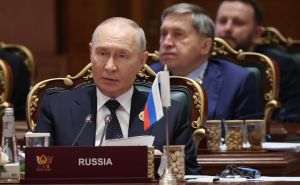
"A world without rules is like an intersection without traffic lights, where chaos and disorder are almost guaranteed. Equity and justice are universal aspirations, and international rules must be drafted by all nations. The logic that "might makes right' is invalid and should have been abandoned long ago," the Chinese leader asserted. Regarding development, the Chinese president stated that the Global Development Initiative, launched by Beijing five years ago, has enabled the implementation of over 2,000 projects, the training of more than 200,000 specialists, and support for populations in over 120 countries. Indian Prime Minister Narendra Modi presented a plan to establish a BRICS network connecting startups and business incubators, as well as a proposal to create an innovation fund. In agriculture, a joint digital network is intended to combine artificial intelligence, geospatial technologies, and digital public infrastructure with the practical needs of farmers.
"Weaponizing technology and critical minerals can hinder our shared progress. That is why I have emphasized inclusivity in technology adoption," Modi warned, according to the "Hindustan Times"-a message delivered amidst intensifying global competition for lithium, cobalt, nickel, copper, graphite, and rare earth elements.
In the energy sector, member states have established a Digital Center of Excellence for smart grids and energy storage, aimed at making clean energy systems more reliable, efficient, and affordable.
Vladimir Putin focused his remarks on Sunday on strengthening BRICS' own economic and financial infrastructure. "BRICS nations possess their own channels for the flow of goods, services, and capital, independent of external conditions. These already enable the efficient conduct of trade, banking, financial, and investment operations, despite external pressures," Vladimir Putin stated, according to the Russian newspaper "Kommersant" and the publication "Vedomosti". Russia is proposing the construction of BRICS infrastructure for payments, settlements, and financial asset custody, the establishment of a joint reinsurance mechanism, and the creation of a grain exchange. Putin also called for strengthening the New Development Bank and updating its operating model, including the creation of a platform to attract long-term capital, such as private funds. To date, the institution has financed 123 projects worth nearly $40 billion, yet the investment needs of BRICS members and partners are considerably higher.
Beyond geopolitics, the summit yielded a series of concrete initiatives in agriculture, health, energy, and technology. BRICS approved networks for agricultural resources, agroecology, and regenerative and digital agriculture, as well as a forum on farmers' rights within seed systems. A network of centers of excellence in mental health was established, and the BRICS Healthy Lifestyle Mission (2026-2029) was adopted. The group is also preparing a BRICS Space Council, the expansion of a joint remote-sensing satellite constellation, and cooperation in quantum technologies.














 Euro
Euro Dolar SUA
 Franc elveţian
 Liră sterlină
 Gram de aur