English

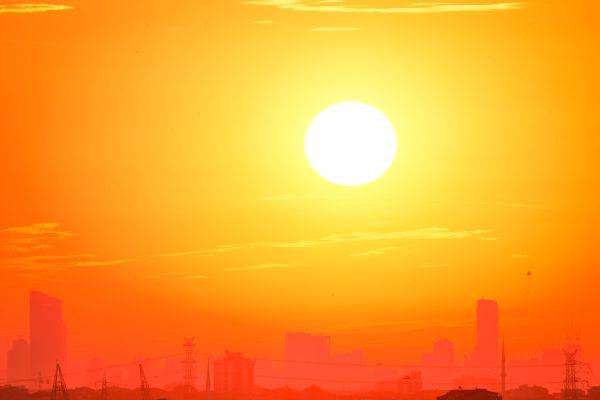
The planet continues to warm at an unprecedented rate, and the global climate monitoring infrastructure is threatened by budget cuts and geopolitical tensions, warn more than 70 scientists from 17 countries, in a report published in the journal Earth System Science Data and cited by AFP. The study, conducted with the participation of several authors from the UN Intergovernmental Panel on Climate Change (IPCC), updates the main climate indicators annually, without waiting for the next full IPCC report, scheduled for 2028.
• Human-induced warming reached 1.37 degrees Celsius
According to the report, global warming reached 1.39 degrees Celsius in 2025 compared to the pre-industrial period (1850-1900), and 1.37 degrees of this increase is attributed to human activities. The study authors estimate that the rate of anthropogenic warming has reached 0.27 degrees Celsius per decade, the highest level observed to date. "The rate of human-induced warming remains at the highest level ever,” the researchers emphasize.
• Earth's energy imbalance has doubled
According to the report's lead author, climatologist Piers Forster of the University of Leeds, the difference between the amount of solar energy absorbed by the Earth and that reflected back into space has doubled in recent decades. "Without human influence, this imbalance should be close to zero, but it has been increasing steadily since the 1970s and has reached a record high,” he explains. According to the researchers, the acceleration of warming is driven by both record levels of greenhouse gas emissions from burning coal, oil and natural gas, and a reduction in aerosol pollution, particles that had a partial cooling effect by reflecting solar radiation.
• 1.5 degrees Celsius threshold could be exceeded around 2030
The report shows that there are some signs of a slowdown in the rate of increase in carbon dioxide emissions, but these are insufficient to keep global warming below the 1.5 degrees Celsius threshold set by the 2015 Paris Agreement. According to researchers, in the absence of a rapid reduction in emissions, this threshold could be exceeded around 2030. Climatologist Aurelien Ribes, from Meteo-France, believes that keeping warming below 1.5 degrees Celsius "now seems impossible” if current trends continue.
• Sea levels and marine heat waves continue to rise
Updated data shows that average sea levels rose by 23 centimeters between 1901 and 2025, with the annual rate of increase currently reaching 3.84 millimeters. At the same time, the number of days with marine heat waves has tripled since the early 1990s, reaching 65 days in 2025. These phenomena affect marine ecosystems, favor extreme weather events and amplify risks for coastal areas.
• Global climate monitoring systems, threatened by budget cuts
One of the main concerns expressed by the authors, however, concerns the scientific community's ability to continue monitoring the climate accurately. According to the report, many Earth observation programs based on satellites, ocean beacons, weather stations and other instruments are affected by funding cuts, especially in the United States. Samantha Burgess, from the European Centre for Medium-Range Weather Forecasts, warns that ocean observations are essential for understanding how the oceans absorb heat and influence atmospheric circulation and weather patterns. The report also highlights the reduction in funding for the World Meteorological Organization (WMO), the halving of the budget for the World Climate Research Program (WCRP), and the vulnerability of the Global Climate Observing System.
• The planet's "vital signs” are deteriorating
According to Professor Peter Thorne, an IPCC member and researcher at Maynooth University in Ireland, climate indicators are "the vital signs of a patient whose symptoms are becoming increasingly worrisome.” According to the researchers, without the maintenance and development of global observation systems, the ability to anticipate and manage the effects of climate change could be seriously impaired, at a time when global warming is accelerating.
























 Euro
Euro Dolar SUA
 Franc elveţian
 Liră sterlină
 Gram de aur