English

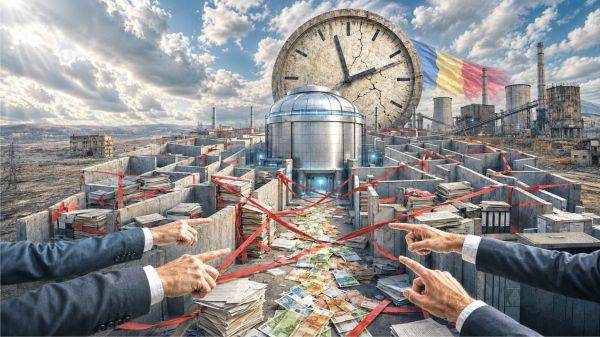
The Doiceşti small modular reactor project, announced as one of Romania's most important energy investments and the first project of its kind in Europe based on American NuScale technology, has reached a point where the main question is no longer when construction will begin, but who is responsible for the accumulated delay, the increasing costs and the corporate architecture that allowed a strategic state investment to advance slowly, with fragmented decisions, divided responsibilities and accusations launched only after the main operations were completed.
The FEED 2 phase, which in the initial schedule was to be completed by the end of April 2024, was only completed in December 2025, with a delay of approximately 20 months. Under these circumstances, the stages that provided for site preparation, construction start in 2026, module installation in 2029 and commercial operation by early 2030 can no longer be treated as firm milestones, but as the expression of an outdated schedule before the project actually reaches the construction phase.
The summary of the Prime Minister's Control Body report published on the Government's website on Monday evening indicates a series of deficiencies at the Nuclearelectrica level: insufficiently anticipated delays, the selection of the Doiceşti site without a quantitative comparative analysis explaining why the location ranked second by the American consultant was preferred, the choice of Nova Power & Gas as a private partner without a competitive procedure and without a comparative assessment of the capacity of other investors, the establishment of a project company in which SNN and Nova hold equal shares, although the financing of RoPower Nuclear's activity was mainly ensured through loans granted by the state company, as well as the acceptance of clauses considered unbalanced to the detriment of Nuclearelectrica.
• The land required for the project has increased in value by over 15 times
The report also attacks the transaction regarding the site, showing that Nova Power & Gas bought the land of the former thermal power plant with an effective cost of approximately 2.8 million euros, and RoPower subsequently acquired it for approximately 24.34 million euros, separately assuming the payment of approximately 19.49 million euros excluding VAT, approximately 22 million euros including VAT, through a re-invoicing agreement. Viewed in isolation, the sequence of amounts is explosive: an asset acquired for 2.8 million euros ends up implying a total obligation of over 46 million euros for the project company. This comparison is precisely what fuels the suspicion that the state-owned company would have accepted a disproportionate transaction, while the private partner would have benefited from a spectacular increase in the value of the site.
The documents presented by Nova Power & Gas, however, considerably complicate this narrative and show that the Government report uses a comparison that is effective in terms of media, but insufficient in terms of economics. Nova did not buy in 2021 and did not resell in 2025 identical assets. According to the company's position, at the time of the acquisition there were the land and buildings of a coal-fired power plant that had been shut down for approximately 12 years, along with the obligations of demolition, greening and closing environmental charges. At the time of the transaction with RoPower, the company claims that the site included approximately 50 hectares of greened land, the structures of the former power plant had been demolished, a new 110/20 kV transformer station had been built, there were six 110 kV power lines, access to the 220 kV infrastructure, modernized buildings, roads, parking lots, facilities and other energy assets. This difference in economic content is confirmed, at least in part, by the valuations attached by the company to its position sent to the Editorial Office. The report specifically prepared to substantiate the acquisition decision established a market value of 24,453,713 euros, of which approximately 7.4 million euros for land, approximately 1.9 million for buildings and over 15.1 million for special constructions and equipment. Other valuations, prepared for other purposes, indicated values of 57.29 million euros, ranges between 56.9 and 60.3 million euros and, after the transaction, a range between approximately 61.6 and 65.4 million euros, with an average of approximately 63.5 million euros.
However, the experts of the Prime Minister's Control Body are right when they warn that these valuations cannot be mechanically mixed. The value of an asset for a transaction, the value intended for a contribution to the share capital and the fair value used in financial reporting are not necessarily identical. Evaluations may use different methods, have different objects and assumptions, and may include investments and works carried out in different ways. Therefore, Nova's claim that the average of the evaluations would have been approximately 45 million euros is not, in itself, a demonstration that the total price assumed by RoPower was correct. The directly relevant valuation for the purchase remains that of approximately 24.45 million euros. But the other valuations cannot be ignored either, because they indicate that the Doiceşti assets had, after modernization, an economic value much higher than the historical price of 2.8 million euros paid by Nova for the degraded site.
• Who commissioned the works carried out on the Doiceşti land?
This is where the real controversy begins. It is not the price of approximately 24.34 million euros that is the most difficult element to justify, since it is very close to the valuation made for the transaction. The central issue is the Re-invoicing Agreement through which RoPower committed itself to pay an additional approximately 19.49 million euros excluding VAT. Nova claims that this amount represents distinct works, specific to the preparation of the site for the nuclear project, carried out between 2022 and 2025 at the request of the mixed team formed by representatives of Nuclearelectrica, RoPower, Fluor Corporation and NuScale and validated periodically in technical meetings. The company states that it had even intended to transform the value of these works into a contribution to RoPower's capital and that it would not obtain a profit from the operation even if the invoice were paid.
The explanation is plausible, but it does not close the file. The fact that an expense was actually incurred does not automatically mean that it had to be paid separately by the buyer. For each amount, it must be established whether the work was ordered by RoPower or Nuclearelectrica, whether it was received, whether it was necessary for the project, whether the price was market, whether the supplier was affiliated with Nova and, especially, whether the value of the work had not already been included in the assessment of 24.45 million euros.
The Control Body's report shows that the re-invoicing agreement included financial costs, capital costs, expenses incurred before the association and invoices of approximately 5 million euros issued by a company affiliated with the seller. The report also claims that there was no unequivocal mandate from the project company for all of these works and that some of the costs even preceded the date of the site assessment.
This is where Nova's defense remains incomplete. The company states that all costs are real and verifiable, but the published annexes do not contain all the primary documentation necessary for a definitive conclusion: work orders, minutes of technical meetings, estimates, work reports, detailed invoices, receipt documents, confirmations from the beneficiary and a reconciliation between each re-invoicing investment and each element included in the assessment report. Without this confrontation, neither the Government's accusation of the payment of unjustified amounts nor Nova's thesis that every euro was owed can be considered definitively proven.
• The state postponed the project by rejecting decisions of the Nuclearelectrica AGM in April 2024
However, Nova brings a much stronger argument regarding the delays. Internal documents show that the company had been analyzing the site since 2020 for its own project, which involved a gas-fired power plant, photovoltaic capacities and battery storage. In correspondence from March and September 2020, the company's specialists requested information about the connection to the National Gas Transport System, the required flow rate, the cooling water supply, the possibilities of evacuating energy at 110 and 220 kV and the condition of the former thermal power plant's infrastructure. These documents contradict the hypothesis that Nova would have bought the site exclusively in order to later resell it to the nuclear project, after learning of the selection of Doiceşti.
More important is the notification sent on May 31, 2024 to Nuclearelectrica and RoPower. Nova indicated that, in the General Meeting of Shareholders of Nuclearelectrica on April 17, 2024, the continuation of the nuclear project, the entry of the Korean fund DSPE into the RoPower shareholder base, the FEED 2 contract and the technology license contract had not been approved. The company requested to be informed by June 30, 2024 whether RoPower still intended to buy the land and within what period, and in the absence of a transaction by July 30, it warned that it could not keep the site blocked indefinitely and that it would reallocate it to its own projects. Nova specified that, in that scenario, it would not request compensation for the costs incurred.
This document is essential for establishing responsibility. It shows that, in mid-2024, the private partner was not blocking the transfer of the land, but was demanding a decision. The blockage was within the corporate and political mechanism that controlled the project: Nuclearelectrica, its shareholders and, ultimately, the Ministry of Energy. If the acquisition of the site was delayed until June 2025, after the two-year period in which it would have been the special procedure provided for in Article 44¹ of the Companies Law is applicable, the available documents do not support the idea that Nova alone or mainly caused this postponement.
Nuclearelectrica's responsibility is nevertheless real and significant. The executive management and the Board of Directors had the obligation to rigorously substantiate the association, to compare potential partners, to negotiate proportional rights and obligations, to establish the financing method and to protect the public company against a situation in which it bears most of the risk, but does not have decision-making control. In RoPower, SNN and Nova each have 50% of the capital and balanced decision-making rights, while the project was financed mainly through Nuclearelectrica's loans. The Control Body's report claims that the private partner benefited from a more favorable withdrawal and capitalization mechanism of the credits, while SNN did not have a symmetrical right, although its financial exposure was much greater.
Nova responds that the SNN loans were commercial, granted at an annual interest rate of 12%, that Nuclearelectrica recorded revenues of 91.7 million lei by the end of 2025, and that the financing was guaranteed by intellectual property rights, pledges on assets and future benefits of the plant. The argument has weight, but it does not remove the imbalance. The interest recorded does not automatically transform the exposure into a safe investment. RoPower does not yet produce energy and does not generate its own commercial income, and its ability to repay depends on the continuation of the project, on obtaining external financing and on the success of a technology that has not yet been commercially exploited on an industrial scale in a plant of this type. If the project company can only pay from future financing or from new resources also provided by Nuclearelectrica, the interest recorded in the accounts is not equivalent to a profit achieved and free of risk.
• The Ministry of Energy did not fulfill its duties in the case of the Doiceşti SMR project
At the same time, the Government and the Ministry of Energy cannot behave as if they had discovered from the outside a corporate construction carried out exclusively by the management of Nuclearelectrica. The report even records that the Investors Agreement, the constitutive act of RoPower and the project stages were approved by the SNN AGEA Decision no. 9 of September 22, 2022, and the majority vote belonged to the representative of the Ministry of Energy. The state was the majority shareholder, the tutelary authority and the strategic beneficiary of the project. The ministry had the possibility and obligation to request a competitive selection of the partner, an economic test carried out before the association, clarification of the competition rules, the introduction of symmetrical rights, the establishment of proportional financing and the provision of land as a contribution in kind, if this was considered the safest formula. Instead of refusing or correcting the agreement, the state representative approved it.
Furthermore, the report criticizes the fact that the association was carried out without the procedure provided for by the Order of the Minister of Economy no. 1180/2021. If the tutelary public authority imposed such a procedure and then, through its own representative, voted on the association without verifying its existence and compliance, the failure also belongs to the Ministry, not only to the public enterprise. The Government can hold SNN administrators and directors accountable, but it cannot eliminate from the equation the responsibility of the shareholder who validated the decision. Another controversy concerns the modification of powers within RoPower before the purchase of the site. The threshold from which a contract had to be approved by the AGA was raised from over 5 million to over 50 million euros, with contracts between 20 and 50 million being transferred to the competence of the Board of Directors, and those up to 20 million to the competence of the General Manager. The rebilling agreement had a value of 19.49 million euros excluding VAT, but exceeded 20 million with VAT. The Control Body claims that the total payment obligation should have been calculated with VAT and that the agreement should have been approved by the CA, while SNN representatives considered the value excluding VAT to be relevant. Even if the legal dispute regarding the calculation of the threshold may continue, it is difficult to ignore the coincidence between the modification of the competence limits and the approval of an obligation located immediately below the threshold assigned to the general manager. In a project financed mainly by a public company, such an operation should have been subject to the highest level of control, not the most permissive interpretation.
Nova is trying to reduce the economic risk through successive buyout offers. The company offered to take the site back at the same price paid by RoPower and, depending on the situation, to reimburse the amount paid under the rebilling agreement or to waive the claim and cancel invoice. The May 2026 offer is valid until October 1, 2026. This availability is an important argument against the idea that Nova would have pursued an irreversible transaction from which to extract an unjustified amount. But the company's statement that RoPower "cannot record losses" is too categorical. The buy-back offer is limited in time, requires the acceptance and execution of a new contract and does not automatically cover all collateral costs: interest, commissions, taxes, subsequent investments, opportunity costs, studies that have become unusable or possible tax effects.
In addition, the buy-back offer can limit the patrimonial damage, but it does not retroactively repair any procedural violations.
• Who is to blame for the delay of the Doiceşti project?
Who is responsible, under these conditions, for the delay of the Doiceşti SMR project? The inconvenient answer is that there is not a single culprit, but the responsibilities are not equal either.
Nuclearelectrica is responsible for the substantiation, negotiation and administration of the project. Its management and administrators should have anticipated the duration of corporate approvals, negotiations, studies and financing, not presented them afterwards as almost inevitable causes of delays. These are precisely the elements that are normal in a nuclear project and should have been realistically integrated into the schedule from the beginning. The Control Body report correctly notes that corporate approvals were not unpredictable events, and the need for complex analyses was known from the moment the project company was established.
RoPower Nuclear is responsible for operational execution, contract control, cost verification and compliance with internal competencies. A project company cannot function solely as a vehicle through which money, assets and contracts are transferred, without its own strong verification and control capacity. The fact that SNN and Nova held equal shares does not eliminate the responsibility of RoPower management to protect the interest of the company, distinct from the individual interests of the two shareholders.
Nova Power & Gas is responsible for the transparency of costs and for demonstrating the full justification of the amounts re-invoiced. The company has credible arguments regarding the investments made, the existence of its own project and the fact that it was not it that blocked the purchase decision. However, being simultaneously a shareholder of RoPower, seller of the site and beneficiary of a receivable of almost 19.5 million euros excluding VAT, Nova was in a position of obvious economic conflict, which required stricter documentation than in a transaction between completely independent parties.
The least publicly assumed responsibility, however, belongs to the Ministry of Energy and the Government. The state approved the association, appointed or influenced the administrators, voted on the essential documents and had the power to stop or condition the project. The state also delayed or did not approve, at certain times, the continuation of the project, the entry of a new investor, the FEED 2 contract and the technological license. Nova's notification of May 2024 indicates exactly such a decision-making blockage. The government cannot subsequently transform Nuclearelectrica into a front that absorbs all responsibility for decisions approved by the Ministry's representatives.
Those who must answer are therefore not only the directors of a state-owned company, nor exclusively the private partner. The responsibility begins at Nuclearelectrica, continues at RoPower and Nova Power & Gas, and inevitably reaches the Ministry of Energy and the governments that approved the strategy, postponed the decisions, and let the project proceed without a real command center.
The Doiceşti project was delayed, ultimately, by the way the Romanian state chose to manage it. A company was created with equal control between a public and a private shareholder, but with disproportionate financing. Calendars were established that did not realistically include the time needed for approvals. Complicated and unbalanced clauses were negotiated. Strategic decisions were postponed, then the delays were presented as consequences of the project's complexity. The site was purchased after years of hesitation, but without all costs being reconciled in a form capable of eliminating suspicions. And now, the institutions and companies involved are transferring responsibility to each other.
• Nuclearelectrica: Delay of Doiceşti project insignificant because no binding deadlines were approved
SNN Nuclearelectrica rejects the conclusions of the Prime Minister's Control Body Report and claims that the Doiceşti SMR project was managed in compliance with the legislation and corporate governance rules, according to the point of view published yesterday on the Bucharest Stock Exchange website. The company states that the delay of approximately 20 months invoked by the Control Body does not represent a significant deviation, since the project stages were of an estimative nature and there were no binding contractual deadlines. According to SNN management, all necessary organizational measures have been adopted, and the complexity of a nuclear project of this type justifies any gaps compared to the initial planning.
Regarding the choice of the Doiceşti site, the company claims that the decision was based on technical studies and that there was no legal obligation to draw up a formal comparative analysis between the sites. SNN indicates that the selection was validated within several missions of the International Atomic Energy Agency (IAEA), which confirmed compliance with international standards for site selection and assessment.
Regarding the association with Nova Power & Gas and the establishment of RoPower Nuclear, Nuclearelectrica states that the entire operation was carried out in accordance with Law no. 137/2002 on mixed-capital companies and with the approval of the General Meeting of Shareholders, including the vote of the Ministry of Energy, the majority shareholder. The company also invokes the "Prudent Private Investor Test" (PIPT) analysis, carried out by Lotus Advisory Services, which would conclude that a private investor would have adopted the same investment structure.
Regarding the fact that Nova Power & Gas did not immediately transfer the land to the project company, but only granted a purchase option, SNN claims that this solution was deliberate and aimed at protecting the company's financial interests, avoiding blocking significant amounts before the technical feasibility of the project was confirmed through field investigations.
The company also states that the payment of the amounts requested by Nova Power & Gas through the Re-Invoicing Agreement is suspended because the supporting documentation is being verified through an ongoing forensic audit, and no payment will be made until all expenses are clarified.
In conclusion, Nuclearelectrica claims that all decisions regarding the Doiceşti SMR project were adopted in good faith, within the limits of the law and in the interest of the company and states that the Control Body's report does not identify the existence of any quantifiable damage to the company's assets.















 Euro
Euro Dolar SUA
 Franc elveţian
 Liră sterlină
 Gram de aur