English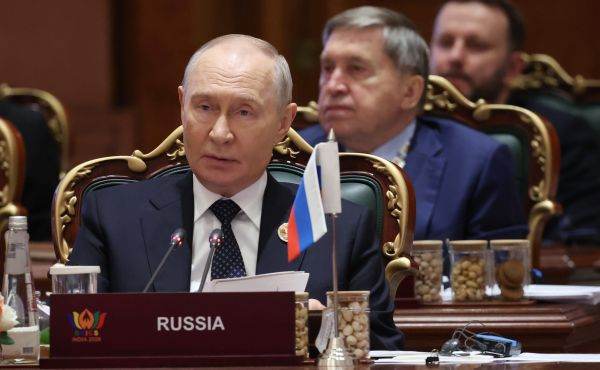
President Vladimir Putin stated at the BRICS summit that the international system designed to serve the interests of a select group of states can no longer be sustained, as economic, political, and technological power shifts toward the Global South and East. According to the Russian leader, the emergence of a multipolar world is meeting resistance from states attempting to preserve their privileges through sanctions, economic pressure, technological restrictions, and the fragmentation of international trade. "The unipolar system of international relations, which served a select group of countries, is becoming a thing of the past. The balance of power is shifting in favor of new growth centers in the Global South and East. An increasing number of states are clearly and unequivocally declaring their readiness to defend their national interests and participate in resolving global issues. However, as we can see, the formation of a multipolar world is not without its difficulties. It faces resistance from those accustomed to thinking in essentially colonial terms-dividing the world into a "blooming garden' and a "jungle'-and to living at the expense of others. They are unwilling to accept reality and strive to curb their rising competitors by any means possible. All methods are employed, including trade wars, illegitimate sanctions, attempts at economic coercion, blackmail, interference in internal affairs, and sheer brute force. Long-standing tensions are being reignited, sparking new conflicts and disagreements. Consequently, the entire system of international relations is collapsing, and the effectiveness of various multilateral structures and institutions is being undermined," stated Russian President Vladimir Putin, according to the Kremlin's Presidential Administration website.
In his address to the BRICS Business Forum, Putin noted that traditional economic centers are losing ground, while BRICS nations now generate approximately 40% of global GDP, compared to 29% for the G7. He accused the initiators of the sanctions of turning economic competition into a tool of coercion and attempting to limit rivals' access to markets, technologies, financing, and payment systems.
"We have always been told that competition is sacrosanct and should remain untouched. Yet, unfortunately, our Western competitors are trying by any means necessary to regain their former leading position. At the state level, this competition sometimes takes on ugly forms. It even involves the use of direct physical force or the destruction of industrial and logistical facilities, pipelines, and so on. Attempts are made to block international transport corridors and seize maritime vessels; illegal restrictions are imposed-alongside threats of so-called secondary sanctions-against those who refuse to act in others' interests and instead defend their own national interests. Over 30,000 sanctions have been imposed on Russia-nearly twice as many as those levied against all other countries in the world combined," Vladimir Putin stated, according to the Russian daily • Kommersant• .
During a meeting held on the sidelines of the summit with Dilma Rousseff, President of the New Development Bank (NDB), Vladimir Putin said-according to the Kremlin's Presidential Administration website: "We support attracting the largest possible number of participants and expanding programs to cover more sectors of the BRICS economies."
The Russian leader indicated that the NDB needs to broaden its geographical scope, the areas it finances, and its capacity to support projects in emerging nations. From Moscow's perspective, the bank must become one of the financial pillars of multipolarity and reduce the dependence of BRICS members on institutions and mechanisms controlled by the West.

















 Euro
Euro Dolar SUA
 Franc elveţian
 Liră sterlină
 Gram de aur