English
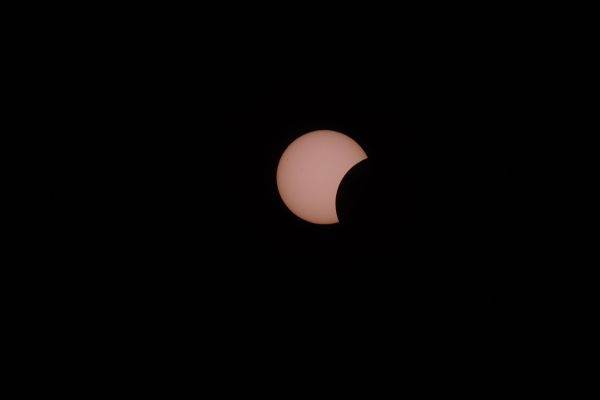
Correcting the location of an ancient Chinese city has enabled researchers to reconstruct a total solar eclipse from 709 BC with greater precision. This historical record helps in estimating the speed of Earth's rotation and could provide insights into solar activity in antiquity. A total solar eclipse observed in China over 2,700 years ago is helping researchers better understand how Earth's rotation has changed over time. An international team re-examined historical documents and astronomical calculations concerning the event of July 17, 709 BC, achieving a more accurate reconstruction of the phenomenon. According to a report published by ScienceDaily, researchers identified an error in the location of the ancient capital, Qufu-the seat of the court of the State of Lu. The coordinates previously used placed the city approximately eight kilometers away from its actual historical position. Correcting this discrepancy allowed for a more precise determination of the eclipse's path, enabling the observation to be used in the study of Earth's rotation. The research was conducted by an international team led by specialists affiliated with Nagoya University in Japan.
• Ancient documents as tools for modern astronomy
The eclipse is recorded in the Spring and Autumn Annals, a historical chronicle compiled several centuries after the event. The document notes that the Sun was completely obscured. This record is considered one of the oldest written accounts of a total solar eclipse that can be dated with certainty. Researchers have cross-referenced the ancient text with archaeological and geographical data, as well as modern astronomical models. The findings highlight the significant value of historical documents in studying phenomena that could not be measured using contemporary scientific instruments.
According to NASA, ancient records of solar and lunar eclipses serve as a vital resource for reconstructing variations in the Earth's rotation. By identifying the location and date of an astronomical event, researchers can compare the observed position with the position calculated via modern models.
• The Earth rotates at a variable speed
The Earth's rotation is not perfectly constant. Over very long periods, the planet tends to slow down-primarily due to gravitational interactions with the Moon and friction associated with ocean tides. Furthermore, fluctuations in rotational speed arise from other processes occurring within and on the surface of the planet. Observations of past eclipses allow researchers to estimate the discrepancy between time as calculated by astronomical models and time as dictated by the Earth's actual rotation. This information helps reconstruct how the length of a day has evolved over the centuries. A study published in The Astrophysical Journal Letters in 2025, titled "Analyses of the Ancient Chinese Report on the Total Solar Eclipse in 709 BCE: Implications for the Contemporaneous Earth's Rotation Speed and Solar Cycles," utilizes precisely this combination of historical documentation and astronomical calculation.
• Possible clues regarding the Sun's activity
Researchers also analyzed a later account of the eclipse, preserved in the Book of Han. The text, written approximately seven centuries after the event, describes the eclipsed Sun as being "completely yellow above and below.” One possible interpretation is that this passage refers to the solar corona-the Sun's outer atmosphere, which becomes visible during a total eclipse.
If this interpretation is correct, the description could represent one of the oldest written accounts of the solar corona. However, researchers advise caution regarding this conclusion, as the text was recorded long after the original event. The potential shape of the corona could offer clues about the Sun's activity during that period-including a transition back to a more active phase following a span of reduced activity. Nevertheless, this interpretation remains less certain than the reconstruction of the eclipse and the estimates concerning the Earth's rotation. The research demonstrates that records preserved by ancient civilizations can retain scientific value even after millennia. When correlated with archaeological data and modern models, the observations made by astronomers of that era provide insights into the evolution of our planet and the behavior of the star around which it orbits.



























 Euro
 Dolar SUA
 Franc elveţian
 Liră sterlină
 Gram de aur