English

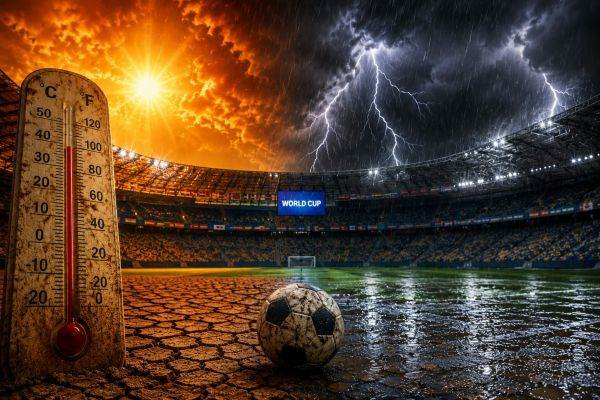
A quarter of the matches of the 2026 FIFA World Cup could be played in sweltering heat, at temperatures higher than those recorded in the 1994 edition, warn researchers cited by AFP and BBC. Climate change, heat waves, frequent storms and air pollution could turn the competition into a major test for players, organizers and fans alike.
• FIFA introduces mandatory cooling breaks
Aware of the risks associated with high temperatures, FIFA has decided that mandatory three-minute breaks should be introduced in all matches in each half, to hydrate and cool players. The measure is part of the athlete protection program, after six matches at the 2025 FIFA Club World Cup were affected by extreme temperatures and storms. One of the most spectacular situations was the two-hour delay of the match between Chelsea and Benfica. Chelsea F.C. coach Enzo Maresca declared at the time that the United States was "not the right place for this competition”.
• Temperatures could exceed 40 degrees Celsius
Cities such as Miami, Houston, Dallas, Atlanta, Kansas City and Monterrey are among the most exposed to the risk of heatwaves. In these areas, the usual maximum temperatures during the summer are between 33 and 36 degrees Celsius, but during heat waves they can reach 40 degrees Celsius or even more. In Miami, for example, a temperature of 32 degrees can feel like 43 degrees due to the high humidity.
• WBGT index indicates extreme heat stress
A key indicator for assessing risk is the WBGT (Wet Bulb Globe Temperature), which measures the combined impact of temperature, humidity and solar radiation on the body. A WBGT of around 28 degrees Celsius is considered the threshold at which heat becomes a serious problem for high-performance athletes. A study published in 2025 in the International Journal of Biometeorology found that 14 of the 16 host cities exceed this threshold on a typical summer afternoon. In six cities, including Miami and Houston, the index could reach 32 degrees Celsius, signaling extreme heat stress conditions.
• Final could be played in a heatwave
The World Cup final is scheduled for July 19 at 3 p.m. in the New York area. In the event of a heatwave, temperatures could reach 35 degrees Celsius. In addition to heatwaves, summer storms are another major threat. In cities like Miami and Atlanta, lightning strikes are common on summer afternoons and evenings. According to US regulations, if lightning is detected within 10 miles (16 km) of the stadium, the match must be suspended and cannot be restarted until 30 minutes after the last lightning strike.
• Wildfires and air quality, an additional risk
The wildfire season has started early in the United States, and smoke could affect visibility and air quality in host cities such as Los Angeles. In 2023, massive fires in Canada significantly degraded air quality as far as New York, forcing the cancellation of sporting and cultural events. For those attending the matches, high temperatures, storms and possible delays could affect transportation, schedules and accommodation. Postponed matches may end late at night, and temporary stadium evacuations are not ruled out.


























 Euro
Euro Dolar SUA
 Franc elveţian
 Liră sterlină
 Gram de aur