 English


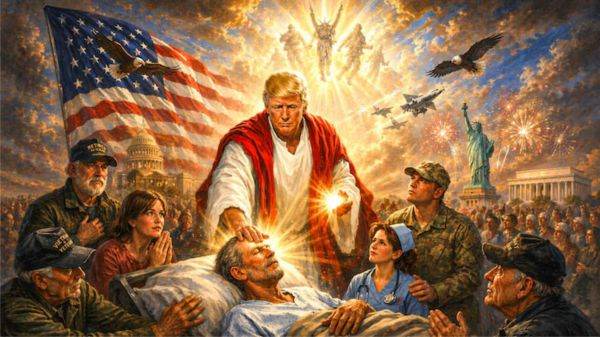
The elections in Hungary and Canada are the first clear symptoms of an international political isolation in full swing as far as Donald Trump is concerned. If this trend continues, the US president risks discovering that global power is not lost through a single major event, but through a succession of seemingly disparate signals that, once brought together, become impossible to ignore.
The crushing defeat of Viktor Orban and his FIDESZ party in last Sunday's parliamentary elections in Hungary, despite direct and intense support from the US administration, represents a setback for the influence of "Trumpism" globally. The visit of US Vice President JD Vance to Budapest and Donald Trump's telephone intervention at Viktor Orban's last campaign rally were intended as a decisive boost for a strategic ally. However, the result was the opposite: the electorate sanctioned not only Orban's 16-year rule, but also his association with an increasingly internationally controversial American leader. After the crushing victory achieved last Sunday, the future prime minister of Budapest, Peter Magyar, formulated perhaps the clearest sense of this rupture, stating that "Hungary must not be an appendage of any foreign agenda” and that "Hungary's future must be decided in Budapest, not in Moscow and not in Washington”, marking a strategic repositioning that goes far beyond the boundaries of domestic politics.
The signal sent from Budapest was amplified on Monday by the result of the by-elections in Canada, where Prime Minister Mark Carney obtained a simple majority in the House of Commons, enough to control essential parliamentary mechanisms and to consolidate his authority in relation to the United States. In his post-election speech, Carney summarized this paradigm shift in a formula that quickly made the rounds of the international press: "Canada will cooperate with partners, but will defend its interests without compromise”. Beyond the diplomatic tone, the message is clear: Ottawa no longer accepts a relationship of implicit subordination and is preparing for a tougher, more balanced and less predictable relationship with Trump's Washington. In a context in which the US administration has resorted to trade pressures, tariffs and aggressive strategic repositioning, Mark Carney's statement marks a fundamental break in the traditional logic of North American relations.
In parallel, the European front offers even stronger signals of this ongoing isolation. The open conflict between Donald Trump and Pope Leo XIV has exposed not only political divergences but also a deep fracture between American political discourse and the global moral authority of the Vatican. Trump launched a direct attack, stating: "I don't want a Pope who thinks it's okay for Iran to have a nuclear weapon,” continuing on the same note: "I'm not a big fan of the Pope... he's very weak.” As if that weren't enough, the US president also said of the leader of the world's 1.4 billion Catholics that "I don't think he should get involved in politics; he's a left-wing loser” and that his positions are "wrong on these issues.” The tone of these statements, rare in relations between Washington and the Vatican, provoked a wave of immediate reactions.
Pope Leo's response was formulated in a completely different register, but with a major symbolic force: "I do not want to enter into a debate with him; I do not believe that the message of the Gospel should be abused," said the Sovereign Pontiff, adding that he would continue to "speak strongly against war, for peace and dialogue." In another message, the Pope warned of a "spiral of violence" and described certain threats as "truly unacceptable." Without directly naming Trump in these formulations, the contrast between the two positions became evident: on the one hand, an aggressive political rhetoric, on the other, a constant call for balance and global responsibility.
The reactions of European leaders confirmed that this rupture is not an isolated one. Giorgia Meloni, until recently considered a natural ally of Trump in Europe, described the attacks as "unacceptable," emphasizing that it is "normal for the Pope to call for peace and condemn war." Moreover, the head of the Government in Rome believes that Donald Trump should apologize to Pope Leo, but the American president has claimed that he has no reason to reconsider his position. Meloni's attitude is all the more relevant as it comes from a political area close to conservatism, which indicates that distancing himself from Trump is no longer just an option of liberals or centrists, but is becoming a broader reflex of European leaders.
At the same time, British Prime Minister Keir Starmer sent one of the clearest messages of strategic autonomy from London, stating in Parliament that the war in Iran "is not Britain's war" and that the British government does not support the blockade established by the US in the Strait of Hormuz. The statement marks a major change in tone in the traditional relationship between Britain and the United States, suggesting that the era of unconditional alignment with Washington is being replaced by a more pragmatic and selective approach.
French President Emmanuel Macron and Spanish Prime Minister Pedro Sanchez also expressed similar sentiments, and while they reviewed the human rights violations by the regime in Tehran, they said that war was not the best way to resolve the differences. Moreover, Emmanuel Macron announced that France and Britain would organize a conference in the coming days, aimed at restoring freedom of navigation in the strait.
Taken together, these developments can no longer be interpreted as mere coincidences. They form a coherent pattern: Trump's political allies are losing elections, strategic partners are asserting their autonomy, and religious and political leaders of the Western world are reacting critically to his speech. What until recently seemed like a global network of influence, from Budapest to Rome to Washington, is fragmenting under the pressure of political realities and electoral reaction.
In this context, the elections in Hungary and Canada are not just points on the electoral map of the world, but landmarks of a broader process: the beginning of Donald Trump's international isolation. And this isolation is not manifested by a sudden rupture, but by an accumulation of signals - electoral, political, symbolic - which, put together, indicate a change in the architecture of Western power.





















 Euro
Euro Dolar SUA
 Franc elveţian
 Liră sterlină
 Gram de aur





























