English

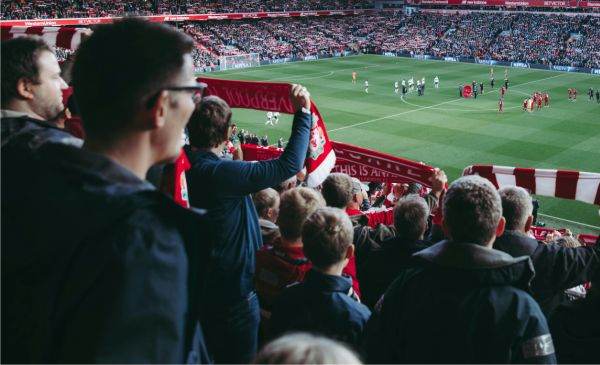
More than four years after the Russian invasion of Ukraine, European football clubs continue to transfer players to Russian teams in deals worth hundreds of millions of euros. According to an investigation by Follow the Money, these transfers represent significant financial support for Russian clubs and, indirectly, for the Russian state, while also providing the Kremlin with a propaganda tool that suggests that economic and sporting activity is continuing as normal, despite the war in Ukraine.
The investigation shows that, since the start of the large-scale invasion in February 2022, transfers totaling at least 277 million euros have taken place between European and Russian clubs, according to data from the football database Transfermarkt. Of this amount, Russian clubs paid around euro153.6 million for players from Europe, while euro123.6 million was transferred in the opposite direction. In the ranking of transfer values, French clubs lead with transactions exceeding euro62 million, followed by teams from Spain (euro48.3 million), Greece (euro34.4 million), Portugal (euro24.8 million) and Italy (euro22.3 million). At the individual level, Greek club AEK Athens ranks first in terms of transfer income with Russian teams, with around euro22 million for two players. They are followed by Paris Saint-Germain (euro20 million), FC Twente from the Netherlands and Real Sociedad from Spain (euro13 million each), as well as OGC Nice from France, with around euro12 million.
The most important transfer of this period was that of Russian goalkeeper Matvei Safonov, who moved from FC Krasnodar to Paris Saint-Germain in June 2024 for around 20 million euros, the largest sum paid in a transaction between a European and a Russian club since the outbreak of the war. The French publication Foot Mercato described the transfer as a "public relations victory” for the Kremlin. In December 2025, Safonov became the hero of the PSG team in the Intercontinental Cup final, played in Qatar, after saving four consecutive penalties. Images of the Russian goalkeeper being celebrated by his teammates went around the world. However, media reports often failed to mention the controversy surrounding the way the payment to the Russian club was made, in the context of sanctions imposed by the European Union.
• Russian clubs and state ties
The Follow the Money investigation shows that many clubs in the Russian top flight have close ties to the state or to companies close to the Kremlin. For example, Zenit St. Petersburg is owned by energy giant Gazprom, a company majority controlled by the Russian state. At the same time, clubs such as Spartak Moscow, Lokomotiv Moscow, Dynamo Moscow or Akhmat Grozny are associated with state-owned companies or economic entities involved in the Russian economy, including in sectors related to the defense industry.
Specialists believe that international transfers indirectly contribute to maintaining the flow of capital to these economic structures.
• Russian football, dependent on public funding
The financial situation of Russian clubs deteriorated significantly after their exclusion from European competitions organized by UEFA. According to a study published in 2024 by economists Ilya Solntsev and Andrey Kurov, the Russian league is already largely dependent on state subsidies, and after the outbreak of the war, the need for public funding increased. Financial reports of the Russian Football Federation and clubs for the period 2022-2024 indicate significant financial pressures, with owners having to inject additional capital to maintain the teams' activity.
In terms of the number of transactions, Bulgarian clubs have made the most transfers with Russian teams - 19, followed by those from Portugal, with 18 transfers made by 14 clubs. In Italy, 12 clubs from Serie A, B and C have had transactions with Russian teams. A Eurobarometer survey conducted in spring 2025 shows that the perception of the war in Ukraine differs significantly between European regions. Only 2% of Greeks, 8% of Spaniards, 9% of French and 11% of Italians and Portuguese consider the conflict a major problem at national level, although they recognize its impact on the European Union. In contrast, in the Scandinavian and Baltic countries the war is perceived as a direct threat, and almost no clubs from these states have made transfers with Russian teams.
• FIFA criticized for ambiguous stance
European clubs involved in these transfers often claim that the deals are allowed by FIFA, the world football governing body. However, several analysts have criticized both FIFA and UEFA for the lack of tougher measures against Russian football. Although Russian teams are excluded from international competitions, the Russian Football Federation continues to be represented in the administrative structures of both organizations. At the same time, FIFA introduced a rule in 2022 that allows players under contract with Russian clubs to suspend their contracts to temporarily play in other championships, without terminating them permanently.



















 Euro
Euro Dolar SUA
 Franc elveţian
 Liră sterlină
 Gram de aur