English


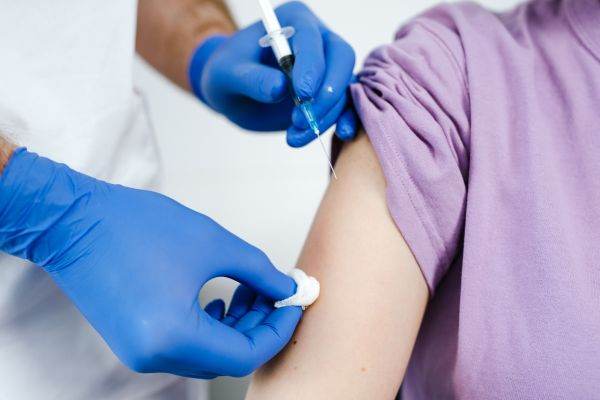
A vaccine developed exclusively with the help of artificial intelligence and tested on humans, a first in the medical field, has produced modest results in terms of stimulating the immune response, according to a study conducted by researchers at the University of Cambridge and cited by AFP. The results, published in June in the scientific journal Journal of Infection, show that the experimental vaccine, designed to provide protection against several infectious diseases, including COVID-19, did not cause a significant increase in antibody levels in the approximately 30 people included in the initial phase of the study.
• A step forward for the use of artificial intelligence in medicine
Although the effectiveness of the vaccine did not meet expectations, the researchers consider the project to represent an important methodological advance. According to the team at the University of Cambridge, it is the first time that a vaccine has been designed entirely with the help of artificial intelligence algorithms. The vaccine's active ingredient was developed using AI models trained on genetic data from several coronaviruses, including those responsible for COVID-19, SARS and MERS.
• The goal: to anticipate future mutations
The researchers sought to overcome the limitations of traditional vaccines, which must be updated regularly to keep up with virus mutations. Using artificial intelligence, the team aimed to predict how these viruses might evolve in the future and create a broad-spectrum vaccine that could protect against variants that don't yet exist. In a statement from the University of Cambridge, virologist Jonathan Heeney explained that such an approach could help break the "endless loop" of constantly updating vaccines by developing "future-proof" products.
• No serious side effects, but limited efficacy
According to the study published in the Journal of Infection, the vaccine was proven safe, with no severe side effects reported among participants. However, the immune response obtained was insufficient to demonstrate the efficacy that the researchers anticipated. The results suggest that the technology is still in its early stages and that further research is needed to determine whether artificial intelligence algorithms can contribute to the development of truly effective universal vaccines.
According to researchers at the University of Cambridge, the next stage will consist of a large clinical trial, which will include about 200 participants. This will assess the vaccine's ability to provide real protection against the targeted diseases and will allow a clearer understanding of the potential that artificial intelligence can have in the development of future generations of vaccines. Although the preliminary results are far from confirming the concept of a universal vaccine, the study opens a new direction of research in a field in which artificial intelligence is starting to play an increasingly important role.























 Euro
Euro Dolar SUA
 Franc elveţian
 Liră sterlină
 Gram de aur