 English


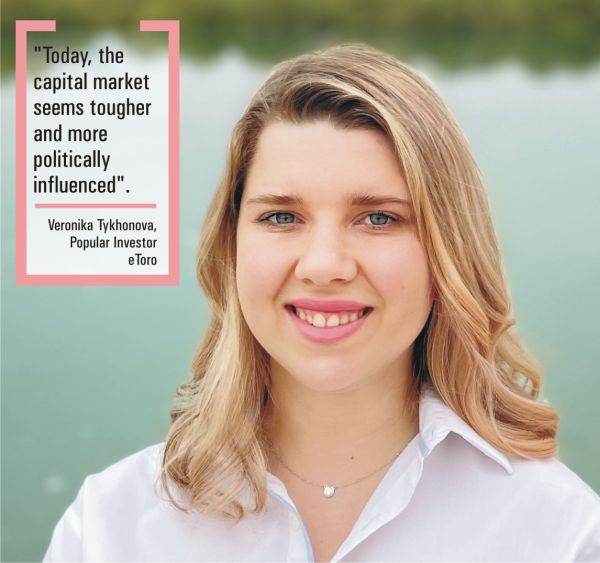
Reporter: How do you see the investment market evolving in the particularly harsh geostrategic and macroeconomic conditions we are currently experiencing?
Veronika Tykhonova: The market today feels tougher and more political. Easy money is gone. Volatility is normal now, not an exception. That changes how risk works.
On the macro side, we're seeing the delayed effects of decisions made over the last two years. Higher rates, trade barriers, and fiscal pressure are now hitting costs and profits. Growth still exists, but it's uneven and more fragile.
Political risk used to be seen as an emerging-markets issue. That's no longer true. It's everywhere. The US election cycle affects rates and tech regulation. Europe's security spending reshapes budgets and deficits. China-US tensions are redrawing entire sectors. Investors can't treat geopolitics as something separate from fundamentals anymore.
In this environment, investment decisions become more scenario-based than forecast-based. I don't ask "what's the most likely outcome,” but "what breaks if this goes wrong?” Diversification matters again, not as a slogan but as protection against political shocks. Concentration, leverage, and blind faith in historical averages feel dangerous. Flexibility, liquidity, and humility beat bold predictions right now.
Reporter: How do you feel as an investor at the moment?
Veronika Tykhonova: Market sentiment right now is about rotation, not exit. Big Tech sentiment is weak. After several losing weeks in the Nasdaq, investors are reassessing long-duration growth. At the same time, value and small caps are doing better - the Russell 2000 is up this year. Money isn't leaving the market, it's moving.
The mood feels split. Consumer sentiment improved in February, but the gap between people with portfolios and those without is clear. As an investor, I'd call it a nervous bull. There's an appetite to move, but confidence is fragile after the recent software-led sell-off.
This selectivity shows up across asset classes. Investors are skeptical of AI hype, but still fund AI with real utility, especially infrastructure. Traditional hedges have also changed. Gold and silver are more volatile and more tradable, which makes them less of a quiet hedge and more of a tactical asset. Bitcoin behaves similarly, moving with risk sentiment.
Personally, I feel grounded. By focusing on defensive growth, I stay invested without getting pulled into short-term noise.
Reporter: Were there situations or moments when you withdrew your money from one asset and invested it in another?
Veronika Tykhonova: Yes, but I see it as rotation, not abandoning assets. I reduced exposure where risk started to outweigh reward and redeployed into areas that fit my current strategy better.
I trimmed some growth and Big Tech positions as volatility increased and concentration risk became higher. Not because I lost faith in those assets, investing isn't about faith. It's about structure, numbers, and risk. At the same time, I added more exposure to value, industrials, defense, and infrastructure, where the risk-return balance looked healthier in this environment.
I did the same with metals. Gold and silver performed well, but they became more volatile and more crowded. When something runs too far in the short term, I'm comfortable taking profits, even if I like the asset long term. I don't stay in a position just because I like the story. I stay if it fits the strategy.
My focus right now is stable growth with lower drawdowns. That naturally leads to fewer concentrated bets and a clearer core-satellite structure.
And just to be clear, this isn't investment advice. My decisions reflect my role as an active investor and a popular investor on eToro. If I were a fully passive investor with a 10-plus-year horizon, my approach would be very different: more buy-and-hold, more dollar-cost averaging, and much less involvement.
On the second part of the question, I see on the losing side, growth-heavy and Big Tech stocks struggled after being priced for perfection. Even solid companies saw drawdowns as expectations reset. Traditional real estate also remained under pressure because higher rates continued to weigh on returns.
On the winning side, value-oriented stocks, small caps, and sectors linked to infrastructure, defense, and energy held up better. Those areas benefited from rotation and from real spending, not just expectations. Metals had strong periods, but they were volatile and more tactical than defensive, so I treated them carefully.
Reporter: What was the biggest disappointment, from an investment point of view, in 2025?
Veronika Tykhonova: Honestly, I wouldn't call 2025 a disappointing year. It was a strong year for markets, and for me, it confirmed a lot rather than breaking anything.
If there was one thing that stood out, it was how quickly optimism came back, even when risks were still there. Some assets ran ahead of fundamentals. That made positioning fragile. You could see it in how lump-sum or calendar-based investing struggled in a volatile year. Even good assets didn't protect investors if they were bought when expectations were already too high. It wasn't about bad companies. It was about bad timing and structure.
For me, 2025 was more about confirmation than disappointment. It reminded me not to confuse a good year with a low-risk one. Structure and diversification still matter, especially when volatility is part of the environment.
Reporter: Which investment areas have caught your attention this year?
Veronika Tykhonova: This year, my attention has been on areas where demand is real and less dependent on market mood. Infrastructure and energy stand out, especially anything related to power, grids, and industrial capacity. These are necessities, not trends.
I'm also watching smaller companies and industrial businesses more closely. After being overlooked for years, some of them are benefiting from rotation and more reasonable expectations.
Advanced manufacturing and automation are other areas I find interesting. Companies are still adjusting supply chains and investing in efficiency, and that creates steady demand even in a slower environment.
Overall, I'm paying attention to areas backed by spending and necessity, rather than stories that only work when markets are calm.
Reporter: What products, tools, service on the platform do you use or find very helpful?
Veronika Tykhonova: On eToro, what I value most is clarity and flexibility. I like that I can clearly see my performance and compare it directly to benchmarks like the S&P 500. That helps keep expectations realistic and decisions grounded.
The interface is simple and intuitive, which matters a lot. I can get the information I need quickly and build my own watchlists to follow ideas and themes in a way that makes sense to me.
I also use the AI tools. The daily AI-generated market summaries and stock news are genuinely useful, especially when time is limited. I see them as a support tool, not a decision-maker. The AI investment companion and live news feed help me stay informed without overload.
I also appreciate that the platform isn't rigid and works for different investing styles. And for beginners, the educational content is a big plus - it's accessible, free, and a good place to start.
Overall, a good platform should make investing clearer and easier, and that's what I get here.
Reporter: What is your investment strategy for 2026?
Veronika Tykhonova: For 2026, my strategy is built around managing volatility while staying invested. I use a core-satellite approach, which simply means most of the portfolio sits in stable, long-term investments, while a smaller part is used for selective opportunities.
The core is there to compound steadily and absorb market swings. The smaller, flexible part allows room to react when conditions change, without putting the whole portfolio under stress. This structure helps reduce the impact of drawdowns and keeps decision-making more disciplined.
I don't expect markets to move smoothly, so I prefer a setup that doesn't depend on perfect timing or strong convictions. Balance matters more than precision.
If there's one takeaway I'd share, it's this: be clear about which part of your portfolio is meant to grow quietly over time and which part is there for opportunity. Mixing the two usually leads to emotional decisions. A simple structure makes it easier to stay consistent when volatility picks up.
Reporter: Thank You!



















 Euro
Euro Dolar SUA
 Franc elveţian
 Liră sterlină
 Gram de aur





























