English


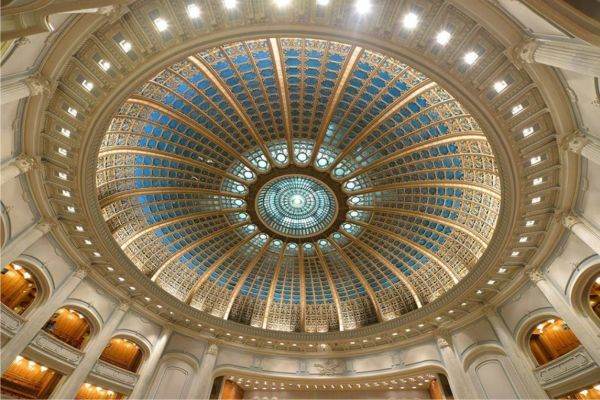
The current political class and the leaders of the parliamentary parties demonstrate, once again, that they do not care about the wishes of Romanian citizens, their daily lives, the well-being of those who voted for them and that they did not understand the negative vote received in the 2024 and 2025 elections. All parliamentary parties, both pro-European or pro-Western ones, as well as the sovereignist ones, of the opposition, have finished the first session of this year and as of today their deputies and senators are on summer recess. Without having a government with full powers at Victoria Palace, invested by the vote of a parliamentary majority, a government that manages the completion by August 31, 2026 of all projects financed from the National Recovery and Resilience Plan and that takes the necessary measures to relaunch the national economy and to continue reforms in local, county and central public administration.
The first ordinary session of 2026 thus ends in a climate of prolonged political deadlock, with failed negotiations between the main parties, with an Executive led by Ilie Bolojan remaining in the interim and with the prospect that Romania will have to wait at least a few more weeks until the designation and validation of a new cabinet.
According to some sources in the PSD, the party leadership estimates that there will be a period of approximately two weeks of "quiet" on the political scene, during which parliamentarians will be on vacation, and President Nicuşor Dan will continue separate discussions with political parties to test the possibility of forming a parliamentary majority. In the assessment of the Social Democrats, the head of state will not designate a candidate for the position of prime minister until he has the guarantee of the existence of a solid majority capable of supporting the future executive.
In this context, the interim government cannot adopt emergency ordinances and cannot promote essential legislative projects, which complicates both the management of public finances and the fulfillment of the milestones assumed by the PNRR, as well as the continuation of the reforms agreed with European partners.
PSD leaders argue that the realistic solution is to convene an extraordinary parliamentary session towards the end of July, when the Legislature would debate the projects necessary for the implementation of the PNRR and, if the political negotiations produce an agreement, to vote on the investiture of a new cabinet. However, even within the PSD there are reservations that all the projects related to the PNRR will be able to be adopted in the current political context, given that some of them, especially the law on unitary remuneration, generate major disputes and have a strong electoral stake.
The political deadlock persists because none of the formulas discussed so far manages to gather a clear majority in Parliament. According to information circulating in the political environment, President Nicuşor Dan has two variants of a minority government on his table, but both would need, directly or indirectly, the votes of the AUR to pass Parliament. Such a formula is rejected by the UDMR, which claims that it does not want an executive dependent on the support of the party led by George Simion. The union believes that the premises for an agreement could only exist towards the end of July and brings back into discussion the restoration of the PSD-PNL-USR coalition, considered the only one capable of providing the necessary parliamentary stability.
The President of the Senate, the liberal Mircea Abrudean, stressed that Parliament can be convened at any time in an extraordinary session, so that the investiture procedure can be completed even within 24 hours, if there is a political majority. He reiterated, however, that the PNL will not give a "blank check" to an executive led by Sorin Grindeanu and that any liberal support is conditional on the existence of a clear political agreement on the continuation of reforms, the implementation of the PNRR and the process of accession to the OECD.
At the same time, the PSD announces that it will not vote under any circumstances for a government led by Siegfried Mureşan, while the AUR rejects both versions of the executive under discussion and continues to support the organization of early elections, a scenario that does not, however, benefit from the necessary support in Parliament.
• A tense session in the governing coalition
The end, on June 30, 2026, of the first ordinary session of Parliament, which began on February 1, leaves behind one of the most tense and atypical legislative periods in recent years. The parliamentary agenda was dominated by clashes within the governing coalition, the unprecedented delay in the adoption of the budget law, votes that violated political protocol between the parties in power, and a motion of censure that confirmed the rupture of the parliamentary majority. At the same time, the Parliament managed to adopt a series of legislative projects considered essential for the implementation of the reforms undertaken through the PNRR, for fiscal consolidation, and for the continuation of public investments.
The highlight of the entire session was the adoption, almost three months behind schedule, of the state budget law and the state social insurance budget law for 2026. The government approved the drafts only in March, the joint parliamentary committees began debates on March 19, and the joint plenary of the Chamber of Deputies and the Senate adopted them on March 20, 2026, after four days of difficult negotiations, procedural deadlocks and disputes between coalition partners regarding allocations for social measures and investments. The delay meant that Romania had to operate for almost a quarter of the year on the basis of the provisional budget execution mechanism, a rare situation after joining the European Union and criticized by both the opposition and the business community.
After overcoming the budgetary impasse, Parliament focused its activity on the projects undertaken through the government program and through the milestones of the National Recovery and Resilience Plan. Normative acts were adopted regarding the reform of public administration and the digitalization of services, measures to streamline budget expenditures, fiscal and financial amendments aimed at consolidating the budget deficit, regulations on strategic investments, projects in the field of energy and energy security, as well as legislative packages to accelerate the absorption of European funds and to continue projects financed through the PNRR. Normative acts related to defense and security were also promoted, in the context of Romania's commitments within NATO and the deterioration of the regional security environment.
If from a legislative point of view the session produced important results, from a political point of view it was characterized by a constant deterioration of relations between the coalition parties. The governing protocol, which provided for mutual support of the Government and coordination of parliamentary votes, was repeatedly violated by voting on simple motions initiated by the opposition against some ministers of the Executive, especially the ministers appointed by the USR. In several cases, the PSD parliamentarians, the political party in power, voted alongside the opposition, transforming the simple motions from mere political instruments into true parliamentary sanctions against the ministers of the government that also included the social democrats. These votes represented the first clear signals that the parliamentary majority was functioning with increasing difficulty, and the political discipline provided for in the protocol had become purely formal.
The political crisis culminated in May, when the rift between the main coalition parties officially transferred to Parliament. On April 28, the PSD and AUR submitted a motion of censure entitled "STOP the "Bolojan Plan" to destroy the economy, impoverish the population and fraudulently sell state assets", and this was presented in plenary on April 29 and put to a vote on May 5, 2026. Unlike previous situations, when the coalitions in power defended their own government, the PSD voted to dismiss it, explicitly violating the coalition's political protocol. The motion of censure thus became the moment that formalized the breakup of the parliamentary majority and opened the process of political reconfiguration.
The parliamentary session was thus held under the sign of a paradox. On the one hand, the Parliament managed to adopt the most important normative acts without which the state could not have continued its normal functioning, led by the budget laws, as well as a series of reforms considered essential for Romania's relationship with the European Commission and for maintaining European funding. On the other hand, the same session highlighted the fragility of a majority that, although theoretically having enough votes to govern, repeatedly violated its own political commitments, both by supporting simple motions against Government ministers and by voting for the motion of censure that ended the collaboration between the coalition partners. From this perspective, the first ordinary session of the Parliament in 2026 will remain in political memory as one in which legislative activity and governmental instability evolved simultaneously, in a precarious balance, until the last day of the session.


















 Euro
Euro Dolar SUA
 Franc elveţian
 Liră sterlină
 Gram de aur