English


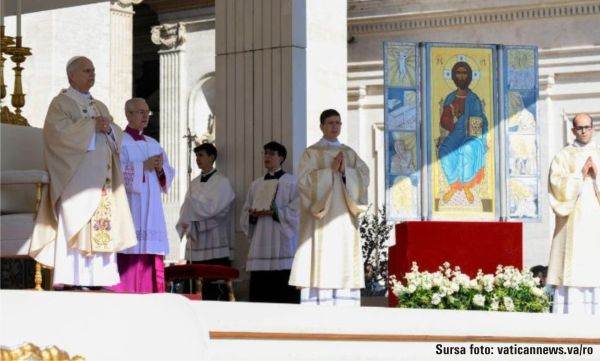
Thousands of faithful gathered in St. Peter's Square in the Vatican on Sunday to listen to the new Sovereign Pontiff, Pope Leo XIV, deliver his first Easter address. The message was a firm one, centered on the urgent need for peace in a world marked by conflicts and geopolitical tensions. Framed by white roses on the central balcony of St. Peter's Basilica, the pontiff launched a direct appeal to the world's political leaders: "those who have the power to unleash wars" must choose peace, AFP reports. "On this feast day, let us abandon every desire for conflict, domination and power and implore the Lord to grant his peace to a world devastated by wars," Pope Leo XIV said. His speech highlighted the risk of normalising violence: people are becoming "indifferent to the deaths of thousands of people”, a trend that the leader of the Catholic Church has openly condemned.
• The "Urbi et Orbi” tradition and the symbolism of Easter
After greeting the crowd, the Supreme Pontiff delivered the traditional "Urbi et Orbi” blessing ("to the city and the world”), one of the most important moments in the Catholic liturgical calendar. For believers, Easter marks the resurrection of Jesus Christ, a central event of the Christian faith. In this context, the Pope evoked the example of Christ, whom he described as "completely non-violent” in the face of suffering. St. Peter's Square was festively decorated with daffodils and thousands of brightly coloured flowers, symbolising rebirth and hope.
• A pontificate with diplomatic accents
The first pope born in the United States, Pope Leo XIV has already distinguished himself by his firm positions on international issues. In recent weeks, he has openly criticized global conflicts and advocated de-escalation. Unlike his predecessor, Pope Francis, the pontiff did not explicitly mention any conflict or country in his Easter address, preferring a general message with universal valences.
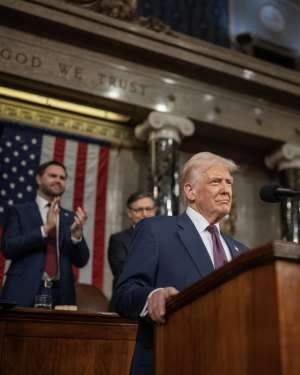
However, in recent interventions, the Vatican leader has made direct appeals to political leaders, including Donald Trump, whom he asked to identify an "exit ramp” for easing relations with Iran.
• Continuity and homage to predecessor
In his speech, Pope Leo XIV paid tribute to Pope Francis, who delivered his last Easter message just hours before his death. At the same time, the pontiff announced the organization of a prayer vigil for peace, scheduled for April 11, a sign of the continuity of his message centered on reconciliation and solidarity.
• A global call for responsibility
Pope Leo XIV's Easter message is part of a clear line of moral and diplomatic discourse, in which the responsibility for peace is placed directly on the shoulders of political leaders, but also of society as a whole. In a tense international context, the Vatican's appeal comes as a reaffirmation of its traditional role as a moral mediator on the global stage.













 Euro
Euro Dolar SUA
 Franc elveţian
 Liră sterlină
 Gram de aur