English

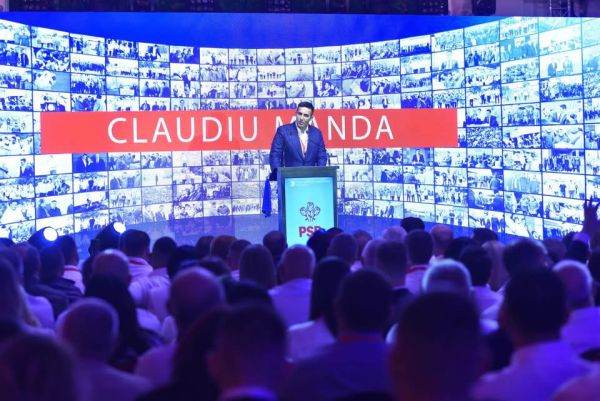
The PSD decision to remove Prime Minister Ilie Bolojan from the Victoria Palace seems to have been made before today's internal referendum, if we consider the statement of Claudiu Manda, the secretary general of the social-democratic political party.
Claudiu Manda said in the middle of last week: "Ilie Bolojan must go. We are in a situation where we go out on the streets and people ask us why we don't get rid of Bolojan. If the result of the vote is a majority, meaning that we can't continue like this, we expect the first gesture of responsibility from Ilie Bolojan. If more than half of those who supported him say they no longer want this formula, it would be right for him to say: "I understand, thank you for your collaboration.' If he doesn't want to resign, I think there will be a 48-72 hour deadline. If Ilie Bolojan wants to stay, not with us. We are withdrawing our ministers from the government. If Bolojan wants to continue to govern, very well, but not with us. Whether he wants to stay for 45 days or whether he wants to stay through a vote obtained from AUR, or through combinations with AUR, is his business. I find it hard to believe that USR and UDMR would remains in a minority government”.
But who is Claudiu Manda? The current secretary general of the PSD is not a politician built on public visibility or institutional performance, but one of the clearest examples of a career made inside the party apparatus, where loyalty, local control and connections at the top weigh more than results. His official career confirms this trajectory: formed entirely in the PSD Dolj, from the youth structures to the leadership of the branch, Manda has steadily climbed the hierarchy, becoming president of the county organization and later a national parliamentarian, before being sent to Brussels as an MEP. It is not a path of competitive merit, but one typical of internal power networks, in which loyalty and political utility are the real selection criteria. His rise cannot be separated from the high-level relationships cultivated during the period of maximum power of the PSD under Liviu Dragnea. The press documented that Manda was part of the narrow circle of influence around him, being one of the people promoted to key positions during the reconfiguration of power in the party. His appointment in 2017 to head the Parliamentary Control Commission of the SRI, directly supported by Dragnea, was the moment when Manda moved from the status of an influential local leader to that of a relevant actor in the state's power mechanisms. It was a sensitive position, which gave him access to information and influence, but which also placed him at the center of major controversies related to political pressure on institutions.
His role during that period was an active and conflictual one. Manda became one of the main promoters of the PSD's rhetoric against the intelligence services, demanding explanations and opening public investigations in cases targeting big names such as George Maior and Florian Coldea. Far from being a pure exercise of parliamentary control, this activity was perceived in the public space as part of a broader political war, in which state institutions were used as a battlefield between power groups.
In parallel, Claudiu Manda's image was affected by one of the most serious judicial episodes associated with a PSD leader of his generation. In 2021, the DNA sued him in a case regarding political interventions for blocking the recovery of illegally granted social benefits in Dolj County. Prosecutors claimed that Manda had used his influence to protect a group of beneficiaries, in an electoral context, the damage being estimated at over 300,000 lei. The case did not end with an acquittal on the merits, but with the termination of the trial following the intervention of the statute of limitations, a final decision recorded in the public space. This solution did not clarify his innocence, but only legally closed the file, leaving behind a persistent suspicion regarding the way in which political power can be used for electoral purposes.
If the domestic route and controversial episodes outline the profile of a man of the system, his activity at the European level raises even more uncomfortable questions. Public data analyzed by the press (Adevărul, Digi24, Europa Liberă) shows that Claudiu Manda is consistently among the Romanian MEPs with the worst performance in terms of attendance and involvement. In 2025, he was reported to have been absent from 26 of 65 plenary sessions, and the lack of public interventions in the plenary is total. Moreover, for the entire previous mandate in the European Parliament, he had no intervention in the plenary or any written statement, which places him in an area of almost parliamentary irrelevance. Previous analyses also showed a high level of absenteeism from voting, of over 40%, which placed him in the top of the least active MEPs, according to Politico and G4Media. In a legislative forum where visibility and influence are built through intervention, initiative and participation, Manda's balance sheet is, in real terms, almost nil.
However, internally, his career not only did not stagnate, but continued to climb. In 2025, Claudiu Manda became Secretary General of the PSD, one of the most important positions in the party, responsible for organization, discipline and internal control. His election to this position was not the result of a remarkable public performance, but of an internal power equation: his candidacy was supported by Olguţa Vasilescu and Sorin Grindeanu. It is the type of promotion that confirms the unwritten rule of the apparatus: it is not public performance that decides, but positioning in the network and the ability to deliver for the political leadership.
Overall, Claudiu Manda's profile is that of an efficient politician within the system, but poorly validated outside it. He has accumulated positions, influence and power, but without building a solid public legitimacy or a visible institutional balance sheet. The corruption case closed by statute of limitations, involvement in major political conflicts and almost non-existent activity in the European Parliament outline the image of a behind-the-scenes leader, not an active representative of the public interest. At a time when political discourse talks about reform and professionalization, the Manda case shows, perhaps more clearly than many others, how little the real selection and promotion mechanism has changed in the PSD.












 Euro
Euro Dolar SUA
 Franc elveţian
 Liră sterlină
 Gram de aur