English

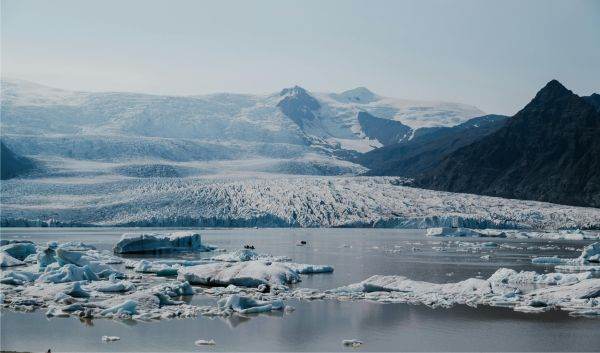
Thousands of glaciers around the world are at risk of disappearing every year in the coming decades, and only a small part of them could survive until the end of this century, in the absence of firm climate policies. The warning comes from a study published in the journal Nature Climate Change, cited by AFP, which highlights the direct impact of political decisions on the future of the planet's glaciers. According to research coordinated by glaciologist Lander Van Tricht, the pace of glacier disappearance could vary dramatically depending on the level of global warming. The measures adopted by world governments to combat climate change will decide whether humanity will lose about 2,000 glaciers per year or almost double, up to 4,000 annually, by the middle of the 21st century. "Our results underscore the urgency of ambitious climate policy," warn the study's authors, who point out that differences of just a few degrees Celsius can have irreversible consequences. The researchers show that limiting global warming to 1.5 degrees Celsius - the threshold set by the Paris Agreement - could allow the preservation of almost half of the current glaciers by 2100. In contrast, a warming of 4 degrees Celsius would leave the planet with less than 10% of the glaciers that currently exist. Even in the optimistic 1.5 degrees Celsius scenario, the current rate of disappearance, estimated at about 1,000 glaciers per year, would accelerate, reaching a peak of about 2,000 glaciers lost annually around 2041. Under these conditions, by the end of the century there would be about 95,957 glaciers left, less than half of the current total.
According to current climate projections, the average global temperature could rise by about 2.7 degrees Celsius above pre-industrial levels. In such a scenario, scientists estimate that between 2040 and 2060, around 3,000 glaciers could disappear each year. By 2100, only about 43,852 glaciers - or one in five - would survive in a world that warms by 2.7 degrees Celsius, the study authors warn.
• Extreme scenario: loss of over 90% of glaciers
In the most pessimistic scenario, based on a global temperature increase of 4 degrees Celsius, up to 4,000 glaciers could disappear annually by the mid-2050s. By the end of the century, only 18,288 glaciers, representing about 9% of the current total, would remain on Earth.
Although the melting of small glaciers contributes less to sea level rise than large ice sheets, their disappearance has significant local effects, the researchers warn. "The disappearance of each individual glacier can have important local repercussions, even though its contribution to sea level rise is small,” explained Lander Van Tricht, a glaciologist at ETH Zurich. Co-author of the study, Matthias Huss, emphasized the emotional and cultural dimension of the phenomenon, recalling the symbolic funeral held in 2019 for the Pizol glacier in the Swiss Alps: "The disappearance of glaciers is not just a scientific problem. It affects us deeply.”
• Alps and Andes among the most vulnerable regions
The researchers analyzed more than 211,000 glaciers using global satellite data and introduced the concept of a "glacial extinction peak” - the point at which their disappearance reaches its maximum. In regions dominated by small glaciers, such as the European Alps and the subtropical Andes, half of the glaciers could disappear in the next two decades. In contrast, in areas with large glaciers, such as Greenland and the edges of Antarctica, this peak will be reached later, towards the end of the century.
The study provides a clear alarm signal: the future of the planet's glaciers depends directly on the political decisions made today. Without a rapid and consistent reduction in greenhouse gas emissions, accelerated glacier loss will become inevitable, with long-term effects on ecosystems, water resources and human communities.





















 Euro
Euro Dolar SUA
 Franc elveţian
 Liră sterlină
 Gram de aur