 English

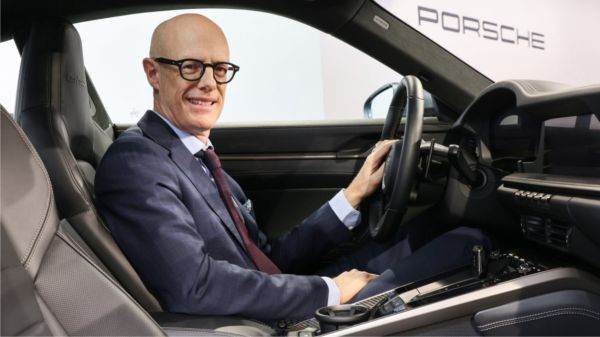
The German sports car manufacturer Porsche is entering a deep restructuring phase after a financial year 2025 that severely shook the company's performance. The data presented yesterday at the annual press conference in Stuttgart shows a dramatic deterioration in financial indicators, while the new management promises a radical repositioning of the company to return profitability to the brand's historical levels.
In 2025, Porsche recorded revenues of 36.27 billion euros, down 9.5% from 40.08 billion euros in 2024. However, operating profit fell dramatically, from 5.64 billion euros to just 413 million euros, and the operating margin fell from 14.1% to 1.1%. At the same time, global deliveries fell to 279,449 cars, 10.1% less than the 310,718 units delivered the previous year.
The new management openly recognizes the seriousness of the situation. CEO Michael Leiters said yesterday at a press conference that the German manufacturer is going through a complicated period in an uncertain economic and geopolitical context.
"We are currently going through difficult times. In a politically and economically uncertain world, we are not living up to our own standards and market expectations,” said Michael Leiters, who added that the company is still not able to counteract the global turbulence effectively enough, which is why management has decided to launch an extensive restructuring program.
"We must find a way to turn these challenges into opportunities. We have set ourselves the no easy task of completely restructuring Porsche. We must make the company leaner, faster and its products even more desirable,” said the Porsche CEO.
According to him, the decline in profit was mainly driven by extraordinary expenses of around 3.9 billion euros. Around 2.4 billion euros came from the realignment of the product strategy and the resizing of the company, 700 million euros from battery-related activities, and another 700 million euros from the impact of customs tariffs imposed by the United States.
Chief Financial Officer Jochen Breckner explained that these costs were deliberately taken to prepare the company for the future:
"2025 was an extraordinary year with a negative impact on our results. We have decided to implement a set of measures, steps necessary to ensure Porsche's long-term profitability, resilience and strategic flexibility,” Breckner said.
Even though deliveries fell, Porsche managed to maintain its average revenue per vehicle. The average revenue in the automotive sector reached 121,000 euros per car, around 4,000 euros more than in the previous year.
"Revenues fell less than deliveries and we were able to maintain the quality of our revenue,” the CFO emphasized.
However, the pressure on costs was significant. Production costs rose by 1.5 billion euros to 31.2 billion euros, driven by inflation in supply chains, costs associated with the transition to electric mobility and higher development costs.
Net cash flow in the Automotive division fell to 1.51 billion euros, compared to 3.73 billion euros in 2024, and the net cash flow margin fell to 4.7 percent, from 10.2 percent in the previous year.
At the same time, the electrification of the range is progressing. Fully electric vehicles accounted for 22.2 percent of Porsche deliveries in 2025, compared to 12.7 percent in the previous year.
The weak results also led to a dividend cut. Earnings per share were 0.47 euros for ordinary shares and 0.48 euros for preference shares, and management is proposing a dividend of 1.00 euros for ordinary shares and 1.01 euros for preference shares, significantly lower than in the previous year.
To return to historical margins, Porsche launched the Strategy 2035 strategic program, which aims to restructure the company and simplify the product portfolio.
"With Strategy 2035, we want to create the framework for the realignment of Porsche - a comprehensive program that strengthens competitiveness and financial robustness and lays the foundation for strong cash flows and solid results,” explained Michael Leiters, CEO of Porsche.
The strategy is based on three main pillars: strengthening the brand and customer relationships, simplifying the product portfolio and reducing structural costs. The company is also considering expanding the portfolio into higher-margin segments.
"We are considering expanding our product portfolio to grow in higher-margin segments. We are looking at models and versions beyond our current two-door sports cars , as well as over the Cayenne,” Leiters said.
For the current year, Porsche estimates revenues of between 35 billion and 36 billion euros, roughly at the previous year's level, but is counting on a partial return to profitability. The company anticipates an operating margin of between 5.5% and 7.5% and a cash flow margin in the automotive division of between 3% and 5%.
Even under these conditions, management insists that the medium-term goal remains an operating margin of between 10% and 15%, which is considered appropriate for a premium sports car manufacturer.
Michael Leiters warned, however, that the transformation will not be quick.
"I have no doubt that we will return Porsche to its former strength. But this will not happen overnight. It will take time, discipline and determination,” the company's CEO said.


















 Euro
Euro Dolar SUA
 Franc elveţian
 Liră sterlină
 Gram de aur





























