English
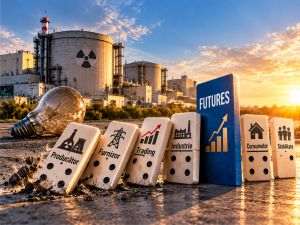
Oil futures rebounded on Tuesday in overseas markets on concerns about a prolonged supply disruption in the Strait of Hormuz.
West Texas Intermediate (WTI) crude for April delivery was at $86.19 a barrel on the New York Mercantile Exchange at 9:11 a.m., up 3.3% from Tuesday's session, while Brent crude for May delivery was at $90.88 a barrel, up 3.5%.
Yesterday's gains followed sharp declines on Tuesday, suggesting traders may be skeptical that the International Energy Agency's (IEA) proposal to release oil reserves will be enough to offset the current supply shock.
According to Bloomberg, the IEA is proposing to release up to 400 million barrels of oil from countries' strategic reserves. This would be more than the 182 million barrels of oil they released in two tranches in 2022, when Russia launched its invasion of Ukraine.
In a statement yesterday, energy ministers from the Group of Seven (G7) major industrialized nations said they were ready to take the necessary steps to stabilize the energy market, and one option under consideration is to use strategic oil reserves if the situation worsens.
Germany said it would "comply with the IEA's request and contribute” to the release of reserves, while Austria and Japan confirmed they would release oil from their stocks.
IEA member and associate countries account for two-thirds of global energy production and 80% of consumption.
• Francesco Pesole, ING: "Depending on the actual extent of the release of reserves, we could see a cap on oil prices”
"Depending on the actual extent of the release of reserves, we could see a cap on oil prices in the coming days,” said Francesco Pesole, a strategist at Dutch bank ING, quoted by CNN, noting that 20 million barrels per day are currently being lost as a result of the effective closure of the Strait of Hormuz. "However, the release of oil reserves is a temporary measure and only military de-escalation can lead to a sustainable decline in oil prices.”
For now, at least, there are few signs of de-escalation in the conflict. Iran announced yesterday morning that it had launched "the most intense and heaviest operation” since the start of the war, according to state media, while Israel announced an additional wave of attacks on Tehran.
Also yesterday, three ships were reported to have been hit by unidentified projectiles near the Strait of Hormuz, according to the British Maritime Safety Agency.
About a fifth of global oil production passes through the strait every day. The near-total blockage of the waterway has sent oil prices soaring. On Monday, crude prices approached $120 a barrel for the first time in almost four years, but fell the following day (-11%). The decline was largely driven by statements by US President Donald Trump that the war would end "very soon” and an announcement by Saudi Aramco, the world's largest oil producer, that it would increase crude flows through its pipeline to the Red Sea port of Yanbu, allowing it to resume 70% of its usual oil shipments.
"Until we move on to the next major event, markets will continue to be driven by volatile news about Iran and the outlook for oil flows," said Jim Reid, head of global macroeconomic research at Deutsche Bank.
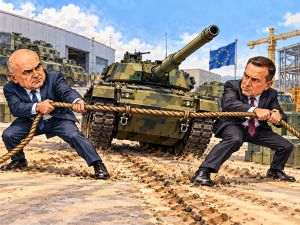
The European Union is considering capping gas prices as part of a broader package of measures aimed at reducing the fuel's influence on electricity prices and protecting consumers from extreme volatility, Bloomberg reports, according to Agerpres.
Gas futures in Europe have risen sharply due to the war in the Middle East, showing once again how exposed the continent is to global energy markets. "It is crucial to reduce the impact of costs when gas sets the price of electricity," European Commission President Ursula von der Leyen told MEPs gathered in Strasbourg. Other measures under consideration include better use of power purchase agreements and contracts for difference, state aid measures, and subsidizing gas prices, von der Leyen said.
EU heads of state and government are meeting next week and are expected to call for more concrete action to reduce prices in the short term. During the 2022-2023 energy crisis, the bloc introduced an emergency gas price cap, although the measure has not been implemented. Although gas prices have risen sharply since the start of the Iran conflict, they remain well below the peak levels reached during the energy crisis.
"Any form of capping or subsidizing the gas price would be extremely counterproductive for Europe. Artificially lowering the price of gas would stimulate demand for this scarce or expensive commodity, aggravating the situation and causing a huge cost to public finances,” said Simone Tagliapietra, an analyst at the Bruegel think tank in Brussels.
On the Amsterdam Stock Exchange, where gas benchmark prices are set in Europe, futures quotes rose 6.1%, trading above 50 euros per megawatt-hour at around 10:41 a.m. Earlier this week, quotes reached almost 70 euros.





















 Euro
Euro Dolar SUA
 Franc elveţian
 Liră sterlină
 Gram de aur