English

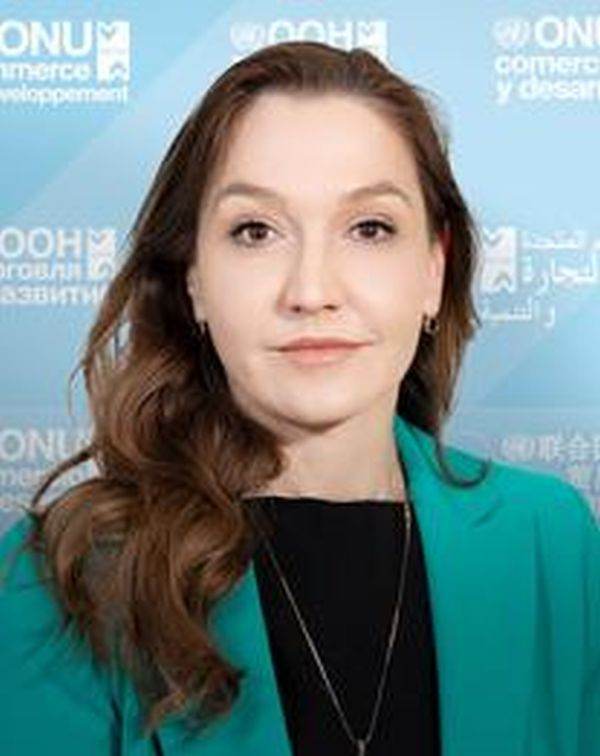
A possible global food crisis could be worse than the 2008 financial collapse, warns Anastasia Nesvetailova, a political economist and head of the macroeconomic and development policy division at the United Nations Conference on Trade and Development (UNCTAD), the same researcher who, a year before the collapse of Lehman Brothers, was already warning of the danger of a financial crisis caused by excessive lending.
"The subprime crisis (ed. - the 2008 financial crisis) would seem like child's play compared to something like this,” Anastasia Nesvetailova says in an interview with Follow the Money, warning that the vulnerability of the global food system could generate an economic and social shock much larger than the one that shook financial markets almost two decades ago.
The economist, who in 2007 published the volume "Fragile Finance: Debt, Speculation and Crisis in the Age of Global Credit”, a warning ignored at the time, says that the mechanisms of systemic risk have not disappeared, but have moved to less visible areas of the global economy, according to the cited source. This time, however, it is no longer just about banks or financial markets, but about the real infrastructure that provides food for billions of people.
"Because it is about real food, from fertilizers to ingredients for production. The food industry is a complex chain, from farmers to supermarkets and capital markets”, explains Nesvetailova, emphasizing that the fragility of the system comes precisely from the concentration of economic power in the hands of a very small number of global companies.
According to her, between 70% and 90% of the global food supply is controlled by a small group of giant corporations in the agricultural sector and trade in raw materials. Their influence goes far beyond grain production and extends to agricultural technologies, logistics, transport, maritime infrastructure and even financial markets. "This includes technologies, logistics, transport, shipping; not just grain production itself. Then I fear it is no longer a competitive market,” warns the UN official, suggesting that global dependence on a few conglomerates creates a major structural vulnerability.
The risk becomes even greater when these corporations are deeply involved in complex financial operations. Nesvetailova draws attention, according to the cited source, that many of the large companies in agricultural trade operate in a manner very close to that of shadow financial institutions, using sophisticated financing mechanisms and credit structures that can amplify instability.
"Yes, just like banks, traders repackage illiquid assets and place them in various vehicles or structures before they are offered to banks and capital markets as investable securities. We've heard this story of debt restructuring before, until it collapsed in 2007,” she told Follow the Money, suggesting that the mechanisms that fueled the global financial crisis are being replicated in the global food chain today. Data analyzed by UNCTAD (ed. note - United Nations Conference on Trade and Development) shows that the transformation of food traders into financial players has become extremely pronounced. In the Trade and Development Report 2025, which Anastasia Nesvetailova co-authored, the organization estimates that between 74% and 76% of these companies' revenues now come from financial activities, such as granting loans, designing and trading financial products, or speculating on food price fluctuations. Given that the revenues of these corporations often exceed 100 billion euros, any financial shock can have ripple effects on a global scale.
The corporate structure of these agricultural giants further amplifies the risks. Companies such as Cargill or COFCO, two of the largest groups in the field, operate through networks of hundreds of subsidiaries and joint ventures spread across all continents. Each of these entities contracts financing from different banks in dozens of jurisdictions. In many cases, financial institutions do not even realize that they are financing structures controlled by the same conglomerate. According to UNCTAD, this opacity creates a systemic risk comparable to that of the banking sector before the 2008 crisis.
In a scenario of major financial turmoil, some of these companies could become vulnerable due to exposure to complex credit instruments and illiquid assets. Nesvetailova warns that the situation could generate enormous pressure on governments.
"In stable times, we can assume that these corporations deliver food efficiently. But in the event of a financial crash, some can go bankrupt because they are full of illiquid and risky structured loans. Then they can come to the state and say, "We are a systemically important food corporation. Please save us, because your population depends on us." Who will pay that bill?” Anastasia Nesvetailova told the cited source.
In her opinion, the problem becomes even more complicated in the context of geopolitical tensions and climate change, which are causing more and more states to replenish their strategic food stocks. This trend, although it seems a logical reaction to global instability, could amplify market volatility and provide traders with huge informational advantages.
"I see that states are increasingly concerned about food, without explicitly recognizing that food sovereignty has long been in the hands of huge corporate giants. These companies have superior information about threats to the global food system. And the state's response tends to be reactive. Smart traders can structure their portfolios in such a way as to take advantage of anything that happens in the physical market - from natural disasters to very good harvests,” says the head of the macroeconomic and development policy division at UNCTAD.
At the same time, there is another perspective on the consolidation of the global food industry. The cited source states that some analyses, including studies by the Organization for Economic Cooperation and Development (OECD), argue that the size of these corporations allows for economies of scale and greater efficiency of the global food system, including through their ability to finance farmers and manage major logistical risks. Nesvetailova does not completely reject this argument, but warns that the true test of the promises made by large conglomerates will only come in a moment of crisis.
"There is indeed an argument advanced not only by the OECD, but also by many companies - that we are moving towards a stage of consolidated capitalism, in which these large firms capitalize on economies of scale. We will know to what extent these promises are truly fulfilled only after a major crisis,” says the UN official.
For the head of UNCTAD's macroeconomic and development policy division, it is clear that systemic risks are not disappearing, but are shifting from one sector to another, and the global economy's capacity to absorb shocks is increasingly dependent on highly concentrated corporate and financial structures. If her warning is confirmed, the world could find that the next great crisis will not start in banks or real estate markets, but in the very infrastructure that feeds the planet.













 Euro
Euro Dolar SUA
 Franc elveţian
 Liră sterlină
 Gram de aur