English

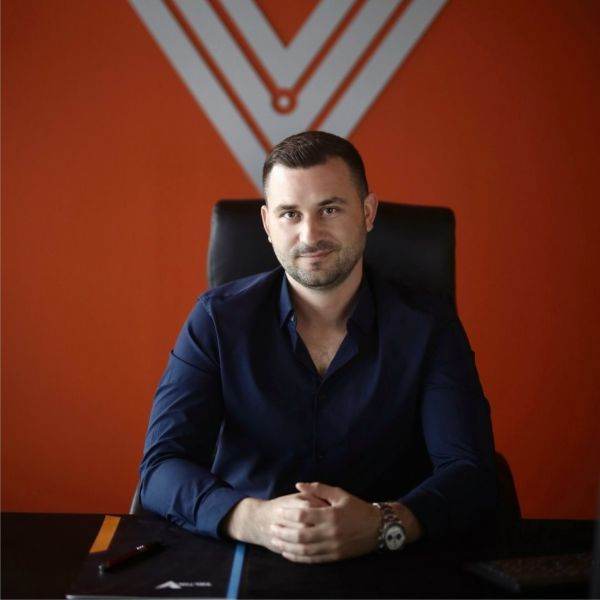
Reporter: Veltol EMS is presented as one of the first EMS systems developed locally, and already implemented commercially and industrially. What is, in your opinion, the key differentiator of this solution compared to other platforms on the market?
Levente Toth: The most visible differentiator of Veltol EMS compared to other platforms on the market is the controller we have physically, the main component of our locally developed platform, the intelligent hub that offers functionalities for optimizing energy management, maximizing efficiency and operating profit. It can connect to the photovoltaic system, the BESS energy storage system, the electricity meter, EV charging stations and heat pumps, to intelligently control production, storage and consumption.
Secondly, Veltol EMS natively integrates SCADA communication, suitable for large photovoltaic parks or multi-site networks, and has broad compatibility: currently, the platform is compatible with over 250 devices from over 50 manufacturers, which gives it a unique flexibility. This unified approach allows for fast implementations and significantly reduced costs.
In addition to this integrated architecture, Veltol EMS also stands out for its advanced energy optimization mechanisms. The platform includes proprietary algorithms, capable of reducing energy costs by up to 15%, while the load forecasting system achieves an accuracy of up to 97% in estimating production and consumption.
This level of analysis and performance is usually found in enterprise platforms from Western Europe or the USA, but at much higher costs. In addition, because it is a solution developed in Romania, Veltol EMS is adapted to our legislation, and benefits from full support in Romanian, a significant advantage for energy operators in the country.
• Automation leads to savings between 45,000 and 120,000 euros annually
Reporter: How does the process of automating battery charging and discharging decisions based on PZU prices work in practice? What real financial gain does it bring to customers?
Levente Toth: The automation process used by Veltol EMS is based on an advanced logic, built in three stages. In the first stage, the system collects real-time data on photovoltaic production, consumption, battery status, flows to and from the grid, as well as hourly prices from the PZU. In the next stage, this information is fed into a forecast and optimization mechanism, which calculates the consumption profile of the next day, estimates solar production and establishes the hours when energy prices are minimum or maximum. Based on these estimates, the system generates the optimal battery charging or discharging strategy.
In the final stage, Veltol EMS automatically transmits the necessary commands to the inverter and the storage system, ensuring autonomous management of electricity consumption, storage and delivery.
The financial impact can be significant, especially in the case of a photovoltaic system to which a BESS (Battery Energy Storage System) storage solution is added. For most industrial customers, the savings can range between 8% and 18% of annual energy costs, and for an industrial consumer with a consumption of approximately 800 MWh per year, the savings can vary between 45,000 and 120,000 euros per year. But these estimates really depend on many factors.
In addition, reducing costs, optimizing battery charging and discharging increases the value of self-consumed solar energy, reduces penalties during negative price periods and minimizes losses resulting from overproduction.
Reporter: The Romanian market has focused too much on production and too little on storage. How do you see this balance evolving in the next 3-5 years?
Levente Toth: The Romanian renewable energy market has evolved at an accelerated pace in recent years, but the development has been unbalanced. Traditionally, investments have focused on expanding production capacities, but storage capacity has remained far below what is needed. Today, Romania has over 8 GW installed in renewables, solar and wind, but only a little over 500 MWh of operational storage, at the end of this year. It is an imbalance that limits consumption optimization, grid stability and the ability to capitalize on energy at competitive prices.
For the next 3-5 years, we anticipate a clear change in this direction. Our estimates show that annual storage volumes installed could reach up to 1 GWh per year, with the market maturing, increasing pressures from system operators and the development of flexibility mechanisms.
The integration of advanced energy management systems, such as Veltol EMS, will play a crucial role in simultaneously optimizing production, consumption and storage, thus maximizing economic and operational benefits.
• 5.5 Megawatt photovoltaic park
Reporter: Large investments in batteries are needed to stabilize the grid. Do you think Romania is moving fast enough in this direction? What major bottlenecks do you see?
Levente Toth: Although Romania has started to realize the importance of investments in storage, the current pace is still below what the market would require. The installed capacity is low in relation to the continuously developing potential of renewables.
There are several major bottlenecks that slow down the accelerated development. The costs for large storage systems have remained high, however, between 130 and 150 euros/kWh for utility-scale projects. In addition, the regulatory framework is still incomplete, especially regarding flexibility, aggregation and compensation mechanisms. The local industry has limited design and execution capacity, and the bureaucracy associated with approvals and authorizations extends the implementation deadlines. Even so, investor interest is starting to grow, and solutions such as Veltol EMS and Velionic batteries are already contributing to accelerating this transformation.
Reporter: You recently announced the investment in your own 5.5 MW photovoltaic park with 10 MWh of storage. What is the strategic objective of this project for Veltol?
Levente Toth: This project represents a strategic step for us. First of all, we see this investment as a clear expression of our belief in the potential of green energy. Renewable energy is the natural direction of the future, and the decision to invest also reflects the assumption of long-term responsibilities. It is the way in which we confirm, through facts, that the solutions we develop and promote are sustainable, correct and necessary for the evolution of our energy system.
In addition, by developing our own park, we also have the opportunity to validate and optimize our own technologies, Velionic and Veltol EMS, in real conditions, in industrial mode. At the same time, we will take the opportunity to study in detail and refine our energy trading and operating strategies in complex markets. It is a way to strengthen our technological independence and accumulate direct know-how, essential for future projects.
Last but not least, it is a clear demonstration that we are willing to invest in our own technologies and to prove their performance in practice, through concrete use cases, with real data.
• "Not even 10% of companies use a complete EMS”
Reporter: Do you have a plan for national or regional expansion? What are the key regions you are targeting and what are the prioritization criteria?
Levente Toth: Yes, our medium-term strategy includes expansion both nationally and regionally. In Romania, our goal in the next 5 years is to increase our operational capacity at national level up to 50%, and we are primarily targeting industrially dynamic regions, where there is a high density of renewable projects and significant industrial consumption. These areas include Transylvania, Banat, Crişana and Maramureş - especially the counties of Cluj, Braşov, Mureş, Alba, Maramureş, Timiş and Arad, which have high potential and currently generate over 35% of new photovoltaic capacities.
In the long term, we aim to expand to markets in Central and South-Eastern Europe, especially Hungary, Bulgaria, and even Italy, with a focus on complex production and energy efficiency projects.
Project prioritization is based on factors such as market maturity, density of renewable projects, the need for infrastructure modernization and the degree of legislative predictability.
Reporter: From what I have observed, Veltol's business model relies on optimizing consumption and capitalizing on energy according to market prices. How ready is the Romanian industrial environment for this type of digitalization and automation?
Levente Toth: Romania has no choice but to moving forward, we are on an irreversible path. The industrial environment in Romania is in a continuous process of accelerated transformation, of energy digitalization, but we still have a lot of work to do. More and more companies are starting to understand that optimizing energy consumption is a condition for competitiveness and is no longer just an option. Approximately 35-40% of large companies currently use developed SCADA systems, and 50-55% have implemented at least basic energy monitoring solutions. However, probably not even 10% use a complete EMS, integrated with market prices. If we look at the full side of the glass, this shows us that we have a very high growth potential.
A not-to-be-neglected stimulus that will accelerate digitalization and automation is the pressure of energy costs - now they represent 18-35% of operational costs. According to our calculations, we estimate that by 2027, the adoption of EMS systems will rise to 45-55%, amid market maturation, ESG requirements and consumption optimization based on market prices.
• Veltol EMS controller - designed to coordinate energy flows in real time
Reporter: The Veltol EMS system integrates production forecast, market prices and automated decisions. What role does the mobile application play in this architecture and who is it primarily aimed at?
Levente Toth: The idea of developing Veltol EMS started from a real need that we have observed over time in the market: the lack of an integrated, flexible and adaptable platform for the intelligent management of our green energy, developed locally. External systems were either too rigid or difficult to adapt to the specifics of our market. So we came up with the first intelligent energy management system, dedicated to the Romanian energy market.
The mobile application represents the interface between the user and the Veltol EMS ecosystem, with the role of bringing forecasting, automation and energy optimization capabilities into a single tool accessible in real time to both operational directors and energy managers. It provides real-time access to information on production, consumption, storage and energy flows, as well as the possibility of directly controlling the systems, regardless of location.
We have recently launched the "star” of the Veltol EMS platform - the Veltol EMS controller. It is an intelligent electronic device, with modular architecture and advanced analysis algorithms, designed to coordinate in real time the energy flows between the photovoltaic system, BESS (storage system), grid and consumers. This solution offers updates every second and syntheses per minute, ensures high accuracy, fast response and complete visibility over the entire energy ecosystem. A major benefit of the controller is its high degree of compatibility with over 250 devices to which it can connect - photovoltaic plants, hybrid inverters, energy storage equipment, smart meters, electric vehicle charging stations and heat pumps - from over 50 brands.
The platform is accessible via cloud or mobile application, and is designed for intuitive use and rapid integration into new or existing infrastructures.
You asked me who it is aimed at, and here the answer is simple: Veltol EMS is aimed at all players in the energy market who develop commercial and industrial projects and seek maximum profit, from energy producers and suppliers, to market aggregators and industrial prosumers.
Reporter: We know that your goal is to reach 500-800 MW managed through the EMS platform. What is needed to reach this critical mass of integrated producers?
Levente Toth: To reach this critical mass, rapid scaling of integrations with most PV and BESS manufacturers in the market is needed, a clear regulatory framework for flexibility and aggregation, as well as the installation of a sufficient number of controllers on the ground so that the platform can efficiently automate and coordinate energy flows.
Developing a network of partners and integrators will play a key role in achieving this goal.
• "The shortage of electricians and automation engineers is between 15-20% of the total market need”
Reporter: How has the evolution of the financial market and the collaboration with banks influenced your pace of development? Will you need additional financing for your plans until 2030?
Levente Toth: The financial market remains volatile, and access to capital is sometimes difficult due to high interest rates and increased caution on the part of financial institutions. However, our collaboration with the banks has been constructive, especially in the area of industrial projects.
For our plans until 2030, it is clear that additional financing will be needed, both for scaling up of solutions of Velionic, as well as for the development and expansion of Veltol EMS. We are already in discussions with investment funds and financial institutions that understand the potential of the energy flexibility market and digitalization.
Reporter: The labor market situation regarding electricians and specialists is not very good, both in our country and at European level. How do you address this problem and what solutions do you see at the industry level?
Levente Toth: The shortage of specialized labor is a sensitive and deficient point in several industries, not only in our field, but also on the entire continent. Eurostat estimates show that, by 2030, approximately 1 in 3 technical jobs will be difficult to fill, and in Romania the shortage of electricians and automation engineers is between 15-20% of the total market need. Projects are becoming more complex - photovoltaics integrated with storage systems and smart energy management solutions - and the need for technicians, electricians, engineers and automation specialists is greater than ever.
We have chosen to constantly invest in the professional training of our team, through internal training and certification programs, we are thinking of forming partnerships with leading universities in the country, and we have implemented flexible work schemes that attract young specialists.
From a human resource point of view, the EMS platform fortunately allows for the automation of repetitive processes and remote monitoring, so that a single specialist can manage multiple installations simultaneously, reducing the pressure on the workforce.
Reporter: What is the turnover you want to achieve in 2030? What growth engines do you have in mind to achieve this goal?
Levente Toth: For the next period, we aim to consolidate the rapid pace at which we have developed in recent years by expanding the portfolio of complex photovoltaic projects at the national level, developing the storage system and launching new components within the Veltol EMS platform.
In 2024, we achieved a turnover of 25 million lei, and this year we estimate a 50% increase.
In the medium term, our objective is to reach a turnover of 30 million euros by 2030.
Reporter: Thank you.























 Euro
Euro Dolar SUA
 Franc elveţian
 Liră sterlină
 Gram de aur