English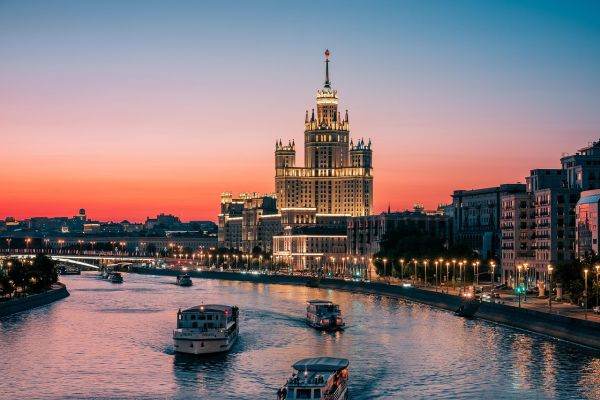
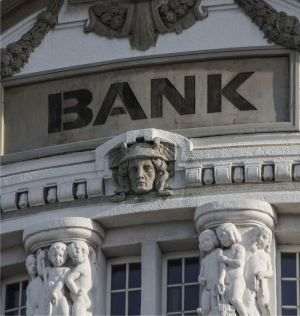
The Central Bank of Russia decided on Friday to reduce the monetary policy rate from 16% to 15.5%, due to the difficulties facing the national economy, according to Reuters.
The Moscow institution informed: "The central bank will assess the need for further interest rate cuts at future monetary policy meetings, depending on the sustainability of the slowdown in inflation and the dynamics of inflationary expectations. The base scenario indicates an interest rate between 13.5% and 14.5% in 2026, which assumes the continuation of the tightening of monetary conditions.”
The Russian government expects the country's economy to grow by 1.3% this year, after a 1% advance in 2025. The Bank of Russia anticipates economic growth of 0.5%-1.5% in 2026 and a decrease in the annual inflation rate to 4.5%-5.5%.
Since the beginning of the year, prices in Russia have risen by 6.5% at an annual pace, following the VAT increase.
"The increase in VAT and excise duties, the indexation of administered tariffs and prices, and price adjustments for fruits and vegetables led to a temporary but significant acceleration of the current price increase in January," the Bank of Russia said.
Moscow's Economy Minister Maxim Reshetnikov told Interfax last week that the country's economy will continue to slow in the first half of this year, with a recovery only possible at the end of 2026, and most likely in 2027. Previously, the Russian Economy Ministry estimated that economic expansion would begin to recover in the second half of 2026, notes Agerpres.
After an advance of 4.1% and 4.9% in 2023-2024, boosted by the state's large spending on the war in Ukraine, Russia's economy has slowed sharply.
Moscow officials have described the economic slowdown as a "controlled cooling" or a "soft landing" aimed at reducing inflation through restrictive monetary policy. President Vladimir Putin has called on the government and the central bank to restore higher economic growth and boost investment activity as early as 2026.
The slowdown in GDP growth and the expected decline in investment in 2025 are the "natural price” of reducing inflation, Reshetnikov said, adding:
"Overall, we now see some scope for further monetary easing. But we must understand that whatever decisions are made now, their impact on the economy will be delayed. The estimated lag is 6-9 months, sometimes more. Therefore, we expect a new economic slowdown in the first half of the year. Growth will resume at best at the end of 2026, but most likely in 2027.”
The International Monetary Fund has cut its estimate for Russia's GDP growth this year to 0.8%, suggesting the Russian economy will perform at about a quarter of the global average growth of 3.3%. Some officials and analysts say Russia is now on the border between stagnation and recession.















 Euro
Euro Dolar SUA
 Franc elveţian
 Liră sterlină
 Gram de aur