English

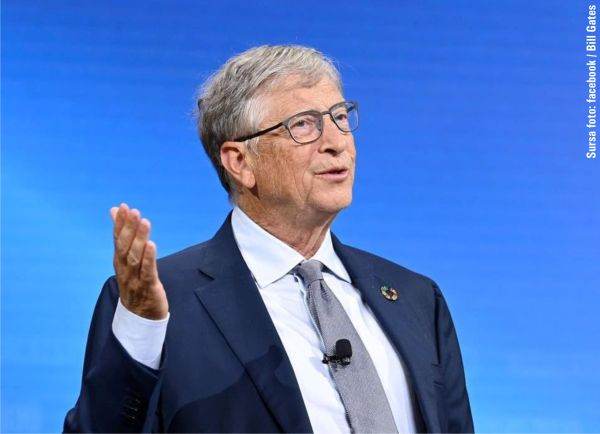
Bill Gates held a Q clearance, one of the highest levels of security clearance in the US Department of Energy system, for more than seven years. Official documents presented last week in the US Senate show that the clearance was granted to him through reciprocity on June 11, 2014, and was withdrawn on December 6, 2021. The Microsoft founder was therefore declared eligible for access to information classified at a level comparable to "Top Secret", including, depending on the needs of his work, the special category "Restricted Data", protected by US atomic legislation.
This means that Bill Gates could open any secret US government file and that he automatically had access to nuclear weapons plans. The Q clearance certifies that the holder has passed the necessary security checks and can be granted access to highly sensitive information, but the actual consultation of each document remains subject to the "need to know” principle: the person must demonstrate that he or she needs the information in question to perform a task or participate in a specific program.
Despite these limitations, the Q clearance is not an ordinary administrative permit nor an honorary distinction awarded to an influential figure. According to the US Department of Energy, it is an official decision by which a person is declared eligible for access to classified information or special nuclear materials. The process involves an in-depth investigation into the candidate's background and an assessment of his or her loyalty, judgment, reliability, and honesty.
The question is therefore no longer whether Gates had the Q clearance. Its existence and the period during which it was active are officially confirmed. The question is why he received it, which federal agency initiated the procedure, and for what program a private citizen, no matter how wealthy and influential, needed an eligibility associated with the most sensitive secrets of the American state.
The mystery is amplified by the formula used in the Energy Department document: Gates's authorization was "granted through reciprocity.” This means that another federal agency had previously checked him and granted or recognized him with an equivalent authorization, and the Energy Department accepted the result of the investigation and granted him the Q authorization in its own system.
The letter does not identify the agency that initially checked Gates. It does not specify whether it was the Department of Defense, an intelligence structure, an institution involved in national security, or another federal entity. It does not mention the project for which the authorization was required, the information to which Gates could have access, or the institution that justified the need for this access.
The Energy Department confirmed the existence of the authorization, but did not explain the reason for granting it. It provided the administrative answer and left the political question untouched: who decided that Bill Gates should be eligible for access to "restricted data” under the Atomic Energy Act, and what official responsibility necessitated this decision?
The confirmation came after Republican Senator Rand Paul, chairman of the US Senate Committee on Homeland Security and Governmental Affairs, sent a formal request to Energy Secretary Chris Wright on June 23, 2026. Rand Paul stated that, in the course of his investigation into the origins of Covid-19 and publicly funded life sciences research, he had obtained information that led him to believe that Bill Gates may have held a Q clearance.
The senator was asking the Department of Energy to confirm whether William Henry Gates III ever held such a clearance and to provide the dates on which it was activated and terminated. The DOE response, dated June 30, 2026, confirmed that the authorization had been granted by reciprocity on June 11, 2014, and withdrawn on December 6, 2021.
Bill Gates therefore held the authorization during the Barack Obama administration, during Donald Trump's first presidential term, and during the first year of the Joe Biden administration. He kept it during the period of expanding his collaborations with US federal institutions, during the emergence of the SARS-CoV-2 virus, and during most of the Covid-19 pandemic.
The information became public in the context of Anthony Fauci's hearing on July 29, 2026, when the former director of NIAID faced harsh accusations from Republican senators. According to the report published by Tyler Durden, Fauci invoked his constitutional right not to answer questions that could incriminate him more than 100 times. A 1,375-page file was introduced into the record of the same hearing, consisting of emails, memoranda, meeting schedules and other documents regarding the relationships between Bill Gates, the Bill & Melinda Gates Foundation, Anthony Fauci, the National Institutes of Health, and institutions involved in biomedical research and pandemic management. In this mass of documents, the letter regarding the Q authorization radically changes the starting point of the discussion: Gates was not only a philanthropist with privileged access to officials, but also the holder of an exceptionally high level of security clearance.
The simplest explanation for his authorization may be TerraPower, the nuclear technology company founded by Gates in 2006 and led by him as chairman. TerraPower develops advanced nuclear reactors, collaborates with the Department of Energy and national laboratories of the United States, and is involved in the construction of the Natrium reactor in Kemmerer, Wyoming.
The Natrium project was selected by the DOE under the federal program for the demonstration of advanced nuclear reactors. On March 4, 2026, the US Nuclear Regulatory Commission granted the construction permit for the plant in Wyoming. Gates' involvement with a company that works directly with nuclear technology and government laboratories provides a plausible reason for granting a security clearance.
A nuclear industry executive receiving a clearance necessary for his work is not, in itself, a scandal. The problem is that the DOE letter does not mention TerraPower and does not link the Q clearance to the company's projects. The explanation is logical, but it is not supported by the document. Moreover, the reciprocal nature of the clearance raises an additional question. If Gates needed the Q exclusively for TerraPower's collaboration with the Department of Energy, why did the equivalent clearance come from another federal agency? Who vetted it before the DOE and for what activity?
The timeline does not provide a clear answer. The clearance was granted in 2014, eight years after TerraPower was founded, and the revocation of the clearance on December 6, 2021 does not automatically indicate wrongdoing. According to the National Nuclear Security Administration, a permit must be revoked when the contractual relationship or activity that justified it ends or when access is no longer needed. Subsequent re-grant is not automatic, but requires the emergence of a new official need and the fulfillment of security requirements.
But it remains to be explained what ended in December 2021. A contract, a function, a project, or just the need for access? If the permit was related to TerraPower, what stage of the collaboration ended then? If it came from another federal program, which program was it? And why is the agency that originally authorized Gates' access not identified?























 Euro
Euro Dolar SUA
 Franc elveţian
 Liră sterlină
 Gram de aur