English


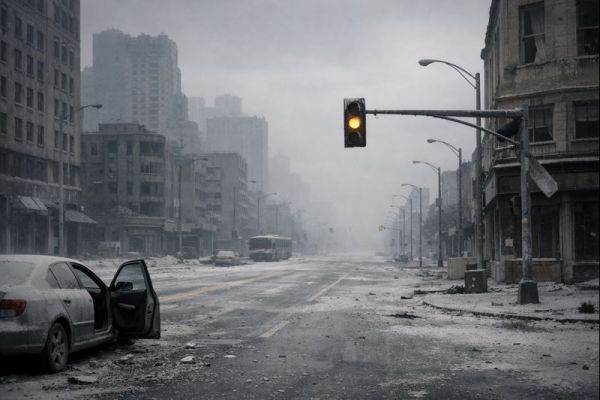
Despite the moderate predictability of most global risks, there are also extreme events, difficult to anticipate, but with devastating impact-known as "black swans.” In 2026, a few such hypothetical scenarios deserve consideration by any architect of the global future.
• 1. Multiple sovereign defaults in emerging economies
The rising public debts in countries such as Egypt, Pakistan, or Nigeria have led to warnings from the IMF and the World Bank regarding a possible chain of defaults. A simultaneous default in 3-4 such economies could trigger a collapse of emerging markets, with a domino effect on international financial institutions, according to the IMF (Global Financial Stability Report, April 2025) and BIS (Global Debt Overview, 2025).
• 2. Loss of control of a general artificial intelligence
The risk of an AI acquiring operational autonomy and escaping human supervision, acting according to its own logic, is highlighted by the Future of Life Institute and supported by hundreds of signatories of the letter calling for suspension of advanced AI experiments (Future of Life Institute - Open Letter on AI, 2023; MIT CSAIL - Autonomous Systems Risk Brief, 2025).
• 3. Accidental regional nuclear escalation
Tensions between states with minimal nuclear arsenals (India-Pakistan, North Korea-USA, Israel-Iran) could accidentally escalate into a limited nuclear strike. According to the Bulletin of the Atomic Scientists 2026 (The Doomsday Clock Statement), the risk has increased due to the erosion of control agreements and the "first use” doctrine.
• 4. Global internet collapse and digital fragmentation
A forced disconnection of global digital infrastructure-between China and the West, or as a result of a massive cyberattack on DNS networks-could split the internet into incompatible regional blocks. This would shock trade, communications, and security, as noted by the World Economic Forum in Global Cybersecurity Outlook, 2026.
• 5. Supermassive volcanic eruption or extreme geological event
The eruption of a "supervolcano” (e.g., Yellowstone or Campi Flegrei) remains unlikely, but if it occurs, it would block sunlight for months, destroy global crops, and produce an unprecedented ecological and humanitarian catastrophe, warn the USGS (Annual Geological Risk Report, 2025) and the Global Challenges Foundation (Global Catastrophic Risks Report, 2026).
Note:
These scenarios are not prophecies, but exercises in strategic imagination. Thinking about extreme risks is not alarmism, but a form of lucidity necessary in times when probability and impact no longer necessarily go hand in hand.
Post Scriptum
The political aggressiveness of the Trump administration, as bewildering as it may be stylistically, is fundamentally a reaction to hidden systemic reality: the risk that the dollar-based global financial system is approaching its structural limits.
From this perspective, the "black swan” of a global sovereign default is not just a hypothetical scenario, but the ghost haunting major decisions.
And Trump, beneath the orange mask, is precisely the political instrument through which the system seeks to postpone collapse.























 Euro
Euro Dolar SUA
 Franc elveţian
 Liră sterlină
 Gram de aur