English

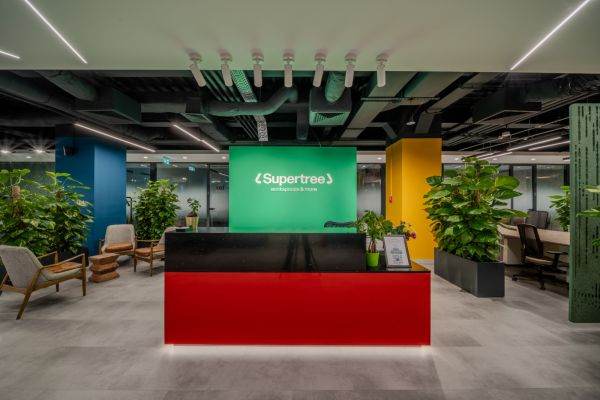
The coworking space market in our country is entering a new stage of growth, as more and more companies rethink their cost structure, and the Capital becomes increasingly attractive to investors. In a difficult economic context, marked by uncertainty, cash pressure and fiscal changes, 2026 is shaping up to be a favorable year for flexible offices, according to the analysis presented yesterday by Supertree Workspaces & More.
Gianina Crăciun, founder and CEO of Supertree Workspaces & More, one of the most modern coworking spaces in the capital, stated: "The current year is more promising than 2025 for the coworking space market, and the evolution of demand confirms this trend. In Bucharest, flexible spaces still represent less than 5% of the total office stock, compared to 10-15% in cities like London or Amsterdam. This gap is not a minus, but a clear potential for growth. In terms of attractiveness to foreign investors, who are testing the market mainly by renting flexible offices, Romania is at a similar stage to Poland 7-8 years ago: accelerated adoption, but still room for differentiation. It is no longer a question of whether the coworking market will grow, but who will capture this growth”,
According to CBRE and JLL data, over 30% of the new office demand in Europe in 2025 was oriented towards spaces flexible, and the trend accelerates in 2026.
• Lack of tax predictability and pressure on cash-flow, factors for which companies choose coworking spaces
According to Ms. Crăciun, in 2026 the main problem is not the level of taxes, but volatility, especially since our country has had over 15 major tax changes in the last 3 years, according to national and international analyses.
Therefore, the lack of tax predictability and pressure on cash-flow accelerate companies' transition from classic offices to flexible working models, a dynamic supported by official data. Companies operating in markets with high fiscal volatility reduce the average duration of real estate contracts by 30-50%.
For an average company, a classic office space in an office building means a 5-year contract, a contractual guarantee consisting of the equivalent of 3 months of rent and service charge, initial investments of 800-1,200 euros/sqm for fit-out and cash blocked without flexibility.
Gianina Crăciun specified that in coworking, the cost is predictable, monthly and fully deductible, especially since in a context of pressure on cash-flow, the difference becomes decisive. Therefore, coworking functions as a financial hedge, not just as a workspace.
McKinsey data shows that over 70% of European companies have revised their fixed investment plans downwards, but have increased budgets for flexible solutions and outsourcing. This defines 2026 not as a year of aggressive expansion, but a year of cost reconfiguration.
"2026 is the year in which coworking becomes mainstream because it responds to a harsh economic reality: uncertainty, pressure on cash and the need for rapid adaptation. At Supertree Workspaces & More, we see this change daily: companies no longer just demand space, but predictability, flexibility and decision-making support. SMEs and entrepreneurs do not completely cut investments, but move spending from CAPEX to OPEX. Coworking fits right in here. 2026 is the year in which the CFO dictates the office decision, not HR. We clearly see that companies no longer accept long-term rents, fixed costs that are difficult to adjust, irreversible investments. The flexible model is no longer a lifestyle choice, but a defensive business strategy”, stated Gianina Crăciun, founder of Supertree Workspaces&More.
• International and local companies, the main tenants in coworking spaces
He specified that the most active companies in the flexible spaces market are international companies with teams of 10-50 employees when entering a new market, scale-up companies in Romania that avoid capital lock-up and multinationals that reduce their office space by 20-40%.
Supertree representatives observe an increase in demand from companies in tech, financial services, energy and ESG, fields where teams are mobile and international. Supertree shows that coworking spaces are no longer for "small players", but for companies that know how to optimize their structure.
A company that operates in a coworking space can reduce costs by up to 30% compared to a traditional office, with hidden expenses such as maintenance, utilities or space layout being eliminated. Thanks to flexible contracts and the possibility of quickly expanding the occupied area, coworking has become an extremely attractive strategy for large, international companies, for those in expansion, but also for SMEs.
The average rental period varies between 1 and 2 years for private offices, respectively around 12 months for open-space areas, generally used by teams of 5-15 people. The office space occupancy rate was on average 80-90% in 2025, according to Supertree data.
Bucharest remains extremely attractive for companies because rental costs can be even 50-90% lower than in other comparable European capitals. If in Bucharest rents for prime offices are around 18-22 euros/sqm, in Warsaw they reach 25-28 euros/sqm, in Prague they reach 26-30 euros/sqm, and in Vienna they can exceed 28-35 euros/sqm, which makes the Capital of our country one of the most efficient options in the region for expanding companies.
• Key trends in the coworking space market
Globally, the flexible space industry is entering a phase of discreet consolidation and constant expansion in 2026, a trend that is also reflected in Romania, Supertree representatives stated. They showed that flexible spaces are moving from "nice-to-have” to critical infrastructure in a consolidating market, design, hospitality and a sense of belonging are becoming the new minimum standards for flexible space operators and coworking is becoming community infrastructure, with expansion in suburban areas and a greater focus on equity and social impact.
Coworking is evolving into an operational ecosystem for flexible office assets, integrating services and complete solutions for tenants. At the same time, technology based on artificial intelligence, data analysis and integration with digital solutions are becoming the operational layer of flexible spaces.
At the same time, the landscape is changing: managed and turnkey flexible offices are becoming one of the most dynamic segments, especially for larger teams that want private, personalized spaces, but under flexible contractual conditions. Building owners are testing their own flex concepts or models aligned with operators, and the market consolidation process is raising the standards in terms of experience, reporting and technology.
The coworking segment continues to grow rapidly globally, estimated to exceed $40 billion by 2030, according to analysis by Grand View Research. Mordor Intelligence and Optix Europe Report show that in Europe the flexible space market is valued at over $7 billion and represents approximately 2.5% of the total stock of modern offices.
According to CBRE, in our country the market is in a development phase, with over 100 coworking spaces and approximately 70,000 square meters of flexible offices in Bucharest, representing 2.3% of the total stock of modern offices, figures that indicate significant growth potential for the coming years.
Supertree Workspaces & More is a coworking concept designed as a complete ecosystem of services, with modern spaces, premium amenities and facilities for productivity and collaboration. The Supertree community benefits from access to business consulting, networking events, themed lunches, office massages and free workshops. Strategically located, close to the business areas of the Capital and the airport, the space is located in the Globalworth BOC Tower building, on Str. George Constantinescu no. 3, in Pipera, with easy access to the metro station and the main business arteries in the north of the Capital.
Supertree was launched within Adeco Advisory, due to the growing need of clients for crisis management, operational optimization, financial restructuring and sustainable growth.
The consulting company ADECO Advisory, founded in 2012 in Bucharest, offers a complete soft-landing solution for international companies wishing to operate in Romania in less than 30 days. Through a multidisciplinary team of experts, ADECO provides integrated services in strategy, taxation, legal, recruitment, relocation and business development, contributing to the growth and stabilization of its partners in local and foreign markets.















 Euro
Euro Dolar SUA
 Franc elveţian
 Liră sterlină
 Gram de aur