English


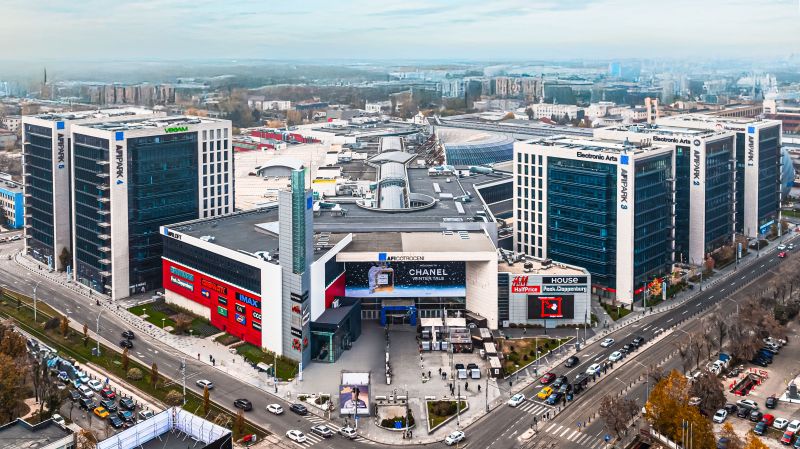
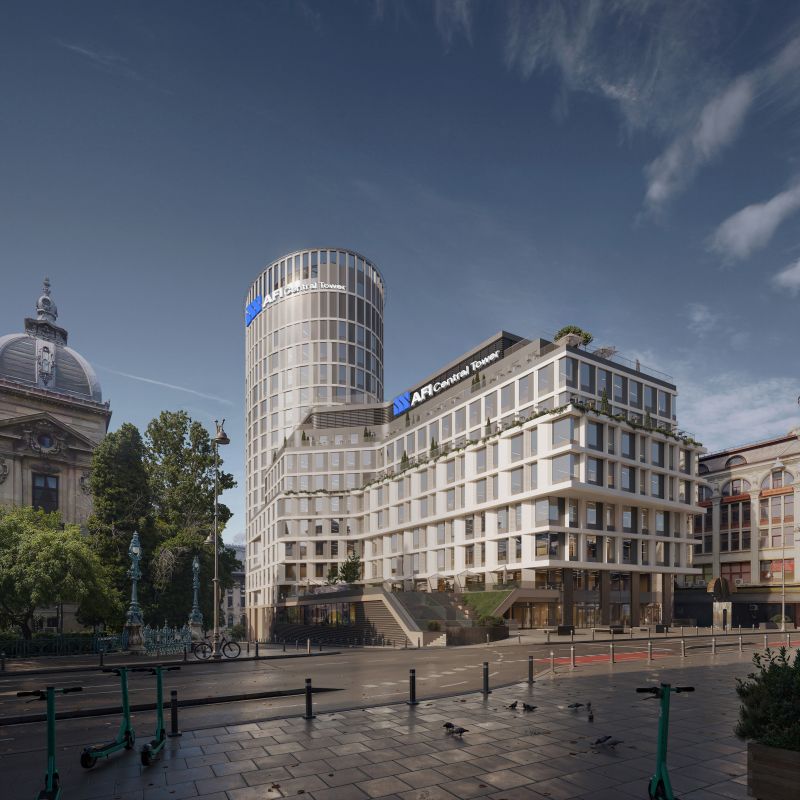
After a period of adjustments, the local real estate market enters 2026 with increased confidence from Romanian investors, who have become an essential factor in supporting market liquidity and stability, showing increased interest in both income-generating assets and brownfield projects, according to the report released yesterday, February 12, by the real estate consulting and services company CBRE.
According to the cited source, investment strategies are mainly oriented towards the sustainability of income and the long-term prospects of projects, and the demand for rental properties is increasing.
Regarding the increase in demand, it continues, although, as stated, at the opening of the event, Tasos Vezyridis, Head of Research, UK&I and CE, CBRE, the uncertainty caused by fiscal policies and geopolitical unrest also has some negative impact on activity in the real estate sector.
Tasos Vezyridis said: "Companies around the world are reducing their capital expenditure and expansion plans, focusing more on productivity and efficient strategies than on pure expansion. This will lead to slow growth and therefore we estimate another year of weak growth in 2026, growth below the long-term average, slightly lower than the previous year. The good news is that although growth will be slow, it will still be growth. (...) Let's look at sentiment. Sentiment indicators can help us predict what will happen in the market. The good news is that investor sentiment is now positive. It was positive at the beginning of last year, then it declined due to tax discussions and volatility, but it has increased again. Our investor sentiment survey confirms this: investors tell us that they expect the same or higher level of transactional activity in Europe. So, a generally positive sentiment, which will support a gradual recovery of the investment market in Europe. I want to I emphasize the term "gradual”; we do not expect a sudden recovery. We estimate an increase in volumes this year of approximately 15% and a turnover increase of maximum 10% in 2026”.
• One million square meters of industrial and logistics space leased in 2025
The report prepared by CBRE shows that the leasing activity of industrial and logistics spaces in our country consolidated in 2025, when one million square meters were leased. A notable performance was recorded in the last quarter of last year, when 427,400 square meters were leased, up 67% compared to 2024, which confirms a continuous recovery in occupier demand, above the increasing volumes identified in other European markets.
CBRE Romania's outlook indicates continued moderate growth in leasing activity, supported by supply chain optimization, regional distribution, e-commerce expansion and consolidation of distribution networks. Net absorption is expected to remain limited in the short term, as a significant portion of transactions reflect relocations and upgrades to higher quality and more efficient facilities, rather than a pure expansion of the footprint.
The cited report states that Romania's modern industrial stock reached 8.17 million square meters at the end of 2025, while the development portfolio remains moderate, with approximately 464,000 square meters under construction and scheduled for delivery by the end of 2026, of which Bucharest is expected to capture 64%. Vacancy rates continued to decline, reaching 3.8% nationally, 3.5% in Bucharest, and slightly higher in regional markets at 4.0%.
Overall, the Romanian industrial and logistics market enters 2026 from a position of strength, supported by steady occupier demand and carefully selected development activity.
Răzvan Iorgu, Managing Director, CBRE Romania, said: "We are entering a new era dominated by artificial intelligence and the accelerated development of data centres globally, with major implications for energy consumption. The emerging interconnected ecosystem, from infrastructure and logistics to energy production and distribution, will generate new economic opportunities for the Romanian industrial sector.”
Laura Dumea-Bencze, Head of Research & Director Investment Properties, CBRE Romania, stated: "On the investment and building sales side, last year was not a fantastic year; if you look at 2025 versus other years, we see a fairly significant decrease. That is why we added another line in our report that shows the number of transactions: the market was active in terms of number, but there were no large and very large transactions. The total volume, even if it seems to be decreasing, does not fully reflect real activity. The activity meant many transactions in the retail area, small shopping centers, but also transactions between 2 million and 50 million euros. (...) The real estate market in Romania enters 2026 with confidence and with very good demand from tenants and occupants. The appetite is there, the values transacted are lower. Looking ahead, 2026 will bring a better alignment between the investment and occupancy markets: investment volumes will gradually recover, while strong rental fundamentals will continue to support income stability”.
• Retail market, sustained growth potential also in 2026
Regarding the retail market, the CBRE report shows that, after several years of strong expansion, it continues to perform solidly, amid more restrictive fiscal conditions and slower growth in consumer spending. The market remained active in 2025 in terms of development and occupier demand, supported by the density of commercial spaces in Romania, still below average compared to most European competitors. With a stock of modern commercial spaces approaching 4.77 million square meters, our country highlights the structural growth potential that continues to support the interest of developers and retailers.
CBRE specialists noted that, over the past year, shopping centers Retail represented the majority of new deliveries, or approximately two-thirds of the new leasable area, driven exclusively by extensions and renovations of existing projects. In addition, several new retail parks and shopping malls were built in the country's cities, reinforcing the continued focus on smaller and medium-sized urban markets. Rents remained largely stable towards the end of 2025, after a moderate increase recorded at the beginning of the year, and occupancy rates in top projects remained constant, supported by the limited availability of quality spaces and active tenant rotation strategies.
In this sector, interest remains high for retail parks and proximity formats, in light of solid consumer performance.
Carmen Ravon, Head of Retail CEE & Romania, CBRE, stated: "The record number of transactions completed by our Retail department in 2025 (850 transactions in total, new leases and extensions, of which 320 transactions with lease terms of minimum 5 years and 530 transactions with lease terms under 5 years) show the interest of retailers in the shopping center market, whether they are malls or retail parks. In a more cautious economic climate, the decision of retailers to continue investing is a clear signal of maturity and confidence in the long-term potential of Romania, in a European context”.
• Zero office spaces in 2025, at least 200,000 square meters of new construction in 2026 and the following year
The CBRE report also provides data on the activity in the office area. According to the cited document, in 2026 companies will prioritize space efficiency, strategic locations and buildings that comply with the latest modern and sustainability specifications. Similar to the core European markets, the fundamentals of the Bucharest office market consolidated in 2025, driven by resilient acquisition levels and the first year with zero new deliveries. Total leasing activity reached 280,000 square meters, down 27% year-on-year, largely reflecting lower development volumes, limited central availability and anticipated transactions from previous years, rather than a weakening of occupier demand. The total area of 166,000 square meters confirms a stable base of net demand, supported by new leases, relocations and expansions. Demand was led by the financial, IT, manufacturing and energy sectors; leasing activity was concentrated in the Floreasca-Barbu Văcărescu and Piaţa Victoriei areas, the central and western areas of the Capital. The vacancy rate decreased further in the central areas, reaching historically low levels of around 4%, while the city-wide vacancy rate stood at 11.1% at the end of the year. Given the limited increase in the supply of unleased space and similar levels of expected demand, the overall vacancy rate is likely to continue its downward trend, with the potential to reach a single-digit value. Tudor Ionescu, Head of Leasing Office, CBRE Romania, noted: "The first year without deliveries of modern offices in Bucharest led to the vacancy rate falling below 5% in both central locations and Floreasca-Barbu Văcărescu. The constant demand we have for quality buildings, well positioned and with easy access to the metro has strengthened the confidence of developers, and over 200,000 square meters of offices are currently being built in Bucharest”.
However, renting office space has become more expensive due to the increase in some costs. Valeriu Toma, Head of Property Management at CBRE Romania, stated: "It is about the service charge, that is, the tax for operating the buildings, which is practically added to the rent. Well, in 2026, if we talk about this cost, 50% of it, slightly over 50%, is represented by taxes, duties or other contributions regulated by the state, independent of the building owner. And if we look at industrial buildings, this percentage goes somewhere towards 60% and then the need for building management, an extremely professional operational management, arises, which can genuinely impact the remaining percentages. (...) The service charge includes property tax, that is, property tax - whose general value in the service charge has increased from 30-33% to almost 40% - and the rest are costs that go to the state, including taxes for employees who maintain the building. The average salary in the economy in the last two and a half - three years has seen five increases. If we add up all these taxes and relate them to the value of the service charge in the building, you will find that their share exceeds 50%. That is, practically, of the 4 euros that we brought, two are state-regulated contributions, they are not specific operational activity”.
• 136 hectares of land traded in 2025 for real estate investments
In terms of real estate investments, 2026 is shaping up to be a year of recovery, according to CBRE specialists, supported by attractive prices in the Central and Eastern Europe region and an improved economy. Positive investor sentiment on the Romanian real estate investment market is expected to consolidate in 2026, the authors of the cited report claim. Although 2025 remained a subdued year, characterized by smaller transactions and limited institutional activity, momentum improved in the 4th quarter and indicates a more active investment environment in the future.
The recovery is at an early stage, with an investment volume in 2025 of approximately 535 million euros, still well below Romania's five-year annual average (down 30%). The Romanian market in 2025 was dominated by income-based strategies, with investors focusing on defensive assets and stable cash flows. Local capital played a central role, representing 31% of the total annual investment volume.
Mihai Pătrulescu, Head of Investment Properties, CBRE Romania, said: "In this period of transition, the role of Romanian capital is particularly important, as it brings stability and continuity at a time when international investors remain cautious. Looking ahead, we see two clear drivers of recovery: on the one hand, the decline in interest rates; on the other hand, the development of local sources of capital.”
The study conducted by CBRE also shows that last year over 136 hectares of buildable land were traded nationally, representing a 41% increase compared to 2024. Of the total area, 55% is concentrated in Bucharest and Ilfov, while the remaining 45% was registered in cities across the country. The Romanian development land market in 2025 is characterized by well-informed acquisitions and very well-documented strategies. The prices of authorized land in Bucharest and the surrounding area have registered moderate increases, and this trend is expected to continue.
Operational performance and rent growth are expected to remain the main drivers of capital value growth in 2026, both in Romania and across Europe.




















 Euro
Euro Dolar SUA
 Franc elveţian
 Liră sterlină
 Gram de aur