English

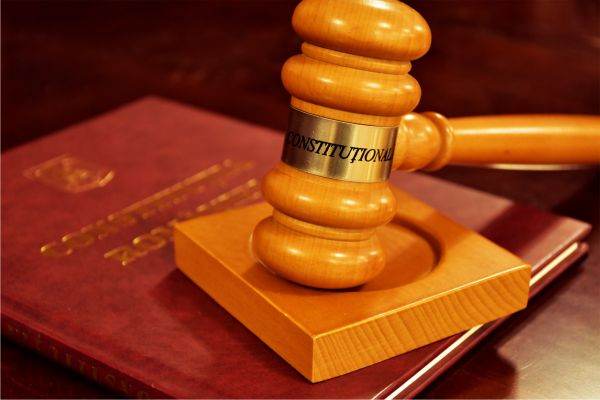
The Constitutional Court of Romania (CCR) decided yesterday, with a majority of 6 votes in favor and 3 votes against, that the law on the reform of magistrates' pensions is constitutional and thus rejected the objection of unconstitutionality formulated last year by the High Court of Cassation and Justice.
The press release issued by the CCR states that the objection of unconstitutionality formulated by the High Court of Cassation and Justice was rejected as unfounded. The Constitutional Court established that the Government has undertaken its responsibility on the Law for the amendment and completion of some normative acts in the field of service pensions, in compliance with art. 114 of the Constitution, since it regulated a homogeneous field of social relations and justified both the urgency and the necessity of adopting the law.
"The criticized provisions ensure a gradual transition to the new seniority and age conditions necessary to obtain a service pension and do not violate art. 147 paragraph (4) of the Constitution, in relation to the Constitutional Court's Decision no. 467/2023. The elimination of the update of the service pension in relation to the gross monthly employment allowance for judges or prosecutors in activity, in identical conditions of position, seniority and professional rank, does not violate art. 147 paragraph (4) of the Constitution, in relation to the Constitutional Court's Decision no. 467/2023. In terms of the dimensioning of the service pension amount, the criticized legal provisions do not violate art. 147 paragraph (4) of the Constitution, in relation to the Constitutional Court's Decisions no. 873/2010, no. 900/2020 and no. 467/2023", the press release states. press release issued by the CCR.
The decision was made after, previously, it was postponed five times until yesterday and after one of the four judges appointed at the PSD proposal, Mihai Busuioc, former president of the Court of Accounts and former Secretary General of the Government during the Grindeanu Cabinet, joined the other five judges who would have wanted to settle the issue in favor of the current Executive as early as December 28, 2025.
Following yesterday's decision of the CCR, after the law will be promulgated by President Nicuşor Dan, the pension of judges and prosecutors will be equal to 70% of the last net salary. Currently, the service pension of magistrates represents 80% of the last gross salary. The amount of the service pension will be 55% of the calculation base, represented by the average of the gross indemnities from the last 60 months, but no more than 70% of the last net indemnification had in activity. Magistrates will still be able to retire early, provided they have 35 years of service, but if they have not reached the age of 65, an annual penalty "of 2% until reaching the standard retirement age in the public system” will be applied.
• Steps to recover money from the PNRR for the reform of special pensions
After the CCR decision, President Nicuşor Dan declared, before leaving for the US: "I welcome the decision of the Constitutional Court regarding the reform of magistrates' pensions. Recalibrating the method of calculating these pensions is a gesture of fairness, expected by our society. I assure all magistrates that their work is respected, and their importance in the architecture of the state is fully recognized.”
The government will take steps to recover money from the PNRR for the reform of magistrates' special pensions, after the Constitutional Court declared this reform constitutional, the Executive announced.
"Prime Minister Ilie Bolojan welcomes the decision of the Constitutional Court regarding the occupational pensions of magistrates. It confirms the correctness of the Romanian Government's approach. The reform of special pensions was insistently requested by Romanian society and we are taking a big step towards equity. At the same time, from now on we will take steps to recover the money from the PNRR milestone related to this reform," a message from the Government states.
Sorin Grindeanu, PSD president and president of the Chamber of Deputies, stated: "It is very good that this issue has finally been clarified. I have not commented and will not comment on the decisions of the Constitutional Court. I have made an appeal for a decision to be made. It is good that this issue has been closed. From now on, it is Minister Pîslaru's job not to lose the money from the PNRR on this milestone."
The Minister of Investments and European Projects, Dragoş Pîslaru, immediately responded, saying that "justice has been done” and that the government led by Ilie Bolojan has succeeded, for the first time, in a major reform in an extremely sensitive area.
Dragoş Pîslaru specified: "Specifically, the retirement age is gradually increasing to 65 years, over a transition period of 15 years, and the pension will be, in principle, 55% of the average gross allowances from the last 60 months, but no more than 70% of the last net allowance. Moreover, early retirement is only possible with a minimum of 35 years of service and with a penalty of 2% per year until reaching the standard age of 65. It is a major change in one of the most sensitive reform chapters and a turning point in the discussion about equity and sustainability in the Romanian pension system. In the coming hours, I will have discussions with European officials regarding this evolution of the approval of the law by the CCR”.
The minister emphasized that, after the promulgation of the law, our country will be able to demonstrate the fulfillment of the milestone in the PNRR, and will request the European Commission to re-analyze the payment request in order to save the 231 million euros.
"With the promulgation by President Nicuşor Dan, we will finally be able to demonstrate the fulfillment of the reform undertaken by Romania within the PNRR. This will then be officially transmitted to the European Commission, for which we will request the re-analysis of payment request number 3. Even in the context of the regrettable delay of over two months after the deadline of November 28, I will make all diplomatic, formal and informal efforts to try to save the situation of the milestone of special pensions and the 231 million euros, non-refundable European money”, said Dragoş Pîslaru.
• The Minister of Justice calls for the continuation of the reform, the President of the High Court of Justice threatens to refer the matter to the European courts
In a telephone interview with B1 TV, Radu Marinescu, the Minister of Justice, stated that, after the CCR decision, he expects good collaboration between the state powers and assured that real problems in the judicial system, such as infrastructure, digitalization and reducing the workload of magistrates, will be discussed.
"From now on, the reform is achieved, the objective set by the governing coalition is met, the law will produce effects. But, once again, I emphasize, I hope that we will no longer have approaches from year to year, frequent, diverse approaches, regarding the status of any profession, precisely in order to have stability and normality for the future (...) There must not be a war between the powers of the state, between state institutions. We must learn and understand each other and manage to cooperate loyally in the interest of the citizen. I expect that, in the future, we will proceed to solve the real problems that exist in the judiciary, numerous problems related to infrastructure, related to digitalization, related to this reduction in the workload of magistrates, in order to make their work more efficient. Issues for which we have projects, for which we had good collaboration with the Superior Council of Magistracy. So I see the future in the key of cooperation, now that things have been settled and from this perspective of the status of magistrates, because the finality is to make justice more efficient, more good for citizens and to regain their trust,” said Radu Marinescu.
The Minister of Justice added that he expects magistrates to understand the role they have in society: "It is expected that, when a change is made to the status of any profession, it will react, to defend the rights it had previously won and which had been granted in the end by the Romanian state. But it is worth noting that today a maturity and functionality of the democratic institutional system in the rule of law called Romania has also been proven. The Government and Parliament acted on their prerogatives, that is, they legislated as they considered, the magistracy, through its legitimate institutional representative - the High Court of Cassation and Justice - appealed to the independent structure for assessing the supreme values in the state, which is the Constitutional Court. It took the necessary time to analyze, analyzed and gave a solution. We thus have a finality, and this finality must be respected in our state and we must start from this premise in a cooperation, I repeat, for the benefit of justice and the citizen (...) I I trust that the magistrates, who are professionally trained people, with a very important status in society, representing one of the powers of the state, will understand and will have the representation of the mission that remains for them, to do justice, to do justice, in a society that must remain a state of law”.
The USR President, Dominic Fritz, stated after the CCR decision regarding the reform of special pensions that the respective sentence is not a victory, but a gesture of normality, which paves the way for reforms that will reduce the privileges and influence of special interests.
"The CCR has formally established what was clear for an entire country: that the reform of special pensions and the retirement age of magistrates is constitutional and legitimate. Today it is not a victory, but a gesture of normality. It is also an affirmation of democracy: the political mistakes of the past can also be repaired through political voting. There are no spaces in society where the rules of the game cannot be changed through moral clarity and responsibility”, Dominic Fritz wrote on his official Facebook page.
Stelian Ion, former Minister of Justice, from the USR, wrote on his official Facebook page: "The CCR decision is a natural one. Unfortunately, the many postponements ordered so far have increased the tension inside of society. I hope that the amounts from the PNRR that we risked losing can also be saved. Now is the time to seriously start making the necessary corrections to the justice laws in order to have a functional justice system, not one captured by obscure interests. The Ministry of Justice cannot postpone this moment any longer”.
Lia Savonea, president of the High Court of Cassation and Justice - the institution that challenged the law at the Constitutional Court -, claims that the ÎCCJ will continue its efforts to defend the "independence of justice”. The head of the ÎCCJ stated that "the obvious setback in terms of constitutional protection requires firm reactions”.
"The independence of the judiciary is not negotiable, and the ÎCCJ will use all legal and institutional instruments to defend it, including by notifying the competent European institutions”, Lia Savonea reacted for HotNews.
• CSM complains about the large number of files
Before the meeting, sources quoted by the media stated that the president of the Legislative Council, Florin Iordache, was in the offices of the judges of the Constitutional Court to discuss with them the decision that was to be made. Also before the CCR meeting, Sorin Grindeanu wrote on the official Facebook page: "I hope that today we will have a final decision at the Constitutional Court of Romania on the subject of special pensions. It is a topic that has cost us an enormous amount, both as a country and as a society. Taking a clear decision is necessary, because this is what Romanians expect from the fundamental institutions of the state. I am convinced that, in the end, wisdom will prevail!".
Furthermore, an hour before the CCR meeting, the Section for Judges of the Superior Council of Magistracy tried to raise awareness of the constitutional court by publishing a press release showing, with data, the fact that they are overloaded with files. According to the SCM press release, the number of cases pending in the courts in our country in 2024 was 769,823, compared to the European average of 358,277, which is more than double. Regarding the number of cases per 100 inhabitants, our country had over 4 cases (4.04) at the end of 2024, unlike the European average of 1.75.
The SCM also presents statistics on newly filed cases, in which, according to the data, Romania was in first place on January 1, 2025, with 1,602,689 new cases in 2024, compared to the European average of 418,544, which means that four times more trials were registered in our country.
Overall, the cumulative total at the end of 2024 (newly entered and pending cases) in our country stood at 2,372,512 cases, which means 8.42 new cases/100 inhabitants, compared to the European average, which stood at 2.20 new cases/100 inhabitants.
The SCM shows that the volume of activity, four times higher, was absorbed exclusively by quadrupling human effort, in the conditions of a constant deficit of judges of up to 15%, and that the positive indicators regarding the resolution rate and the average resolution duration were achieved through additional human effort by judges.

























 Euro
Euro Dolar SUA
 Franc elveţian
 Liră sterlină
 Gram de aur