English

China Advances in the Shadow of War
(M.S.)
English Section / 3 martie
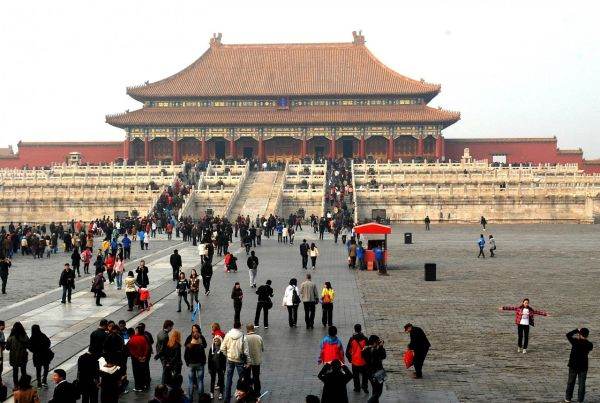
China is set to present its medium-term strategic vision at the National People's Congress (NPC), amid the escalating armed conflict in Iran, triggered on February 28, 2026, by joint military operations conducted by the United States and Israel - operations that led to the elimination of Iran's Supreme Leader Ali Khamenei and prompted Iranian retaliation through missile and drone attacks against Israel, the United Arab Emirates, Qatar, Kuwait, and other Gulf states.
The opening of the National People's Congress session on March 5, where the final outline of the 15th Five-Year Plan (2026-2030) will be adopted, takes on major geopolitical significance. According to official Chinese sources and international analysts, the document emphasizes China's stability, technological self-sufficiency, and economic resilience at a time when the war in the Middle East is disrupting global energy markets, supply chains, and the balance of power.
According to Reuters (March 2, 2026), the plan comes just weeks before the scheduled meeting between Chinese President Xi Jinping and U.S. President Donald Trump (March 31 - April 2), where technology and supply chains will be central topics. The war in Iran intensifies the pressure: oil prices have risen sharply, while risks to the Strait of Hormuz - the main route for energy exports - are heightening global vulnerabilities, including for import-dependent economies.
Consequences for the economic-financial confrontation with the U.S.
According to analysts cited by Reuters and Rhodium Group (January 2026 report), the conflict in Iran strengthens Beijing's determination to accelerate technological and industrial self-reliance. China, which already controls critical segments of global supply chains (rare earths, low-end electronic components), is using this context to consolidate its position as a stable alternative to disruptions caused by war.
Doug Friedman, CEO of the American institute BioMADE, states: "We're neck and neck. Whoever doubles investment over the next 3-5 years will gain a real advantage.” The war in Iran diverts American and European resources, giving China a window to expand its influence in key technologies (AI, humanoid robots, space), while reducing dependence on Western chips and equipment.
According to The Straits Times (March 2, 2026), the plan will project "stability” through modest economic growth targets (below 5%), focusing on domestic consumption and exports to offset external shocks generated by the Iranian conflict. This further intensifies the economic-financial rivalry with the U.S.: Beijing is betting on strengthening its position in supply chains, while Washington simultaneously manages military costs in the Middle East and technological competition.
What is expected from the final document to be adopted by the Chinese Communist Party
The Chinese Communist Party's recommendations from October 2025 (the framework document officially published on October 28) will be almost entirely incorporated into the final outline, according to statements from the Politburo on February 27, 2026. According to Xinhua News Agency and Government of China (gov.cn), the document will maintain as its central pillars:
"new quality productive forces,”
self-reliance in science and technology,
industrial modernization.
Analysts at Plenum China (cited by Reuters) expect increased emphasis on "AI-plus manufacturing” - the large-scale integration of artificial intelligence into factories, logistics, and energy systems, with major state-owned enterprises acting as anchors of adoption.
According to experts at Ankura Consulting (Alfredo Montufar-Helu, cited by Reuters): "The [DeepSeek] shock is over. Now comes the expectation of what China can produce next.” The final outline will include, according to forecasts by Rhodium Group and Plenum:
Concrete numerical targets (reasonable average annual GDP growth, R&D investment above 3% of GDP, reduced carbon intensity);
Explicit priorities for embodied intelligence (humanoid robots), space (including private reusable rockets such as Zhuque-3 from LandSpace), and sectors with rapid commercial impact (autonomous driving);
Measures to protect supply chains, amid export controls on rare earths and low-end semiconductors already expanded by Beijing.
Shujing He of Plenum China emphasizes, according to Reuters, that the strategy will favor large enterprises capable of absorbing implementation costs, accelerating industrial consolidation.
The 15th Five-Year Plan will likely not represent a radical change of direction, but rather a pragmatic refinement of the strategy adopted in October 2025. According to all official Chinese sources and independent analysts, it transforms recent breakthroughs (AI, robotics) into systemic gains at industrial scale, positioning China as a resilient technological power precisely as the war in Iran reshapes the global balance of forces.
The full document will be published after NPC approval, most likely in the second half of March. Until then, markets and Western capitals are closely watching how Beijing will calibrate its response to an international environment marked by instability.



















 Euro
Euro Dolar SUA
 Franc elveţian
 Liră sterlină
 Gram de aur