English


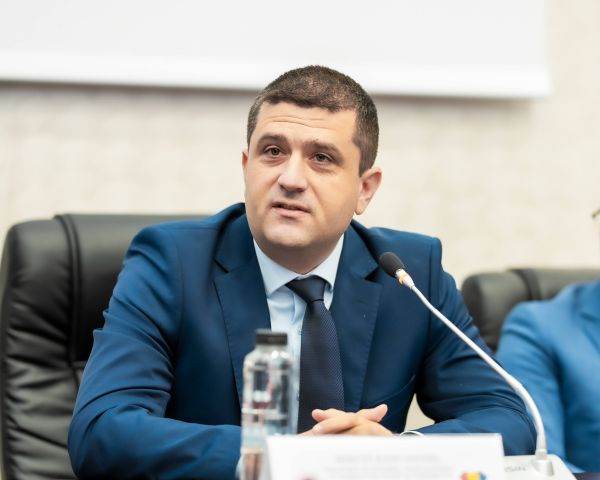
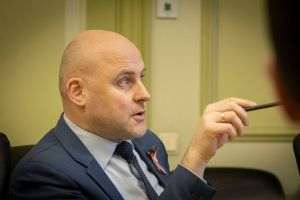
The Ministry of National Defense will receive 9.53 billion euros from the SAFE mechanism to finance 21 Army equipment projects, Minister Radu Miruţă declared yesterday, during a press conference he held at the Victoria Palace with Mihai Jurca - Head of the Prime Minister's Chancellery, Bogdan Despescu - Secretary of State within the Ministry of Internal Affairs and Raed Arafat - Coordinator of the Department for Emergency Situations, an event during which all the projects that will be financed through the respective European mechanism were presented.
Ten of the projects intended for the Army will be carried out in joint procurement with other European states, and eleven are national programs. Romania will acquire, in partnership with France, Mistral portable anti-aircraft missile systems worth over 600 million euros, 12 state-of-the-art H225 multirole helicopters, as well as 12 modern radar systems. In cooperation with Germany, three air defense systems to complete the Patriot complex and two anti-aircraft command and control systems will be purchased. In addition, SAFE will finance VSHORAD systems with anti-drone capabilities, other very short-range VSHORAD systems, Piranha 5 armored personnel carriers produced in Romania, Iveco military trucks, an intervention ship, OPV ships for the Naval Forces, as well as the already existing programs regarding infantry fighting vehicles (MLI). All these acquisitions are integrated into a multi-annual plan approved by the CSAT and Parliament and are intended to quickly close critical vulnerabilities in Romania's air, land and naval defense, in a context in which NATO's eastern flank is directly exposed.
2.8 billion euros are allocated for the Ministry of Internal Affairs and the area of security and public order, of which approximately 900 million go exclusively to civil protection, a rare decision at the European level and explicitly encouraged by the EU and NATO. The Ministry of Interior will purchase equipment intended for intervention in major crisis situations, but perfectly functional in peacetime: multirole aircraft for transporting victims and equipment, seven medium-heavy helicopters with transport, medical evacuation and firefighting capabilities, five light-medium helicopters for medical transport, a train for the medical transport of victims, a helicopter flight simulator, two river search and rescue boats, drone systems for extinguishing fires and mini-drones for searching for victims in collapsed buildings, eight intervention robots in chemical, radiological, biological and nuclear environments, decontamination containers, tents and equipment for CBRN interventions, electric generators, 42 mobile camps for mass evacuations, 82 trucks, 20 communications trucks, various trucks, fuel tankers and mobile repair workshops. In parallel, the Ministry of Interior will invest in weapons and ammunition for operational structures, anti-drone systems, observation capabilities, critical communications and command-and-control systems, as well as in a new integrated national warning and alerting system that will replace the outdated siren network.
Beyond defense and public order, SAFE will also finance strategic infrastructure projects, with 4.2 billion euros allocated to the A7 Paşcani-Siret and A8 Paşcani-Iaşi-Ungheni highways, essential sections for both Moldova's economic development and military mobility on the eastern flank. In the current security logic, road infrastructure is no longer a separate chapter, but an integral part of the state's response capacity.
All these projects sum up the 16.6 billion euro application submitted by Romania through SAFE, the second largest in the European Union, in a program with a total budget of 150 billion euros. The financing is granted in the form of a 45-year loan, with extremely advantageous interest rates, specific to triple-A rated states, and with a 10-year grace period, which means that the first payments will only be made from 2035. The conditions imposed by the European Commission are clear: purchases made, as far as possible, jointly with other states, a minimum of 65% of production in Europe and total state control over critical components and software.










 Euro
Euro Dolar SUA
 Franc elveţian
 Liră sterlină
 Gram de aur