English


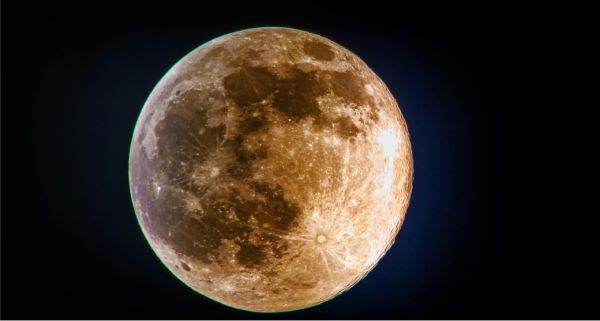
Atoms and molecules from Earth's atmosphere have been migrating into space and settling on the moon's surface for billions of years, according to new research that solves a long-standing mystery dating back to the Apollo missions. The discovery was published in the journal Communications Earth & Environment and is presented by Space.com. The results suggest not only that the Moon may hold a natural archive of Earth's primitive atmosphere, but also that lunar soil contains valuable elements that could support future permanent human bases.
Analyses of lunar regolith samples brought back by Apollo astronauts have revealed unexpected amounts of volatile substances - elements such as water, carbon dioxide, helium, argon and nitrogen, characterized by low boiling or sublimation points, the research reveals, according to the cited source. Some of these substances reach the Moon via the solar wind, but the abundance of some elements, especially nitrogen, cannot be explained exclusively by this mechanism.
In 2005, researchers at the University of Tokyo proposed the hypothesis that some of these volatile substances come from Earth, in the form of particles that escape from the upper atmosphere when accelerated by energetic particles in the solar wind. However, the Japanese team believed that this process would have been possible only in the early stages of Earth's history, before the planet developed a strong global magnetic field capable of limiting the loss of atmosphere to space.
• Surprising discovery by American researchers
A team at the University of Rochester disputes this hypothesis. The researchers, led by doctoral student Shubhonkar Paramanick and astronomy professor Eric Blackman, used computer simulations to evaluate the transfer of atmospheric particles from Earth to the Moon in two distinct scenarios. The first involved early Earth, with a weak magnetic field and a strong solar wind. The second looked at modern conditions, characterized by a strong magnetic field and a more moderate solar wind. Contrary to expectations, the results showed that the modern scenario is more favorable for the transfer of atmospheric particles to the Moon. "Instead of completely blocking the escape of particles, the Earth's magnetic field has essentially created a highway to the Moon,” the study authors explain. Some lines of the Earth's magnetic field extend far enough to allow particles to reach the lunar surface.
Recent findings by researchers at the University of Oxford show that the Earth already had a magnetic field comparable in strength to its current one about 3.7 billion years ago. This suggests that the process of "leaking” the Earth's atmosphere to the Moon could have been ongoing for much of the planet's history. "By combining data from the lunar soil with modeling of the interactions between the solar wind and the Earth's atmosphere, we can reconstruct the history of the Earth's atmosphere and its magnetic field,” said Eric Blackman. Thus, the lunar regolith could constitute a unique, very long-term record of the evolution of climate, environment and even conditions favorable to life on Earth. The study is also relevant for understanding atmospheric loss on other planets, such as Mars, which no longer has a global magnetic field today, but had one in the past, along with a denser atmosphere. The phenomenon is not unique in the Solar System. On Pluto, the planet's thin atmosphere leaks towards its moon, Charon, not by means of a magnetic field, but as a result of gravitational interactions. In addition, the accumulation of volatile substances on the Moon, including water, brought both from the Earth's atmosphere and by impacts with asteroids and comets, could have major benefits for future human presence.























 Euro
Euro Dolar SUA
 Franc elveţian
 Liră sterlină
 Gram de aur