English


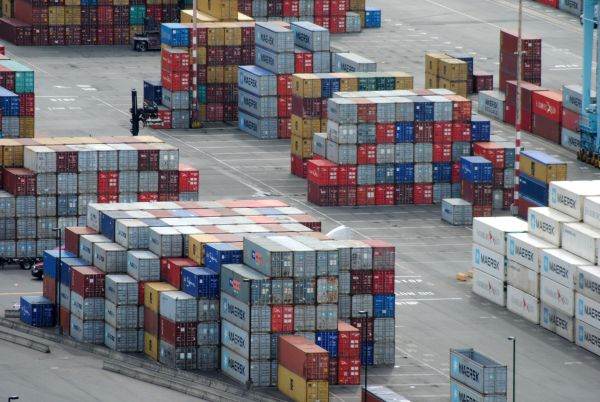
The European Union is completely dependent on imports for ten of the critical raw materials needed for the energy transition, and in many cases the supply is concentrated in a single country, is the reality that emerges from the report published last night by the European Court of Auditors (ECA), an institution that warns that the EU's energy and industrial policy is in an area of deep structural vulnerability, at a time when climate goals are becoming increasingly ambitious and global competition for strategic resources is intensifying.
"Without critical raw materials, we can have neither energy transition nor competitiveness or strategic autonomy. Unfortunately, for now we are dangerously dependent on a few countries outside the EU to supply ourselves with these materials. It is therefore essential that the EU gathers all its forces and reduces its vulnerability in this area,” said Keit Pentus-Rosimannus, the Member of the European Court of Auditors responsible for this audit, when presenting the report.
The cited document specifies that the Union's energy transition is based on technologies such as batteries, wind turbines, photovoltaic panels, electrolysers and heat pumps, all of which depend on a limited set of critical raw materials, including lithium, nickel, cobalt, copper, graphite, magnesium and rare earths. Of the 34 critical raw materials identified at European level, 26 are relevant for the energy transition, and 17 are considered strategic. However, most of these materials are extracted and processed outside the Union, and supply chains are often dominated by one or a few third countries, which increases economic and geopolitical risks.
The ECA stresses that this concentration is not a marginal phenomenon, but a structural feature of the EU supply. At the extraction stage, the Union is completely dependent on imports for ten critical raw materials essential for the energy transition. At the processing stage, the dependence is even more pronounced in the case of strategic materials, where over 65% of the supply comes from a single third country. Examples are eloquent: 97% of the magnesium used in the EU for hydrogen-generating electrolysers is imported from China, and 99% of the boron used for solar panels comes from Turkey. For lithium, magnesium, gallium and rare earths, the dependence on a single external source exceeds the 65% threshold at the processing stage, exposing the European energy transition to risks that cannot be controlled internally.
In this context, the Court explicitly warns that "the EU is struggling to end its dependence on imports of critical raw materials concentrated in just a few countries”, and the overall conclusion is that "a secure supply of critical raw materials does not seem to be guaranteed by 2030”. This assessment is in direct contradiction with the Union's political timetable, which calls for at least 42.5% of energy consumption to come from renewable sources by 2030 and for climate neutrality to be achieved by 2050. The European Regulation on Critical Raw Materials, adopted in 2024, was designed to respond to this dependence, but the Court finds that the legislative instrument fails to provide a solid basis for reducing vulnerability. The auditors point out that "the Critical Raw Materials Regulation sets a strategic direction, but its objectives are not justified and the underlying data are not robust”. The 2030 targets for import diversification, domestic extraction, processing and recycling are not binding, apply only to strategic raw materials and are not supported by a methodology showing how they contribute in concrete terms to the EU's renewable energy or net-zero industry targets.
In parallel, efforts to diversify imports have not produced tangible results. Although the EU has stepped up its external activities, including through trade agreements and strategic partnerships, the Court finds that "strategic partnerships improve cooperation but contribute only to a limited extent to the security of supply of critical raw materials”. Furthermore, the European Commission does not have quantified data demonstrating the effect of these initiatives on the EU's actual supply, and the lack of concrete supply projects means that the results are, at best, limited.
Import dependence is exacerbated by trade distortions and the geopolitical context. The Court points out that "trade distortions restrict access to critical raw materials, while the effect of the EU's external activities on supply cannot be determined.” Export restrictions imposed by certain third countries, trade disputes and geopolitical instability are increasing the doubt, at a time when global demand for critical raw materials is growing rapidly.
Internally, the Union's capacity to reduce this dependency is limited by financial, legal and administrative bottlenecks. Exploration activities are underdeveloped and risky, and the permitting procedures for mining projects are lengthy and complex. Even when deposits are identified, it can take up to two decades before they enter production. At the same time, processing capacities in the EU are hampered by a lack of technologies and high energy costs, which reduce industrial competitiveness and discourage investment.
Recycling, often invoked as an alternative solution, remains underdeveloped. The Court finds that "substitution and recycling are still not being achieved at a sufficient level” and 10 out of the 26 critical raw materials needed for the energy transition are not recycled at all. Seven others have recycling rates between 1% and 5%, and technological barriers, high costs and regulatory obstacles limit the expansion of this sector.
Overall, the picture described by the European Court of Auditors indicates a structural discrepancy between the Union's climate ambitions and the economic reality of the supply of critical raw materials. Without a real reduction in import dependency and without strengthening domestic extraction, processing and recycling chains, the EU's energy transition remains exposed to major risks.













 Euro
Euro Dolar SUA
 Franc elveţian
 Liră sterlină
 Gram de aur