English

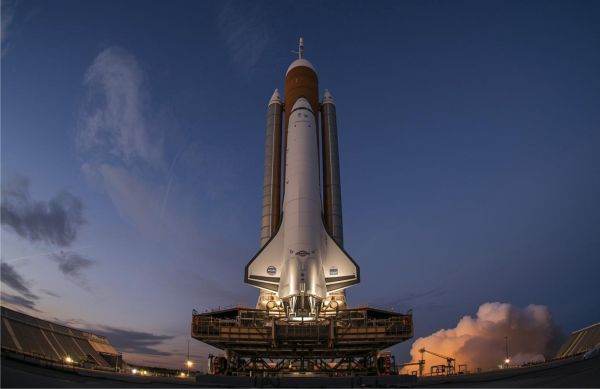
The European Space Agency (ESA) is preparing for the most intense year in its history, with 65 satellite launches and space missions planned in 2026, an unprecedented level, which will exceed the record set in 2025, when 46 launches were carried out. The announcement was made by ESA Director General Josef Aschbacher, during a press conference dedicated to the assessment of the agency's activity and prospects for the current year, EFE reports. The accelerated increase in the number of missions reflects a change in the scale of European ambitions in the space field, in a global context marked by intense technological competition, strategic security challenges and the need for autonomy in access to space.
• Ariane 6, the cornerstone of the European strategy
One of the main challenges for ESA in 2026 is to double the number of launches of the Ariane 6 rocket, the main European high-capacity carrier. After the four launches carried out in 2025, the objective is to rapidly increase the operational pace.
Initially, the Arianespace consortium - controlled by Airbus and Safran - had planned five Ariane 6 launches last year. However, the last launch, with the most powerful version, Ariane 64, equipped with four solid-fuel thrusters, was postponed to 2026. This version is essential for the fulfillment of strategic contracts, including the launch of satellites in the Kuiper constellation, Amazon's project intended to provide global satellite internet. Josef Aschbacher highlighted that, in just 17 months since its first flight, Ariane 6 has recorded five launches, a pace considered unprecedented for a new rocket in this category. According to the ESA director, the performance shows that the new European launcher "has worked very well”. For the coming years, Arianespace is targeting between nine and ten Ariane 6 launches per year, and further details on the schedule could be announced next week.
• Competition for new European launchers
In parallel with the consolidation of Ariane 6 and Vega C, which are already operational, ESA is running a strategic tender for the development of new sovereign launch capabilities, aimed at the emerging European space industry. Among the companies competing are:
- PLD Space (Spain), with the Miura rocket;
- Isar Aerospace and Rocket Factory (Germany);
- MaiaSpace (France);
- Orbex (United Kingdom).
The initiative reflects ESA's desire to diversify access to space and support the development of a competitive European ecosystem, capable of competing with American private players.
• Explosion of Earth Observation Missions
The most spectacular quantitative leap is expected in the field of Earth observation. ESA plans to increase the number of satellites launched from 22 to 48, of which 33 will be part of the Iride constellation, a project launched at the initiative of the Italian government. "This is an absolute record in terms of Earth observation satellites,” said Aschbacher, emphasizing the importance of this field for monitoring climate change, security, agriculture and managing natural disasters.
• Space exploration and human presence in orbit
In addition to observation missions, ESA has 15 space exploration missions underway, with another 12 in preparation. A significant symbolic moment in 2026 will be the departure of French astronaut Sophie Adenot on a mission aboard the International Space Station (ISS), scheduled for February 15. The mission confirms Europe's active role in human spaceflight programmes.
ESA currently operates with an annual budget of euro8.26 billion, of which:
- 64.2% comes from Member States' contributions;
- 23.4% from the European Union;
- 7.9% from third-party sources.
At the ESA ministerial meeting in Bremen in November 2025, the 23 Member States approved a budget of euro22.1 billion for the period 2026-2028, representing an increase of 31% in nominal terms and 17% adjusted for inflation.
Asked about the impact of NASA's budget cuts decided by the Donald Trump administration, Josef Aschbacher admitted that they "have an impact" on the joint programmes, but stressed that the cooperative relationship between ESA and the US space agency remains strong. With the scale of the programs and the unprecedented volume of launches, the year 2026 is shaping up to be a turning point for European space policy, marking the transition from recovering lost capabilities to a strategy of expansion and autonomy in a field that has become essential for security, economy and research.




















 Euro
Euro Dolar SUA
 Franc elveţian
 Liră sterlină
 Gram de aur