English

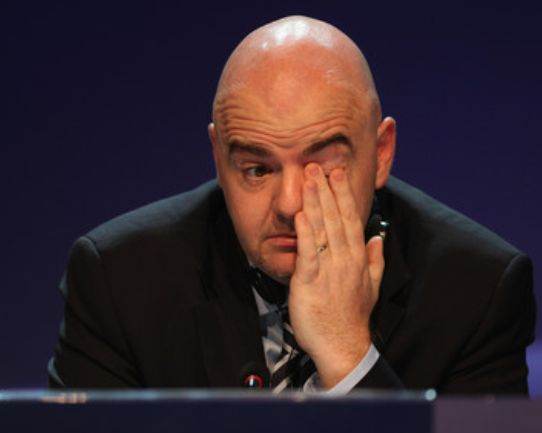
FIFA President Gianni Infantino has reignited one of the most sensitive controversies in world sport, saying that football's world governing body should lift its ban on Russia from international competitions. The comments, made in an interview with Sky News and reported by Politico, come amid persistent geopolitical tensions over the war in Ukraine and a growing rapprochement between FIFA and the US administration.
Russia was suspended by FIFA in the winter of 2022, immediately after the full-scale invasion of Ukraine. The measure targeted all Russian national teams and clubs, making it one of the harshest sports sanctions ever imposed on a country in a geopolitical context.
While the ban remains in place for senior teams, some youth teams have been allowed to gradually return to international competition from 2023, a decision that has already drawn criticism from some federations and civic organizations.
• "I am against bans and boycotts”
In an interview with Sky News, Gianni Infantino was explicit about his position:
"We have to do it. I am against bans, I am also against boycotts. They only create more hatred,” the FIFA president said. Infantino argued that Russia's return to international competition would send a positive message, especially for children and young athletes. "It would be a good sign that girls and boys from Russia can play football all over Europe,” he added. The statements suggest an approach that separates sport from political decisions, a line of argument that has been frequently invoked but hotly contested in the context of the current conflict.
• Close relationship with the Trump administration
Infantino's position is also being analyzed in light of his close relationship with US President Donald Trump. In December, the FIFA chief awarded Trump the FIFA Peace Prize, a newly created distinction, considered by many observers to be symbolic, in the context in which the American leader did not win the Nobel Peace Prize, despite intense public campaigns in this regard. In addition, FIFA opened an official office in Trump Tower in New York in July, and Ivanka Trump, the daughter of the US president, was appointed to the board of directors of an educational charity project partially financed by ticket sales for the 2026 FIFA World Cup.
• World Cup under the sign of controversy
The United States will host the World Cup this summer, along with Mexico and Canada. The event has already been overshadowed by calls for a boycott from some political and social circles, which criticize the foreign policy of the Trump administration. In this context, a possible lifting of the Russian ban could amplify tensions and put FIFA in a delicate position, between diplomatic pressures, commercial interests and the declared values of sport.
• A precedent with global echoes
Russia hosted the 2018 World Cup, a tournament considered, at the time, an organizational success. Its return to international football would set a major precedent and could reshape the way global sport reacts to armed conflicts and violations of international law. For now, Gianni Infantino's statements have not materialized in an official decision, but they indicate a change of tone at the top of FIFA, with the potential to generate strong reactions from both the sports community and international political actors.




















 Euro
Euro Dolar SUA
 Franc elveţian
 Liră sterlină
 Gram de aur