English

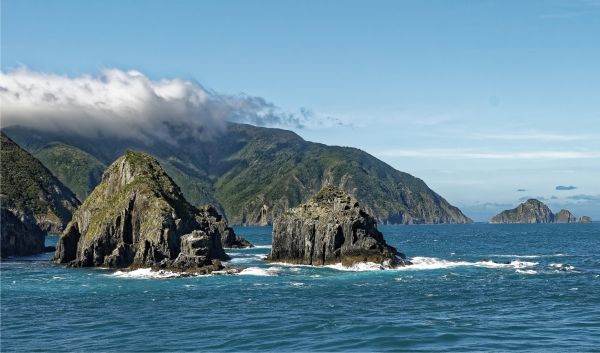
The world was shaken after US President Donald Trump began to talk obsessively about Greenland. His speech "wobbled” in all directions, from aggression to a desire for peaceful negotiation, with the president claiming that the island could be annexed to the US by force of arms or with the help of money. A huge chorus rose up against this strange score. Things were not the same 16 years ago, when somewhat similar proposals appeared from one European country (Germany) to another European country (Greece), the main subject also being some islands.
While the rest of the world was revising its economic plans, looking at inflation, demographic evolution, regional wars and climate change, Donald Trump decided that the solution to all global problems was simple: to buy or force the purchase of a cold island. Thus, in 2025-2026, the focus of the US president migrated to Greenland, not for tourism or to study .. the climate, but to "integrate" it under the American flag. This is not an absurd episode of a satirical series, but something real that has already generated major international tensions. Trump spoke impulsively about using "force of arms" or money to obtain the island, arguing that "anything could be done for national security". The global reaction was as surprising as... protests ("Hands off Greenland"), diplomatic criticism from European leaders and serious discussions about international norms regarding the sovereignty of states.
Moving forward, but not to the future, but to the past, it is worth looking in the mirror a little at the 2010s, when another crisis related to the economy, money and islands made waves in another context - the eurozone debt crisis. There, the Greek islands were not proposed for annexation by force but as potential assets to save a collapsing economy. The question may also arise: What is Greenland's debt and to whom? The answer has already been given, a military-strategic one, to the Western world, and Greenland and Denmark do not have the necessary resources to "pay it off".
Obviously, the tone makes the music, including when you claim the right to an island.
• Greece: Islands, Debt, and the Lesson of Monetary Union
When the sovereign debt crisis devastated Greece from 2009-2010, the idea of "selling assets to pay off debts” was not a geopolitical joke, but a serious discussion in the European press and among German politicians. In 2010, two members of the German Parliament, Josef Schlarmann and Frank Schaeffler, publicly suggested that Greece sell islands and other assets to recover economically. They argued that "those insolvent must sell everything they have to pay their creditors,” and that Greek assets - buildings, companies, and more or less inhabited islands - could be used to reduce the debt burden. One name was also mentioned: Corfu, an island famous not only for its tourism. Although these proposals sparked outrage in Greece and were never implemented, they remain a symbol of the extreme measures discussed at the time.
To understand the scale of the crisis and how serious the issue was, one must also look at what has happened in this country over the past 16 years: Economically bankrupt, Greece received about 275 billion euros in three assistance programs between 2010 and 2018, and only the last one was successfully completed. At the end of the program, Greece's debt remained huge - about 179% of GDP, one of the highest in the EU. The lenders' goals required tough reforms, including annual budget surpluses of 3.5% of GDP by 2022 and then 2.2% by 2060 - goals that many economists consider difficult to achieve. However, Greece has achieved some positive milestones in emerging from the crisis: a surplus budget, falling unemployment and lower bond yields than in 2010, indicating increased confidence in financial markets. In December 2025, Greece already repaid 5.3 billion euros in debt early, saving over 1.6 billion in interest payments until 2041. In addition, it retained all the islands.
• The world trembles over an ice island
In another part of the globe, during another crisis - the geopolitical one - tensions escalated when the US president spoke of Greenland as a geopolitical bargaining chip. Donald Trump promoted the idea that the US could acquire Greenland to strengthen its strategic position in the Arctic and to counter the influence of Russia and China. European states, including Denmark, have strongly rejected the idea, stressing that territorial sovereignty is non-negotiable. Trump has since retracted his comments on the use of force, but has said he is optimistic about a future agreement, without providing specific details.
Greenland is not just a piece of ice, as one might think on the surface. Climate change is warming the Arctic about four times faster than the rest of the world, opening up new shipping lanes and making valuable natural resources, from oil and gas to rare minerals essential to technology, accessible. Its geographic position gives it an important role in military and strategic surveillance.
Pro-sovereignty protests in Denmark and Greenland have grown in the wake of threats of annexation. Europe has condemned the rhetoric as a form of "neo-colonialism,” and leading leaders have warned of the erosion of international norms and Western alliances. Denmark has bolstered its military presence in Greenland and is reasserting its control over the territory.
While Greece has weathered a painful economic crisis marked by reforms, commitments, and measurable progress, the Greenland crisis is yet another geopolitical experiment in progress, mixing elements of military strategy, natural resources, and climate change.
If in Europe in the 2010s, there was discussion, even with exaggerated irony, about islands for financing, today the world is discussing islands for security and global influence, with weapons, tariffs, tense alliances and civic protests at the center. The not-so-distant future will show whether the Greenland issue will remain just an episode of diplomatic spectacle or whether it will shape the strategic configuration of the 21st century. One thing is certain, double standards (even when it comes to islands and fluid borders) are used to the fullest in this whole world, including the civilized one.



















 Euro
Euro Dolar SUA
 Franc elveţian
 Liră sterlină
 Gram de aur