English

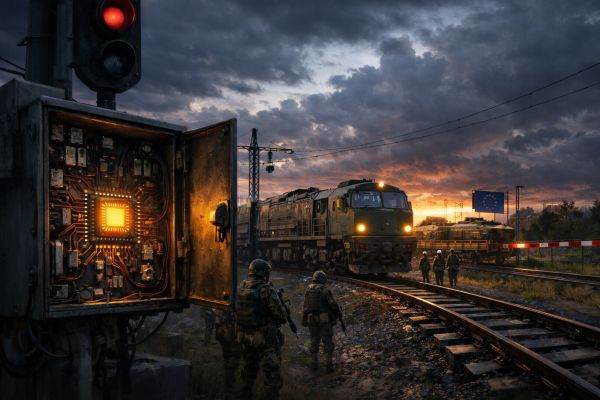
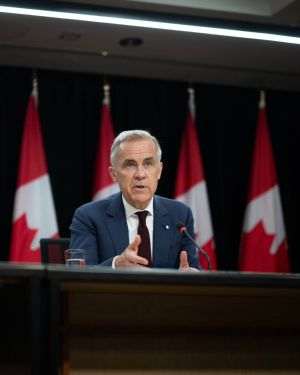
French MEP Francois Kalfon, one of the European Parliament rapporteurs for the military mobility file, warns sharply that the infrastructure and rolling stock used in European dual mobility projects - civil and military - must come from the European Union, in order to eliminate any risk of external sabotage in an increasingly fragile security context, according to an article published by Euronews.
"Today, everything is digitalized. I do not want our digitalized railway signaling points to be able to be stopped remotely because there are Huawei chips inside them," Francois Kalfon told the cited source, highlighting the risk of the existence of so-called "kill switches" (ed. - hidden remote stopping mechanisms) that could block, at critical moments, the movement of European troops and military equipment.
The statement comes as the European Parliament prepares to substantially strengthen the legislative package on military mobility, presented by the European Commission in November 2025, a package that aims to harmonise rules across the 27 member states in order to drastically reduce the time it takes to move troops and equipment across the Union. Currently, some member states can take up to 45 days to respond to a request from another EU state for the cross-border transit of military equipment. The European executive proposes that this period be reduced to a maximum of three days in peacetime and to a maximum of six hours in crisis situations, under a new emergency mechanism, the European Military Mobility Enhanced Response System (EMERS), already dubbed the "military Schengen”. For Francois Kalfon, however, the issue is not just bureaucratic speed, but also strategic control over infrastructure and technology. "What is missing from the text is European preference. It is prudent for our investments in infrastructure and rolling stock to give priority to Europe,” says the French MEP, who points out that currently "there is nothing that obliges any transport operator to use European equipment,” which in his opinion represents a major vulnerability at a time when critical infrastructure is increasingly the target of hybrid wars. The geopolitical context amplifies these fears. Russia's large-scale invasion of Ukraine in February 2022, as well as recent years marked by suspicions of sabotage against critical infrastructure in Europe, have forced European states to reassess their strategic dependencies. A major source of concern is Chinese holdings in ports, airports, electricity companies and telecommunications infrastructure. There are fears that Chinese investments could allow the collection and transmission of strategic data to Beijing or even the installation of hidden mechanisms that would allow the remote shutdown of key European infrastructure.
Although, at the end of last year, the European Union reached an agreement to tighten the rules on foreign direct investment in critical infrastructure and strategic sectors, and the European Commission recently called for limiting the acquisition of components and equipment from "high-risk" foreign suppliers in areas such as telecommunications networks, data centers, cloud services and connected devices, the European Parliament rapporteur on the military mobility file claims that the transport sector remains insufficiently protected. "I will give an example that is not related to military mobility, but to fighter jets. If Greenland were potentially attacked by the United States and they only have F-35s, and in order to authorize the flight plan they are obliged to send the flight plan to Lockheed Martin, you have a problem. In our case, it is less visually spectacular than with fighter jets, but with trains and airplanes the problem is practically the same. And we want to change this,” Francois Kalfon told the cited source.
The European Union has already introduced a "Made in Europe” preference in several defense initiatives, including the 150 billion euro SAFE defense loan scheme and the 1.5 billion euro European Defense Industry Program, where at least 65% of the components of the financed projects must come from the EU or an associated country, such as Norway or Ukraine. However, Kalfon believes that this logic must be firmly extended to military mobility.
In addition, the French MEP aims to amend another key element of the Commission package: the proposal to create a "military solidarity pool”, through which member states would voluntarily offer assets for use by others if necessary. In his view, this mechanism is insufficient.
"We need a strategic reserve of European rolling stock,” says Francois Kalfon, comparing the concept to RescEU, the EU's crisis response plan, which is buying 12 firefighting aircraft with EU funds. "What is a strategic reserve? It means that if a high-intensity war breaks out in Europe - let's say Poland is attacked - all your wagons and locomotives are mobilised to transport equipment to the front. That means high-intensity war. We don't have enough locomotives and freight wagons to do that,” Francois Kalfon told the source.
On the list of assets that should be jointly purchased, with direct EU funding, Kalfon includes locomotives, freight wagons and hospital train wagons, jumbo jets and jumbo helicopters. Special attention is being paid to dual-use locomotives, capable of running on both electricity and fuel.
"In particular dual-use locomotives, which can run on both fuel and electricity, for reasons of resilience. Your locomotive must be able to run if the power plant is bombed, so it must also be diesel. We do not have this type of equipment or we have very little of it,” the French MEP told the cited source, adding that these assets, by their dual nature, could also be used within RescEU.
All these proposals overlap with the European Commission's ambition to create a true "military Schengen”. According to the package presented, member states will be obliged to allow the transit of troops and military equipment within a maximum of three days in peacetime and within just six hours in emergency situations, with the presumption that authorization will be granted automatically in the event of a crisis. The package also provides for the acceleration of cross-border authorisation procedures, the creation of a new response system for military mobility, inspired by the EU Civil Protection Mechanism, a "military mobility catalogue" of dual-use assets from the private sector and a coordination group made up of one national coordinator from each member state. In parallel, 500 infrastructure projects considered essential for the improvement of four European military corridors, the routes of which have not been made public, will be prioritised for funding, aiming to modernise roads, railways, ports, airports, tunnels and bridges so that they can support the weight and dimensions of military equipment. The financial size of the plan is estimated at almost euro100 billion, given that the current multiannual budget, which ends in 2027, allocates only euro1.7 billion for military mobility, i.e. "a drop in the ocean". The proposal for the next seven-year budget, which will start in 2028, foresees almost 18 billion euros, a tenfold increase, but still far from necessary. However, the Commission is counting on the fact that member states will also be able to use cohesion funds, given the dual-use nature of infrastructure, as well as the SAFE loan scheme for defence, and that investments will also be able to be counted towards NATO's new spending targets.
In this context, insists Francois Kalfon, the European preference is not a protectionist fad, but a condition of existential security. In a Europe faced with the real risk of a high-intensity conflict, rapid, safe and sovereign military mobility is no longer a technical option, but a line of strategic defence. And without full control over the infrastructure and technology that support this mobility, warns the MEP, the Union risks discovering, precisely at the critical moment, that speed is worth nothing if it can be stopped remotely.
















 Euro
Euro Dolar SUA
 Franc elveţian
 Liră sterlină
 Gram de aur