English


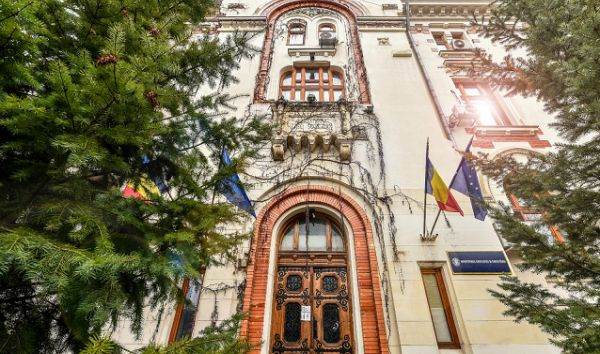
The Ministry of Education and Research (MEC) has begun technical discussions with the Ministry of Investments and European Projects (MIPE) and with representatives of the European Commission to identify a financing solution, through European funds, for social scholarships for students. The information was sent by Minister Daniel David, in an official message. The first conclusions of the discussions aim to supplement the scholarship fund for 2026 with approximately 60 million euros, money that would come from European funds. According to the minister, this supplement would bring the scholarship budget to a level comparable to the years 2024-2025, after the budgetary adjustments made in the context of the fiscal crisis, and by approximately 35% above the level in 2023. The measure targets the social component, applicable to both public and fee-paying students. Daniel David emphasizes that the supplement would reduce the financial pressure on universities, which could direct their own funds towards academic performance objectives. The ministry wants the program to be approved and implemented quickly, so that scholarships can be accessed from the beginning of the 2026 academic year, with the first payments estimated for February (for January 2026). In the message sent, Minister Daniel David recalls that, in the context of the fiscal-budgetary crisis, "difficult measures” were applied, including the resizing of the scholarship fund. However, the official claims that these measures prevented major blockages in the education system and contributed to maintaining the country's macroeconomic stability. He invokes the recent assessments of international rating agencies (S&P, Fitch and Moody's) that did not downgrade Romania to the "junk” category, as well as the fact that the European Commission's analysis in November did not generate blockages of European funds, although the country is under the excessive deficit procedure.
The Minister also lists the measures already applied during the crisis to avoid destabilizing the system: no interruption of employment contracts in pre-university education, the number of holders increasing by over 2,200 people; maintaining the focus on social and technological scholarships, as well as on awarding international Olympians; the possibility for universities, from their own funds, to provide additional support to students. The university sector remains, in the Minister's view, one of the strategic priorities, given that Romania has too few higher education graduates compared to the general population.
Daniel David thanks the representatives of the European Commission for their openness to the MEC's proposals, mentioning in particular Roxana Mînzatu, Vice-President of the European Executive. He emphasizes that "in complicated situations, when the country needs support and understanding, the European Union has been close".
The Minister announces that the stabilization period must be followed by growth and modernization measures in education, including: increasing the value of scholarships for students; expansion of Olympic scholarships; gradual increase in hourly pay in pre-university;
unblocking positions and solving the problem of teaching relief.



















 Euro
Euro Dolar SUA
 Franc elveţian
 Liră sterlină
 Gram de aur