English

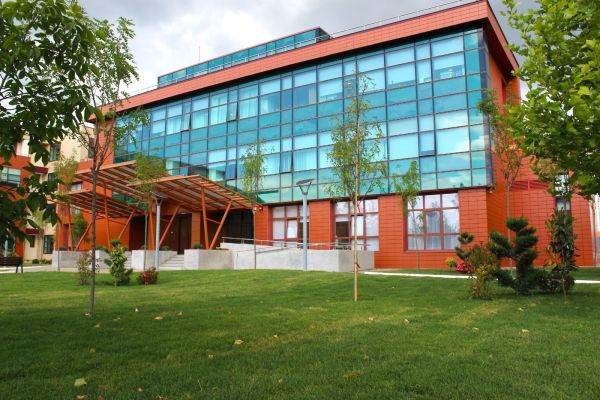
Valahiia University in Târgovişte has launched the Virtual Forensic Investigation Training System (VR CSI), a state-of-the-art tool for training forensic scientists, police officers and future legal professionals, in a national premiere. The simulator was purchased through a project funded by the National Recovery and Resilience Plan (PNRR) and involved an investment of approximately 160,000 lei. The project is part of a broader initiative to digitize higher education institutions, and the management of Valahia University emphasizes the importance of this approach for modernizing the educational process. "The simulator is intended for professional bodies working in the forensic field, but also for the professional training of future graduates, who will acquire skills for this type of activity. For our university, the fact that it is the only simulator of this type in Romania is a good thing and demonstrates that even smaller universities can have constructive initiatives", stated the UVT rector, Corneliu Sălişteanu. He emphasized that the university's mission to continuously develop gains consistency by offering, to students and professionals from the judicial system, modern tools, adapted to the current demands of the labor market.
• Technology used for the first time in Romania
Considered a revolutionary tool, VR CSI was initially used in Spain, being developed in partnership with the Guardia Civil. The system fundamentally changes the way in which forensic scientists and police officers are trained, offering an immersive, realistic and controlled training experience. According to the Valahia University of Târgovişte, "VR CSI is not just a technology, but a paradigm shift,” as it allows: the reconstruction of crime scenes with millimetric accuracy; the controlled simulation of forensic interventions; real-time access for teachers and trainers for analysis, monitoring and evaluation.
• Realistic reconstructions and real-time evaluation
By integrating virtual reality technologies, the simulator allows for the faithful reproduction of crime scenes and the generation of complex scenarios, such as crime scene investigation, road accident reconstructions or border control simulations. At the same time, the system evaluates in real time the way in which the technical-ocular inspection is carried out and highlights errors or omitted evidence. The President of the Romanian Association of Forensic Scientists, Gheorghe Popa, emphasized the essential role of this technology in the practical training of investigators.
"Investigating the crime scene is the most important activity that judicial bodies must carry out when they are notified of the commission of a crime. Through this simulator, the aim is to develop the skills of searching, discovering and collecting traces, as well as the skills of interpreting them to establish the circumstances of the crime and the profile of the perpetrator", explained Gheorghe Popa.
In addition to the educational component intended for students, the simulator can also be used by the operational structures of the Romanian Police. Representatives of Valahia University stated that there is already a collaboration protocol with the Dâmboviţa County Police Inspectorate, which will allow the organization of training courses for forensic scientists, using VR CSI.


















 Euro
Euro Dolar SUA
 Franc elveţian
 Liră sterlină
 Gram de aur