English

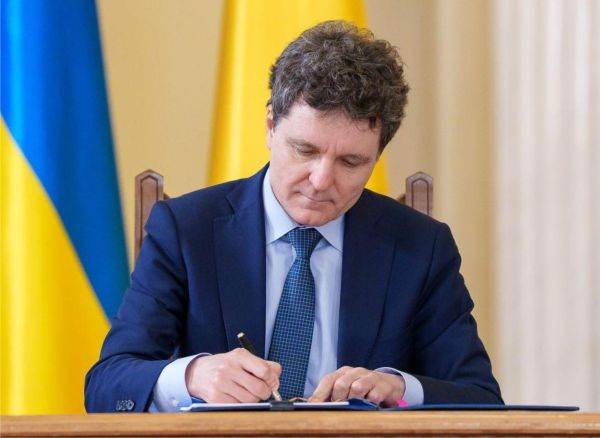
President Nicuşor Dan chose, in the scandal triggered by the PSD against Prime Minister Ilie Bolojan, not to be the active mediator that his position would imply, but a disciplined, neutral and attentive spectator not to disturb the unfolding of hostilities, waiting for the two camps to consume their conflict and to finally deliver him a "balanced" solution from which to choose the optimal option. It is a positioning that, under the veneer of institutional responsibility, rather hides a sophisticated form of absence.
While the PSD is organizing an internal referendum today with the air of political execution and putting on the table a 72-hour ultimatum for the resignation of the Prime Minister, the head of state manages the rare feat of identifying the main culprit beyond the political scene.
In an interview last week with Sebastian Zachmann on Europa FM, Nicuşor Dan said: "It's not a problem of political leaders. I'm concerned that, after we've all gotten over the shock of the elections, we've returned to a battle of attrition in which both society and influencers incite this war between these two pro-Western camps, and the political leader tries to satisfy this desire. Instead of collaboration, we've returned to the old left-right fight.” In other words, PSD doesn't trigger anything, PNL doesn't react to anything, and the crisis is essentially the work of society and influencers, who are those great invisible directors of Romanian politics, in the opinion of President Nicuşor Dan. Basically, responsibility is lifted from the concrete plane and placed in a sociological fog, where no one can be held accountable. In this setting, the president can remain impeccably neutral, because, after all, how can you position yourself against "society” or "influencers”? It is probably the only situation in which political reality is reinterpreted as a matter of emotional climate, not decision.
The same concern for neutrality is also found in the constant refusal to take someone's side, even when the political agreement of the governing coalition is called into question. "I don't want to be on one side or the other,” claims Nicuşor Dan, a phrase that, repeated often enough, begins to resemble less equidistance and more like an avoidance strategy. Because, paradoxically, not being "on one side or the other” in a conflict in which the rules are violated is no longer a neutral position, but represents a choice.
Moreover, the president defines his role himself with disarming sincerity: "I do not have a constitutional attribute to intervene. It is a dispute between parties, it does not depend on me. When it depends on me, I will come up with a balanced solution”. The message sent by the head of state is simple: until the crisis formally reaches his table, it can continue unhindered. The president does not stop the fire, he monitors it. He does not intervene in the conflict, he archives it for the moment when it becomes inevitable.
In this logic, the invoked mediation becomes more of a promise for the future than a present action. "I am trying to maintain my role as mediator (...), I will invite calm”, states Nicuşor Dan, except that the invitation to calm, launched from outside the conflict, has every chance of being perceived as a rhetorical exercise, not as a real balancing instrument. It is, if you will, the political equivalent of a spectator recommending the players to stop arguing, while the referee is absent from the field.
The irony reaches a high level when the president implicitly validates the legitimacy of the PSD's actions: "each of these parties, in a somewhat legitimate way towards their members, will democratically express its political action”. Therefore, even the detonation of a coalition that should function according to the political agreement until 2027 can be seen as an internal democratic exercise. At this point, the concept of political responsibility seems to have been replaced by a much more convenient one: that of internal legitimacy, regardless of the consequences.
And yet, there are moments when Nicuşor Dan abandons this neutrality. Asked about a possible PSD-AUR government, the answer is sudden, sharp: "I will never do it”. Here there are no more influencers, no more collective resentments, but there is a clear red line. The difference is that this scenario is not the one causing the current crisis, but a hypothetical one. In the face of real risks, the discourse is fluid; in the face of theoretical ones, it becomes inflexible.
Otherwise, everything remains in the register of cautious observation. "Obviously, I am looking at all possible scenarios for the coming weeks," claims Nicuşor Dan, a phrase that says, in fact, that the president has chosen to watch. To analyze. To wait. To not bother.
And this waiting is not without political calculations. He himself admits that his position can be interpreted: "I tell everyone that Romania cannot be governed without some or the other and, therefore, a mediator is needed”. This is perhaps the most honest explanation: neutrality is not only a principle, but also a strategy for political survival.
However, in moments of crisis, this strategy begins to cost. Because, while the conflict deepens, and one of the coalition partners presses the accelerator, the president seems to be driving with the brakes on, convinced that the road will regulate itself. It remains to be seen whether this philosophy of elegant passivity will produce the desired stability or will only confirm an uncomfortable reality: that, sometimes, doing nothing is still a decision, only one that leaves the outcome to others.












 Euro
Euro Dolar SUA
 Franc elveţian
 Liră sterlină
 Gram de aur