English


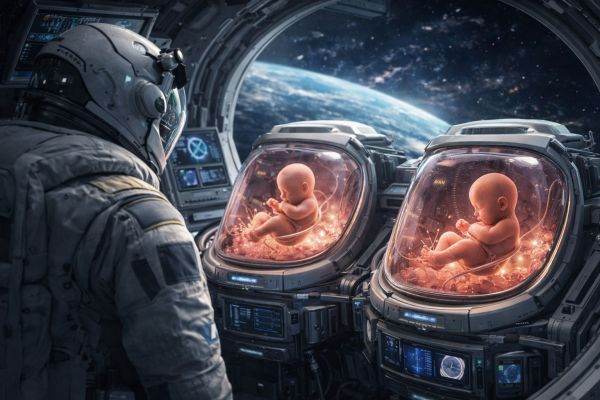
Human reproduction in space may be more difficult than previously thought. A study recently published in the journal Communications Biology shows that microgravity affects both the ability of sperm to reach the egg and the early development of embryos. The research comes as NASA accelerates its plans to build a base on the Moon and send human missions to Mars, raising crucial questions about the possibility of long-term human life beyond Earth.
One of the study's main conclusions is that in the absence of Earth's gravity, sperm have difficulty finding their way to the egg. "Sperm must actively find their way to the egg, and this is the first study to test this ability under conditions similar to those in space," explained Nicole McPherson, the study's lead author. For the experiment, the team from the University of Adelaide used a special device - a plastic chamber that mimics the female reproductive tract - designed as an "obstacle course" for sperm.
• Reduced performance and more difficult fertilization
The researchers tested human and mouse sperm in a constantly rotating device that simulates microgravity. The results showed that: the performance of sperm was about 50% lower than in normal conditions;
the rate of successful fertilization could drop by about 30%. These data suggest that the fertilization process is significantly affected in space, even in the early stages, Communications Biology reports. A surprising result of the study is that sperm that managed to complete the course in microgravity appeared to generate embryos of better quality. According to the researchers, microgravity could act as a "natural filter", eliminating weaker sperm and allowing only the best performers to reach the egg. This effect could theoretically have positive implications, but the benefits are limited by the problems that arise later. The most important difficulty occurs in the first 24 hours after fertilization. "The results were brutally reversed: fewer embryos were formed, and those that did exist were of poorer quality,” Nicole McPherson emphasized. This critical stage of embryonic development appears to be extremely sensitive to microgravity conditions, which raises serious questions about the viability of pregnancies in space.
• Protecting embryos, a key challenge
Researchers believe that microgravity is not necessarily an insurmountable obstacle to reproduction, but protecting embryos in the first hours of development could be the key to success. This would require the development of technologies capable of reproducing conditions similar to terrestrial gravity inside spacecraft or extraterrestrial bases. Scientists point out that fertilization is only a small part of a much more complex biological process. "We are still a long way from the birth of the first child in space,” said the study's lead author. Much more research is needed to understand how the space environment affects all stages of reproduction, from conception to fetal development and birth.
In the context of long-term space exploration ambitions, the ability of humans to reproduce outside Earth is becoming a strategic issue. Without viable solutions, the idea of human colonies on the Moon or Mars remains incomplete. The study, published in Communications Biology, is an important step, but also a warning sign: adapting human life to space is much more complex than simple survival.

























 Euro
Euro Dolar SUA
 Franc elveţian
 Liră sterlină
 Gram de aur