English


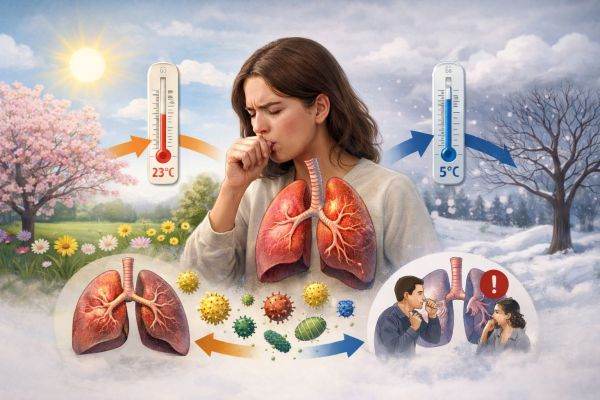
Sudden changes in temperature, increasingly common in the spring season, can have direct effects on respiratory health, causing coughing, irritation of the respiratory tract and even difficulty breathing. The warning comes from pulmonologist Darius Dăncilă, from the Sibiu Hospital for Pneumophthisiology.
According to the specialist, quoted in a press release, the rapid transition from higher temperatures to cold air causes a reflex response in the body. The airways contract, the blood vessels in the mucosa narrow, and the secretions become denser. "This mechanism can trigger coughing or the sensation of difficulty breathing," explains the doctor. In short, the body tries to adapt, but this adaptation comes at a cost, especially for sensitive people.
• Patients with chronic diseases, the most vulnerable
The effects are felt more strongly by certain categories: patients with chronic bronchitis; those diagnosed with Chronic Obstructive Pulmonary Disease; children and the elderly. In these cases, temperature variations can worsen existing symptoms and trigger acute episodes. Another important effect of changing weather is the weakening of the body's defense mechanisms. The respiratory mucosa becomes more vulnerable, which facilitates the penetration of viruses and bacteria. Thus, periods with large temperature differences between day and night are often followed by increases in the number of respiratory infections.
• When to see a doctor
Specialists point out that certain symptoms should not be ignored: persistent cough; repeated difficulty breathing; feeling of tightness in the chest.
These may indicate more serious conditions or insufficiently controlled respiratory problems. To reduce the risks, doctors recommend a few simple but essential measures: clothing in layers, adapted to temperature variations; avoiding sudden exposure to cold air; protecting the airways, especially in the morning; adequate hydration; avoiding intense physical exertion in cold conditions.
• A trivial phenomenon, but with real effects
Although temperature changes are considered normal for this time of year, they can have real consequences on health, especially for vulnerable people. Adapting to weather conditions and paying attention to the body's signals remain the most effective methods of prevention, doctors emphasize.





















 Euro
Euro Dolar SUA
 Franc elveţian
 Liră sterlină
 Gram de aur