English


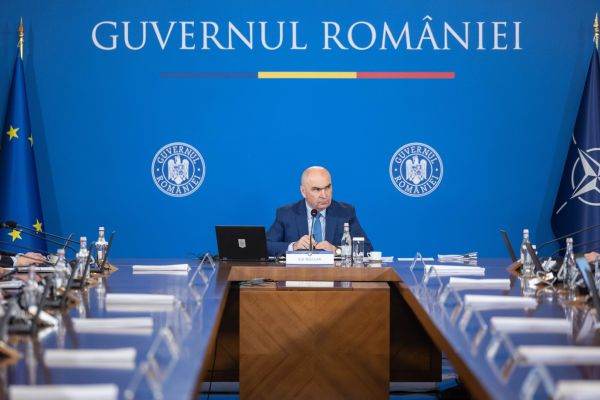
The National Alliance of Student Organizations of Romania (ANOSR) has requested an audience with Prime Minister Ilie Bolojan, who holds the interim portfolio of Education and Research, to discuss a series of topics considered critical for the future of higher education. These include the budget allocated to the Ministry of Education and Research (MEC), the level of scholarships, transportation facilities for students, but also recent statements regarding the reduction of tuition fees and the decrease in university funding. Student representatives warn, in a statement, that possible budget cuts and restrictions on access to higher education could have negative long-term effects, both on the educational system and on Romania's economic and social development.
• The real cost of student life
The request for an audience comes in the context of the launch of the analysis "The minimum student basket. How much does it cost to be a student? - Over 2,000 lei per month", a document that highlights the financial difficulties faced by students. According to ANOSR, the monthly expenses necessary for a student to live a decent life exceed the threshold of 2,000 lei, while the support offered by the state remains modest. "In the context of the low level of scholarships, both in value and number, of the austerity measures adopted during 2025 in Education and the fact that the state budget laws have not yet been adopted, we believe that an honest dialogue, based on solid data and arguments, represents an act of responsibility and respect towards the student community and the education system in Romania", argues ANOSR. The organization emphasizes that it expects the prime minister to treat this request seriously, given his direct role in coordinating educational policies.
• Romania, at the bottom of Europe in student support
ANOSR draws attention to the fact that Romania is below the European average in terms of support provided to tertiary education students. According to the data cited by the organization, public support represents only approximately 10% of students' monthly income, a percentage considered insufficient to ensure equitable access to education. At the same time, students recall the commitments assumed at European level. The European Union has set a goal that by 2030, 50% of the population aged between 25 and 34 should have completed tertiary education. However, Romania is far behind this target.
"In 2024, Romania ranked last at European level, with only 23.2% of tertiary education graduates, 8.4 percentage points lower than the next ranked country,” ANOSR emphasizes. In this context, student representatives believe that any decision to reduce university funding or tuition fees would run counter to the strategic objectives of the Romanian state and would directly affect Romania's capacity to develop its qualified human resources. "Reducing higher education funding and reducing tuition fees act against the development of the education system and the commitments assumed by Romania at European level," the student organization's press release also states. ANOSR hopes that the meeting with Prime Minister Ilie Bolojan will open a real dialogue on education priorities and lead to public policies that support access to higher education, instead of restricting it.

















 Euro
Euro Dolar SUA
 Franc elveţian
 Liră sterlină
 Gram de aur