English

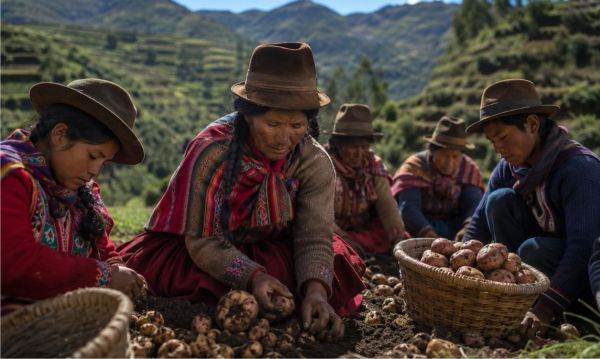
Cultivated for thousands of years in the Andes Mountains, the potato has not only changed the diet of indigenous communities in South America, but also their genetic makeup. A recent study published in the journal Nature Communications and cited by Reuters shows that Andean populations have developed genetic adaptations that allow them to more efficiently digest starch, the main nutritional component of potatoes. The research suggests that these biological changes appeared 6,000 to 10,000 years ago, with the expansion of potato cultivation in the Andean region.
• A gene associated with starch digestion
The study analyzed the DNA of current populations of Quechua speakers in Peru, descendants of the inhabitants of the former Inca Empire. The researchers found that they have, on average, about ten copies of the AMY1 gene, which is involved in starch digestion, two to four more than most populations in the world. According to the researchers, no other population analyzed globally exceeds this level. The AMY1 gene controls the production of amylase, an enzyme present in saliva, responsible for breaking down starch in the oral cavity. The more copies of the gene there are, the more amylase the body produces and the more efficiently it processes starchy foods. "It's a wonderful example of how culture shapes biology,” said Omer Gokcumen, an evolutionary geneticist at the University at Buffalo and one of the lead authors of the study.
• Potato, the basis of the diet in the Andes
The researchers say that the genetic adaptation coincided with the development of agriculture based on potato cultivation in the Andes. At high altitudes, where other crops were difficult to grow, potatoes were a stable source of food for local populations. "Potatoes were a major source of calories in the ancient Andean diet,” said Kendra Scheer, a co-author of the study and a doctoral candidate at the University at Buffalo. Another author of the study, Abigail Bigham of the University of California, Los Angeles, said the study demonstrates the importance of diet in human evolution and metabolic adaptation.
• Thousands of potato varieties in Peru
The study analyzed genomic data from more than 3,700 people from 85 populations in the Americas, Europe, Africa and Asia, including 81 native Quechua speakers from Peru. Scientists believe that people who could metabolize starch more efficiently had a survival advantage, which favored the spread of these genetic variants over generations. The potato has remained a central element of Peruvian food culture to this day, with between 3,000 and 4,000 different varieties, with shades ranging from purple and blue to red, gold and black. Introduced to Europe after the Spanish conquest of the Inca Empire in the 16th century, potatoes later became one of the most widely grown crops in the world.


























 Euro
Euro Dolar SUA
 Franc elveţian
 Liră sterlină
 Gram de aur